
Inside 24-hour one-man attempt to plant 40,000 mangroves in Mombasa
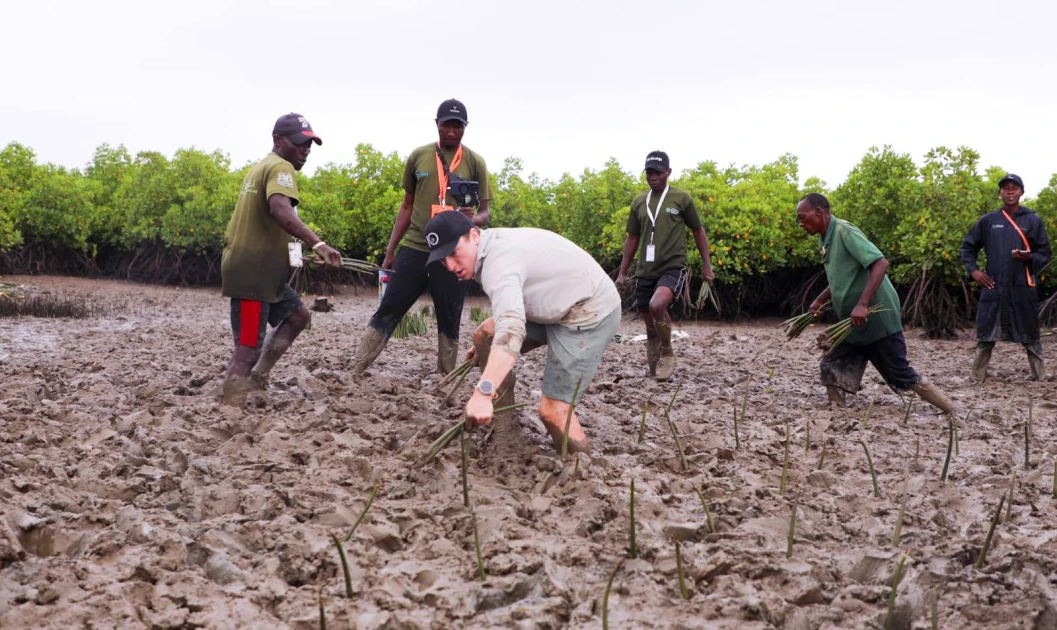
Antoine Moses during a pre-challenge dry run at Tudor Creek, Mombasa County, in the days leading up to 30 April 2026.

Audio By Vocalize
Moses, a Canadian tree planter, is the holder of the Guinness World Record for the most trees planted in 24 hours by an individual. He planted 23,060 terrestrial trees in 24 hours in Alberta in 2021. That record was challenged on 22nd April, 2026 by Kenyan Hillary Kibiwott who planted 23,326 terrestrial trees in Kaptagat, in 24 hours, in a yet to be ratified record by the Guinness World Records.
This time, in Kenya, Moses is attempting a different record at sea, the highest number of mangroves planted by an individual in 24 hours. Beneath the rhythm of the tide lies a deeper intention, to end the far more dangerous game of hide and seek humanity is playing with nature, as mangroves, the fragile buffer between coastal communities and the Indian Ocean in Kenya, continue to disappear.
“Kenya is honoured to welcome Antoine Moses from Canada to coastal Kenya. His attempt to plant 40,000 mangroves in 24 hours at Tudor Creek, Mombasa County, is not just about breaking a record, but breaking the trend of forest degradation before it is too late to mend. His presence affirms our growing role as a credible leader in global climate action,” said Dr Deborah Barasa, Cabinet Secretary for Environment, Climate Change and Forestry.
“What a gift to Mother Earth, the very soul of our tourism! We witnessed our own Hillary Kibiwott plant 23,326 trees in 24 hours in Kaptagat Forest on 22 April 2026, and today, the Kenya Tourism Board proudly welcomes Antoine Moses to Magical Kenya,” added June Chepkemei, Chief Executive Officer, Kenya Tourism Board.
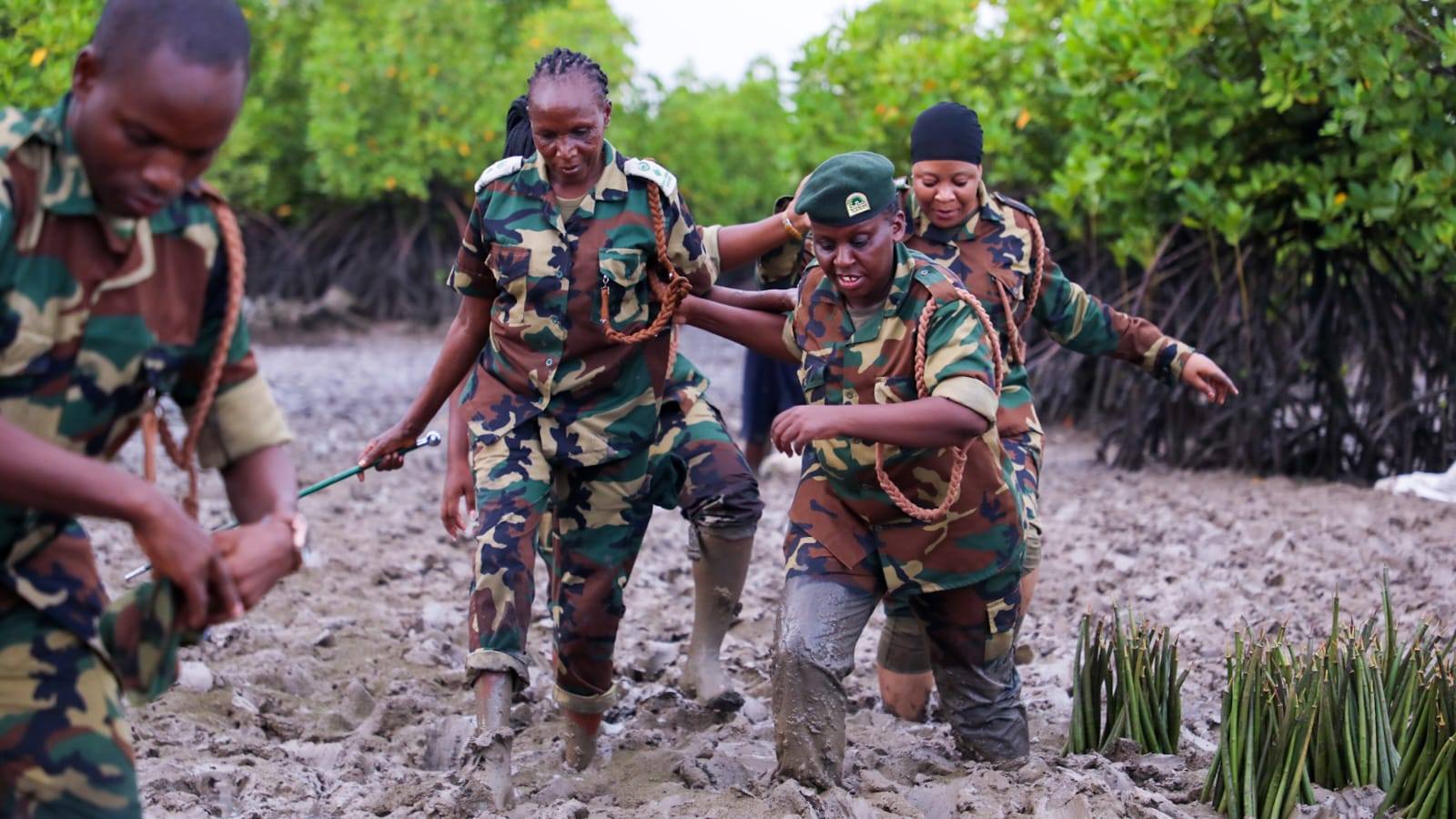
The Kenya Forest Service support team arrives at the mangrove restoration site at low tide.
According to Gitonga Mugambi, Principal Secretary, State Department for Forestry, “Planting mangroves is among the toughest forms of restoration, done in shifting tides, deep mud, and demanding conditions. So when Antoine Moses takes on the challenge of planting 40,000 mangrove propagules in 24 hours on April 30, we pause and say pongezi! Congratulations.”
According to the Kenya Forest Service, mangroves cover over 64,000 hectares in Kenya, what the Chief Conservator of Forests, Alex Lemarkoko, calls “quiet guardians of our coastline.” highlighting that “Mangroves shield coastal communities from storms, sustain fisheries, support livelihoods, and store vast amounts of carbon. Their value is not just ecological; it is deeply human and economic.”
The host organisation, EarthLungs, provided technical support to Moses, grounded in practical experience in mangrove ecosystem restoration. Victor Mwanga, Founder and Chief Executive Officer, noted that, “We are fully committed to ensuring that this initiative achieves a survival rate of more than 85%, supported through proven restoration methodologies, transparent monitoring systems, proper site preparation, correct spacing, and sustained post-planting care.”
The combination of rigorous scientific research, the Kenya Forest Service mangrove restoration guidelines, indigenous community knowledge, and the expertise of mangrove specialists ensures that species are matched to sites where they historically thrived, compared with scientific zonation data, and used to design restoration plans that mimic natural ecosystems.
Join the Discussion
Share your perspective with the Citizen Digital community.
No comments yet
This discussion is waiting for your voice. Be the first to share your thoughts!