
ICJ Kenya makes recommendations to resolve nationwide doctors' strike
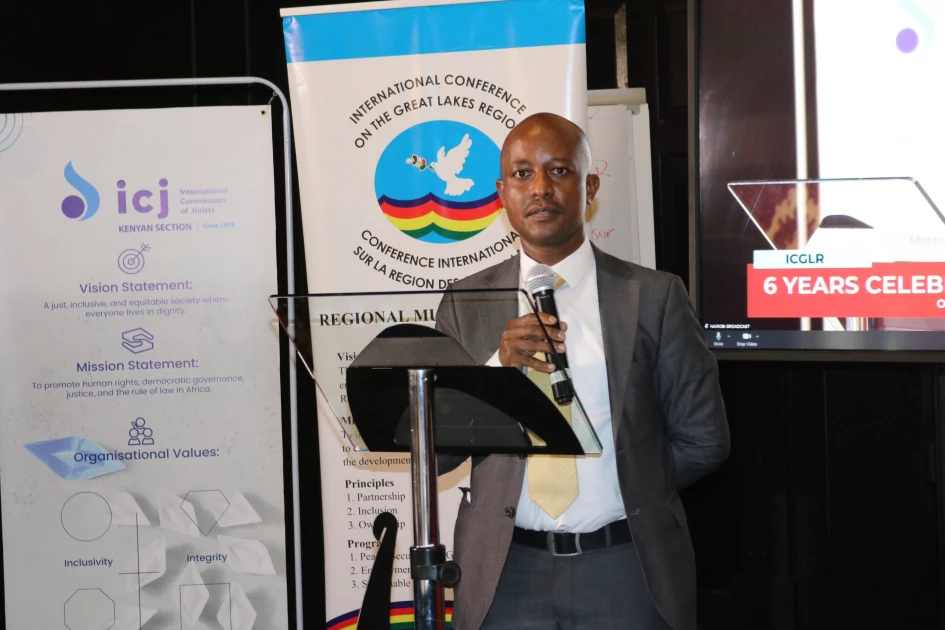
File image of ICJ Kenya Chair Protas Saende.

Audio By Vocalize
As the doctor’s strike enters day 15, there are no signs of the continued industrial action being resolved any time soon as concerns continue to be raised on the plight of patients across Kenya.
Despite efforts to resolve the impasse, the Kenya Medical Practitioners, Pharmacist and Dentists Union (KMPDU), has accused the government of being non-committal in addressing its plight with the government in turn threatening to sack doctors who fail to return to work, stressing that talks on a return-to-work formula will only happen then.
With parties involved in the ongoing saga planning their next moves, the Kenyan Section of the International Commission of Jurists (ICJ Kenya) has called for an urgent resolution of the health crisis in the country owing to the doctors' strike and NHIF cash crunch.
ICJ Kenya Council chairperson Protas Saende has called on the parties involved, including doctors, KMPDU, the Ministry of Health (MOH), the Council of Governors (COG), the Public Service Commission, the Salaries and Remuneration Commission (SRC), Ministries of Labour and Social Protection, National Treasury, and the Head of Civil Service to resume talks on a clean slate.
“We, a collective body of Jurists, are deeply concerned about the ongoing doctor’s strike that is causing untold suffering to a majority of the Kenyan population who rely on public health facilities," he said.
"The nationwide strike has disrupted health service delivery in public hospitals countrywide, stranding patients who cannot afford health care in private facilities."
Some of the contentious issues from the doctor’s side include the implementation of the 2017 Collective Bargaining Agreement (CBA), posting of medical interns, comprehensive medical cover, postgraduate training, and employment of doctors.
The doctor's strike comes at a time when the government is transitioning from the National Health Insurance Fund (NHIF) to the Social Health Insurance Fund (SHIF) established in 2023.
Health facilities have raised concerns over the delay in the payment of NHIF claims. Some private health facilities have been compelled to require NHIF beneficiaries to pay out of pocket for medical services, which is not affordable for the majority of Kenyans.
”Kenya continues to grapple with challenges in the health sector, including issues of poor health staff management characterised by failure to honour CBAs resulting in frequent strikes, inadequate health financing to ensure appropriate and sustainable funding for universal health coverage (UHC) and the lack of a comprehensive social health insurance scheme to protect and cushion vulnerable households from the risks of catastrophic health expenditures,” he said.
The commission of jurists has urged parties involved to implement the following recommendations in a bid to restore normalcy.
The Salaries and Remuneration Commission, for instance, has been urged to, ”acknowledge and ensure that healthcare workers, including medical interns, receive fair and competitive compensation that recognises their training, expertise, and nature of work."
"Adequate pay will also help curb the brain drain witnessed in Kenya despite the significant investment in training doctors, nurses, clinical officers, and other healthcare workers,” added ICJ Kenya Council chairperson Protas Saende.
Amid the issue of past and unimplemented agreements, parties including the state actors in the National and County governments, have been urged to honour all agreements resulting from all concluded negotiations and all court orders resulting from adjudication processes.
“We call upon the National Treasury, NHIF, and the Ministry of Health to ensure the immediate release of funds owed to public and private health facilities by NHIF so that beneficiaries continue to receive the health insurance they are entitled to,” said Saende.
Join the Discussion
Share your perspective with the Citizen Digital community.
No comments yet
This discussion is waiting for your voice. Be the first to share your thoughts!