
IAEA chief backs Ruto's nuclear push despite Kenya's renewable energy success

Audio By Vocalize
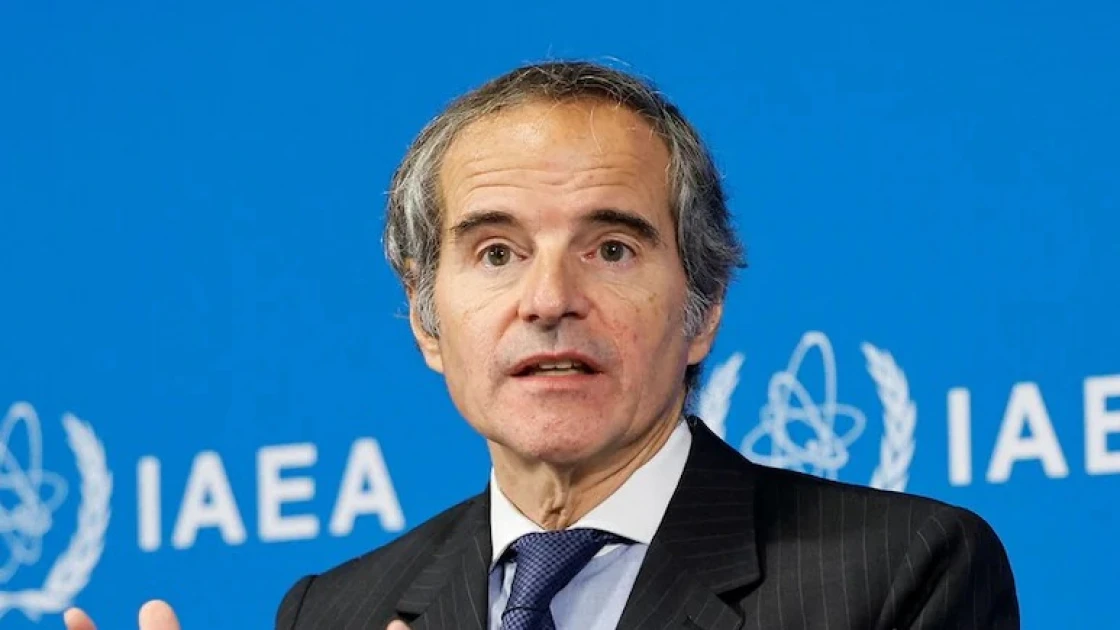
International Atomic Energy Agency (IAEA) Director General Rafael Grossi threw his weight behind a strategy that President William Ruto has increasingly placed at the centre of Kenya's long-term energy future.
Speaking to Citizen TV in Vienna, Grossi dismissed suggestions that countries with strong renewable energy systems have little reason to invest in nuclear power.
The comments came after Citizen TV questioned the rationale behind Kenya's nuclear ambitions at a time when the country is widely regarded as one of the world's clean energy success stories, with geothermal, hydro, wind and solar power accounting for the overwhelming majority of electricity generation.
"There is no one-size-fits-all," Grossi said.
The IAEA chief argued that countries must make energy decisions not only based on what works today, but also on what will be needed decades into the future.
"Nuclear is a marriage for life," he said, noting that modern nuclear power plants can operate for up to 100 years.
His remarks are likely to strengthen the hand of President William Ruto, who has emerged as one of Africa's most vocal proponents of nuclear energy despite questions over whether Kenya actually needs it.
Kenya's energy story has been largely built around renewables. The country is home to some of the world's largest geothermal resources and has become a global reference point for clean electricity generation.
Kenya currently has an installed electricity capacity of about 3,300 megawatts, with geothermal power providing the single largest share of electricity on the grid.
The country is also home to Africa's largest wind farm at Lake Turkana and continues to invest heavily in solar and hydropower.
Yet Ruto believes that will not be enough.
Addressing the International Conference on Nuclear Energy in Nairobi earlier this year, the President said Kenya intends to grow electricity generation capacity from about 3,300 megawatts today to 10,000 megawatts within the next five to seven years as the country accelerates industrialisation and manufacturing.
Nuclear power is expected to contribute a significant share of that expansion.
The government is targeting at least 3,000 megawatts of nuclear-generated electricity over the coming years, with plans for the country's first commercial nuclear power plant already taking shape.
The nuclear journey has been more than a decade in the making.
The Ministry of Energy established a dedicated nuclear programme, which has since evolved into the Nuclear Power and Energy Agency (NuPEA).
Over the years, the country has completed a nuclear pre-feasibility study, established the Kenya Nuclear Regulatory Authority, undertaken reactor technology assessments and conducted site identification studies.
Potential sites have been identified in Kilifi, Kwale and Siaya counties.
Recently, government agencies have intensified work in Siaya County, which is increasingly emerging as the frontrunner for Kenya's first nuclear power plant following resistance to earlier plans at the Coast.
Studies are ongoing to determine the most suitable location based on environmental, safety and engineering considerations.
The current plan envisions a 2,000-megawatt nuclear power plant, with construction expected to begin later this decade and operations targeted for the early 2030s.
Yet Kenya's case is particularly complex.
Unlike many countries exploring nuclear power, Kenya is not short of clean energy options.
According to the Ministry of Energy and KenGen, the country has an estimated geothermal potential of more than 10,000 megawatts, most of which remains undeveloped.
Kenya currently exploits only a fraction of that resource, despite geothermal already being the largest source of electricity on the national grid.
Geothermal power is widely regarded as one of the country's greatest competitive advantages.
It provides stable baseload electricity similar to nuclear power, can operate around the clock regardless of weather conditions and is significantly cheaper and faster to deploy than a nuclear power plant.
That reality has fuelled a longstanding debate among energy experts over whether Kenya should focus on fully exploiting its vast geothermal resources before committing to a multibillion-dollar nuclear programme that would take years to complete.
Critics have repeatedly questioned whether a developing country such as Kenya can afford such an investment, particularly when renewable alternatives continue to become cheaper.
Grossi acknowledged that financing has been one of the biggest barriers to nuclear energy expansion globally.
"It is very easy to make the case for nuclear energy," he said. "The question is: who pays?"
According to the IAEA chief, that equation is beginning to change.
The World Bank, he said, is now working more closely with the IAEA on nuclear energy projects after years of reluctance by international development finance institutions to engage in the sector.
The shift, he added, has triggered growing interest from regional development banks, including ongoing discussions with the African Development Bank, potentially opening new financing channels for countries exploring nuclear energy.
Beyond funding, Grossi said the participation of multilateral lenders helps de-risk projects and attract private capital.
"Private investors will not invest when they do not see international finance institutions and insurers getting into a project," he said.
The comments are significant because financing has often been cited as the Achilles heel of Africa's nuclear ambitions.
While countries across the continent face rapidly growing electricity demand, few have been able to mobilise the capital required to build nuclear infrastructure.
For Kenya, Grossi's endorsement offers fresh support for a programme that remains both ambitious and controversial.
Supporters argue that nuclear energy would provide the reliable baseload electricity needed to power industries, data centres, electric mobility and future economic growth while complementing renewable energy sources.
Critics, however, continue to question the cost, timelines, waste management requirements and whether scarce public resources would be better spent expanding geothermal, solar and transmission infrastructure.
Join the Discussion
Share your perspective with the Citizen Digital community.
No comments yet
This discussion is waiting for your voice. Be the first to share your thoughts!