
I will end poverty in Kenya if elected president in 2027 - Wanjigi
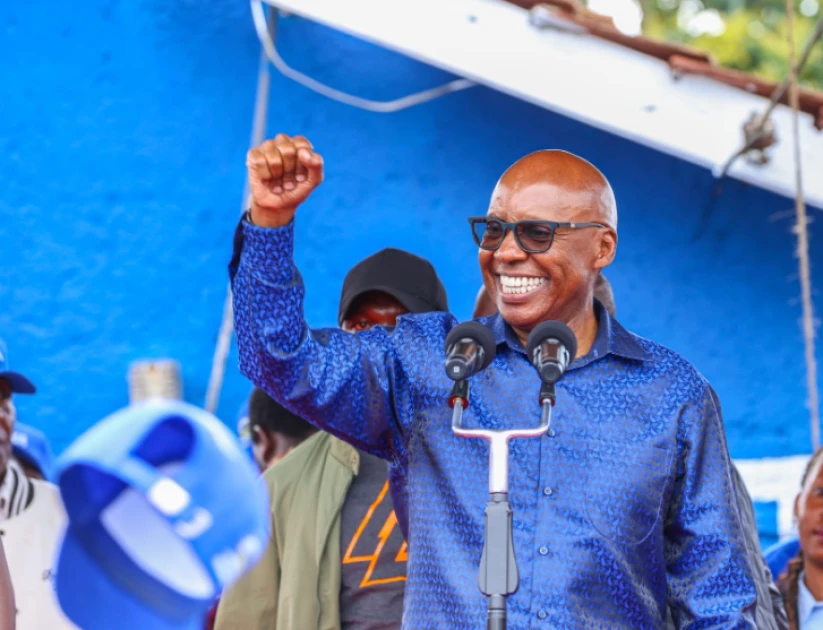
Safina party leader and 2027 presidential hopeful Jimi Wanjigi during a previous address. PHOTO | COURTESY

Audio By Vocalize
Safina party leader and 2027 presidential hopeful Jimi Wanjigi
has said his primary objective if elected the country’s Head of State at the
next polls would be to eradicate poverty, arguing that poverty remains the root
cause of many of Kenya’s longstanding challenges.
Wanjigi says Kenya had made significant progress in areas such
as education and healthcare since independence but had failed to resolve the
fundamental problem of poverty.
He invoked the legacy of Kenya’s first President, Jomo
Kenyatta, saying the country’s leadership at independence had correctly
identified poverty, health and education as three major challenges facing the
newly independent nation.
“I will remove poverty,” Wanjigi said when asked why he would
be interested in becoming President, during an interview on Thee Alfa House
YouTube channel.
“The whole goal of this is that there are three things that
have eluded us since independence. When we got independence, Jomo Kenyatta was
very good at anchoring three problems; poverty, health, and education. 63 years
later, are we still not in those challenges?”
Wanjigi argued that tackling poverty would have a multiplier
effect on other social challenges, saying improving the economic circumstances
of Kenyans would in turn make it easier to address problems in healthcare and
education.
“Mine is to remove poverty; because once you remove poverty,
you remove all the others,” he said.
The businessman-cum-politician cited poverty figures which he
said illustrate the scale of the problem facing the country more than six
decades after independence.
According to Wanjigi, about 32 million Kenyans are classified
as poor, with approximately 12 million experiencing multidimensional poverty
linked to deficiencies in education and health.
He said the remaining poor population includes Kenyans facing
food poverty and absolute poverty, putting the proportion of the population
living in poverty at about 60 per cent.
“That is 60% of our population; six out of every 10 are called
poor. What nation is that 63 years after independence?” he posed.
Wanjigi said Kenya’s persistent poverty could not simply be
attributed to a lack of talent, education or hard work among its citizens.
He argued that Kenyans possess the human capital and social
conditions required to build a prosperous economy, but lack sufficient access
to capital remains a fundamental obstacle to economic transformation.
“There’s one basic reason why some nations are poor and others
are not; capital,” Wanjigi said.
He questioned why Kenya continues to struggle economically
despite having an educated and hardworking population and being relatively
peaceful and united.
“Why are we such a struggling nation? Many of us have
education, we have potential, we’re hardworking as Kenyans, we’re a united and
peaceful nation – but what is this state that becomes something permanent to us
that we are always listening to promises that we will come out of poverty but
it doesn’t go away?” he posed.
Wanjigi has constantly positioned himself as an advocate for
reforms to Kenya’s political and economic system, often criticising what he
describes as a failure by successive governments to deliver meaningful economic
change to ordinary citizens.
Join the Discussion
Share your perspective with the Citizen Digital community.
No comments yet
This discussion is waiting for your voice. Be the first to share your thoughts!