
How Tigrayan fighters were drawn into Sudan's bloody civil war
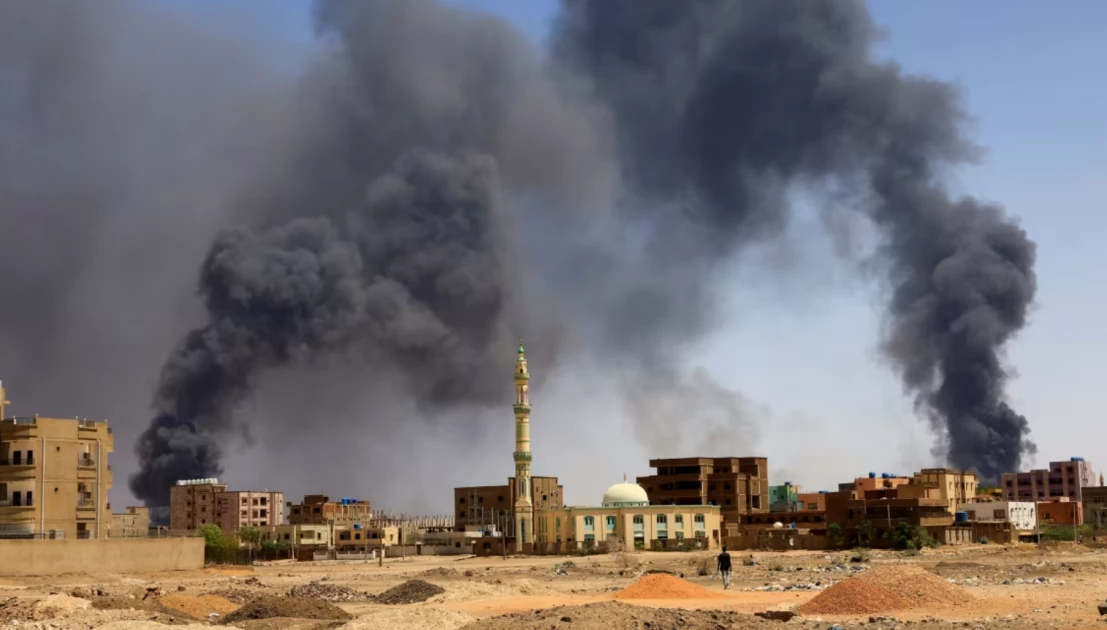
A man walks while smoke rises above buildings after aerial bombardment, during clashes between the paramilitary Rapid Support Forces and the army in Khartoum North, Sudan, May 1, 2023. Mohamed Nureldin Abdallah/Reuters

Audio By Vocalize
On February 6, 2026, the United Nations warned that the conflict in Sudan continued to deepen civilian suffering, three and a half years after its outbreak. Shifting front lines are forcing increasing numbers of families to flee, leaving many homeless amid a severe funding shortfall.
The UN Refugee Agency and the International Organization for Migration (IOM) reported that approximately 15.4 million people urgently need emergency shelter and basic household supplies, including millions who have decided to return to their areas of origin.
According to the IOM, although Sudan is facing the world's largest displacement crisis, the 2026 Humanitarian Needs and Response Plan is suffering from a severe funding shortfall, having received only 47% of the required amount.
This situation has forced humanitarian agencies to further scale back essential services. The original plans, it should be noted, aimed to support only 20.4 million of the 33.7 million people in need across the country.
Meanwhile, videos circulating online showed a group of young men wearing military uniforms and speaking Tigrinya while in the custody of the Rapid Support Forces (RSF), according to an investigation published by Sahih Sudan on November 6, 2026.
The matter appears to have become a necessity for the army, which may explain why the war in Sudan has yet to end, despite numerous regional and international initiatives rejected by army chief Abdel Fattah al-Burhan.
An Official Strategy
According to the investigation, footage emerged showing Sudanese officer Sunni Haidar thanking Tigrayan fighters for their participation in the fighting and praising their readiness to continue military operations, four days after the recapture of Wad Madani in January 2025, Sahiih Sudan reported.
The footage reportedly shows several fighters standing alongside him. Sources said that the officer, Sunni Haidar, is affiliated with the terrorist Islamist Movement and the Al-Baraa ibn Malik Brigades, and that he helped recruit members of Tigray’s Muslim minority.
On May 14, 2026, the Sudan Peace Tracker website reported that the fighters had participated as infantry units alongside the army in battles in the states of Al Jazirah and Sennar during November 2024, and that they maintained a command centre in the city of Wad Madani.
The website quoted military sources as saying that “their participation came as part of understandings with the Sudanese army concerning the exchange of support in the event of a future confrontation with the Ethiopian government.”
The report also noted that “some of these fighters had been part of the Ethiopian force serving with the United Nations Interim Security Force for Abyei (UNISFA)”, adding that hundreds of them “were granted political asylum in Sudan following the outbreak of the Tigray war in late 2020, providing the Sudanese army with manpower that included individuals with previous military experience”.
The International Crisis Group confirmed that several thousand Tigrayans, most of them from the region’s western area known as Welkait, fought alongside the Sudanese army after remaining stranded in eastern Sudan since the Tigray war.
The report, entitled “Ethiopia, Eritrea and Tigray: A Powder Keg in the Horn of Africa”, noted that “hundreds of Tigrayans who had served in the UN peacekeeping forces in Abyei left their positions and joined the Sudanese army and its allies in eastern and central Sudan”.
Deception and Forced Recruitment
These individuals entered the Sudanese war through several channels. In one recording, a young man says they were compelled to participate in the conflict after being forcibly recruited, while the commentary accompanying the footage refers to their being lured by promises of monthly salaries of $200.
According to the investigation, the pages that circulated the recordings identified the young men as being from Ethiopia’s northern Tigray region and alleged that they had been recruited by entities linked to the Tigray People's Liberation Front (TPLF) before being sent to fight alongside the Sudanese army.
The investigation added that “the recruits were told their salaries would be transferred to bank accounts, but they never actually received the money”.
The investigation also referred to a widespread forced recruitment campaign in Tigray during the current year.
On July 6, Human Rights Watch revealed cases of abduction and unlawful recruitment targeting civilians, including children as young as 15, carried out by forces and local officials in the region since April.
The organisation documented “six cases of forced recruitment, based on interviews with 18 people, including witnesses, relatives of recruits and individuals who managed to escape recruitment operations”.
The testimonies included accounts of young men being taken from streets, homes, markets and gold-mining sites, detained in administrative offices and police stations, and subsequently transferred to military camps in the northern and southern parts of the region.
According to Sahih Sudan, the abuses were not limited to the recruits themselves. The organisation also reported that “relatives of young men who refused to enlist were detained, families were forced to bring their sons forward, and threats were made against those attempting to evade recruitment”.
Ethiopia Lodges a Protest
The International Crisis Group says the Ethiopian leadership is increasingly angered by the Sudanese army, which it accuses of hosting thousands of Tigrayan fighters in areas under its control. Addis Ababa fears that these fighters could use Sudanese territory as a launching pad for attacks against Ethiopia or return to Tigray to fight the federal government.
On July 7, last year, Ethiopian Prime Minister Abiy Ahmed addressed parliament on the forced recruitment of young Tigrayans and their dispatch to fight in Sudan.
He said they were losing their lives in a war they neither understood nor had any connection to. The statement constituted an official Ethiopian accusation that recruits were being transferred to the Sudanese conflict.
Meanwhile, the United Nations has referred to “reasonable grounds” to believe that the Sudanese army used drones supplied by foreign actors during its military operations.
External support has become a central factor in the army’s ability to sustain the fighting, offset its losses and rebuild its military capabilities.
It has also contributed to the transformation of a conflict that could have been resolved swiftly into a prolonged war of attrition, with profound humanitarian, economic, political and regional consequences.
Join the Discussion
Share your perspective with the Citizen Digital community.
No comments yet
This discussion is waiting for your voice. Be the first to share your thoughts!