
How the SGR is supporting Kenya’s green transition
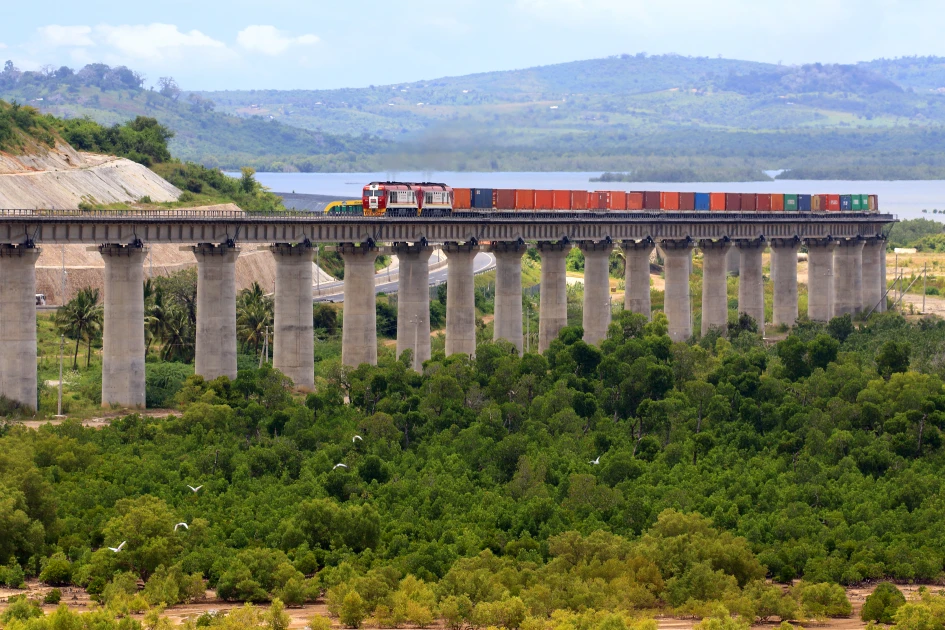
Kenya’s SGR freight train glides across elevated bridges above mangrove forests, allowing the ecosystem below room to thrive. It is an example of how railway infrastructure can support biodiversity conservation while keeping Kenya’s economy moving.

Audio By Vocalize
Kenya’s Standard Gauge Railway (SGR) offers a case study in how rail transport can support economic activity, reduce emissions and help protect wildlife.
As the country marks Mazingira Day, the railway’s growing role in passenger and freight transport highlights the importance of integrating environmental safeguards into infrastructure development.
Since its launch in May 2017, the Madaraka Express has become an important part of Kenya’s transport network. According to the Kenya National Bureau of Statistics, SGR passenger numbers reached 2.73 million in 2025, an 11.6 per cent increase from the previous year.
Freight volumes rose by 12.3 per cent to 7.33 million tonnes. In the first quarter of 2026, passenger numbers increased by a further 12.3 per cent year-on-year, while freight volumes grew by 12.7 per cent.
The SGR’s environmental benefits include shifting freight from carbon-intensive road transport to rail. According to Afristar’s 2024 Environmental, Social and Governance (ESG) report, this shift has avoided more than 800,000 tonnes of cumulative carbon dioxide equivalent (CO₂e) emissions since operations began.
Citing World Bank estimates, the report adds that transferring one million tonnes of freight from road to rail can avoid more than 20,200 tonnes of carbon emissions.
The railway also incorporates measures to reduce its impact on sensitive ecosystems. Its route passes through landscapes that include the Tsavo ecosystem, where wildlife and railway operations share the same environment.
Bridges, culverts, protective fencing and designated wildlife crossings help reduce the risk of collisions between trains and animals.
Afristar’s environmental programme includes approximately 900 kilometres of protective fencing, 79 bridges and 572 culverts. In areas with frequent wildlife activity, 59 warning signs have been installed. Speed controls are also enforced along sections of the railway within Tsavo National Park. Joint patrols with the Kenya Wildlife Service further support wildlife protection and railway safety.
“From the coastal mangrove ecosystems to the wildlife corridors of Tsavo and the open landscape beneath Nairobi National Park’s elevated viaduct, Kenya’s SGR highlights the importance of integrating environmental considerations into infrastructure planning, construction and operations,” said Nelson Asienwa, communications officer at Afristar.
The railway’s sustainability efforts also extend to daily operations, resource efficiency and waste reduction. Its wastewater treatment facility processes approximately 1,168 tonnes of industrial wastewater annually while complying with environmental discharge standards.
In 2025, three faulty locomotive oil-air coolers were repaired and rigorously tested to meet performance standards instead of being replaced. According to Afristar, the repairs reduced material consumption by 98 per cent.
Other initiatives include the installation of 98 solar-powered lights across railway facilities and the planting of native trees at Ngong Road Forest.
“The SGR demonstrates that moving goods and people can also advance the climate agenda. By shifting freight from road to rail, Kenya is showing how transport infrastructure can support economic growth while contributing to lower emissions,” Asienwa added.
As Kenya marks Mazingira Day, the SGR highlights how economic development and environmental stewardship can work towards a shared goal.
Its experience underscores the importance of designing and operating transport infrastructure that supports economic activity while addressing emissions, protecting wildlife and conserving natural resources.
Join the Discussion
Share your perspective with the Citizen Digital community.
No comments yet
This discussion is waiting for your voice. Be the first to share your thoughts!