
How Justa Kajuju Mwenda turned der diabetes struggle into a lifeline for others
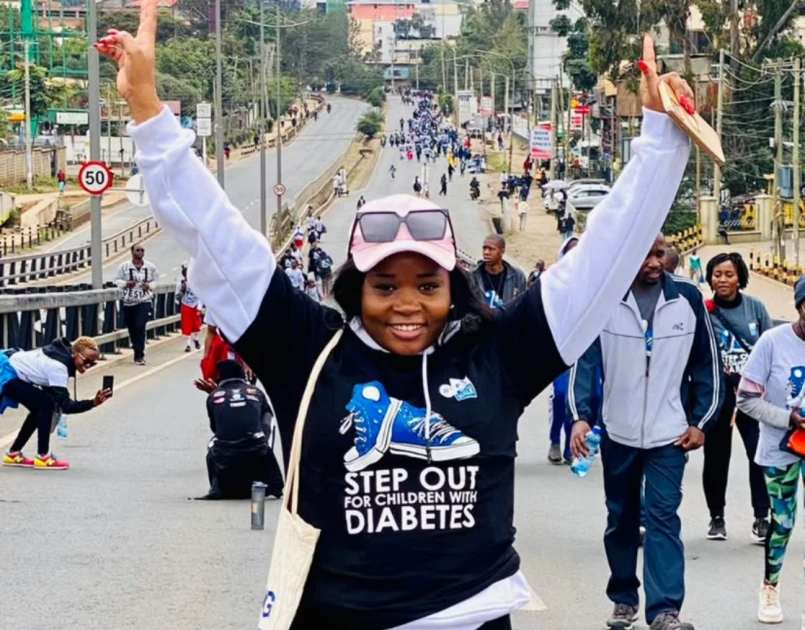
Justa Kajuju Mwenda's DiaHope Africa organised an awareness walk that mobilised 5,000 students from different schools.

Audio By Vocalize
When Justa Kajuju
Mwenda was diagnosed with Type 1 diabetes during her university years, her life
changed in ways she had not anticipated. Once a bubbly young woman enjoying
campus life, she suddenly had to organise her days around insulin injections,
strict routines and the constant demands of managing a chronic condition.
Beyond the
physical adjustments, there was the emotional burden. She struggled with
isolation, stigma and the difficulty of helping family and friends understand a
condition they knew little about. While her peers navigated university life
with fewer health-related considerations, she often felt different, questioning
why her body could not function like everyone else’s and worrying that her
condition made her a burden to those around her.
But one of her
greatest challenges was finding a community that understood what she was
experiencing. The support she needed was difficult to find, and the absence of
that support became a turning point.
“When I searched
for a support network and found none, I decided to build one myself,” Mwenda
recalls.
That decision led
to the founding of DiaHope Africa, an organisation dedicated to supporting
young people living with diabetes through education, peer support, awareness
and improved access to essential healthcare.
What began as a
response to a personal need has since grown into a broader effort to ensure
that a diabetes diagnosis does not leave young people isolated or limit their
opportunities.
Turning Personal
Experience into Collective Impact
Mwenda’s journey
from searching for answers to becoming an advocate was shaped by the
realisation that her experience was shared by many others. Across communities,
young people were navigating diabetes amid misinformation, fear and limited
understanding.
Initially, she
searched for a cure, hoping to find a way out of the difficulties she faced.
Over time, she recognised the importance of continuous care, reliable
information and a support system that empowers people to manage their
condition. Her focus shifted from finding a personal solution to addressing the
gaps that made life harder for others.
Through DiaHope
Africa, she began creating spaces where young people could learn, share
experiences and challenge misconceptions. School and university engagements,
diabetes clubs and community awareness initiatives became practical ways to
bring these conversations into public spaces.
The scale of that
work was evident during World Diabetes Day 2025. In collaboration with Kenyatta
University, Diabetes Kenya and the International Diabetes Federation (IDF),
DiaHope Africa organised an awareness walk that mobilised 5,000 students from
different schools. The accompanying programme at Kenyatta University
facilitated the screening of nearly 4,000 people, with support from hospital
and other in-kind partners.
The initiative
also provided a platform to launch DiaHope Africa’s Dia clubs, which have
established a presence at Kenyatta University, Jomo Kenyatta University of
Agriculture and Technology, Zetech University and high schools.
Beyond these
activities, Mwenda is helping develop the next generation of advocates. She is
currently training 40 diabetes advocates to use lived experience and
storytelling to advance public awareness, improve diabetes management and
influence policy.
“Mentorship
ensures that advocacy doesn’t end with one person or one tenure,” Mwenda
explains. “By putting young people directly into leadership roles, they learn
by doing, gain confidence, and carry the movement forward.”
Her broader
engagements with the IDF and dedoc° voices have also exposed her to
international perspectives on diabetes care, health economics and
evidence-based advocacy. As a Global Patient Representative with dedoc° voices
and a Young Leader in Diabetes through the IDF, she continues to champion the
involvement of people living with diabetes in decisions affecting their care.
Her advocacy calls
for more inclusive schools and workplaces, earlier diagnosis, reliable access
to insulin and glucose-monitoring supplies, and stronger diabetes surveillance
systems. These priorities reflect her conviction that awareness must translate
into practical support and lasting institutional change.
Together, these
efforts demonstrate how one person’s search for support has evolved into
opportunities for thousands to learn, access screening and participate in a
growing advocacy movement.
Learning to Build
for Greater Impact
As DiaHope
Africa’s work expanded, Mwenda recognised that sustaining its growth required
more than passion and experience. She needed organisational, digital and
communication skills to strengthen operations, coordinate stakeholders and
build partnerships.
Her academic
background in linguistics and public policy had already equipped her to
understand the power of communication and the importance of policy in
addressing systemic challenges. However, she sought additional capabilities
that could help translate her mission into a more structured and sustainable
organisation.
This led her to
enrol in ALX programmes in AI Career Essentials and Virtual Assistance. Through
the programmes, she developed skills in digital tools, administrative
coordination, communication and operational management, while connecting with a
wider Pan-African community of peers and innovators.
“Upskilling at ALX
didn’t just give me tech tools; it sharpened my voice, broadened my platform,
and gave me the community support needed to take diabetes advocacy to a global
level,” Mwenda says.
She has applied
these skills to coordinate activities, manage meetings, communicate DiaHope
Africa’s impact and engage more effectively with stakeholders. Drawing on her
virtual assistance training, she also manages budgets, coordinates office
operations and mentors young team members. Her communication skills have helped
her structure ideas, pitch to stakeholders and use digital platforms to reach
wider audiences.
Combined with her
academic background and broader advocacy experience, these capabilities are
helping her build a more structured and sustainable organisation.
The ALX experience
has complemented a mission that was already underway, giving Mwenda additional
tools, confidence and connections to organise and extend her advocacy.
Creating
Opportunities Beyond the Diagnosis
For Mwenda, the
next phase of DiaHope Africa’s work is about building a more connected and
sustainable support system. The organisation plans to establish Dia clubs in at
least 50 institutions across and beyond Kenya, develop an educational app
connecting young people with doctors, expand access to glucose-monitoring
devices and pilot the Dia-Band, an opt-in digital band designed to help
bystanders recognise and respond to diabetes emergencies.
These remain
future ambitions, building on the organisation’s existing programmes and reach.
Economic inclusion
is equally central to her vision. Mwenda wants young people living with
diabetes to access digital skills training, employment, internships and
entrepreneurship opportunities without their health conditions defining their
professional prospects. Through partnerships, including its engagement with
ALX, DiaHope Africa aims to help young people develop the skills and confidence
to participate more fully in society.
An upcoming
patient symposium planned with ALX for World Diabetes Day on 14 November 2026
is one of the initiatives intended to advance this mission. For Mwenda, success
is not simply about raising awareness of diabetes. It is about ensuring that
young people have the knowledge, support and opportunities to shape their own
futures.
Her ambition is to
help build a society where young people living with diabetes are “healthy,
skilled and employed, recognised for their talent rather than defined by their
condition.”
The support she
once struggled to find is becoming the foundation of something larger: a
community where young people can learn from one another, become advocates and
help change the systems around them. By building DiaHope Africa and investing
in the capabilities to grow it, Mwenda is working towards a future in which a
diabetes diagnosis does not determine how far a young person can go.
Join the Discussion
Share your perspective with the Citizen Digital community.
No comments yet
This discussion is waiting for your voice. Be the first to share your thoughts!