
How climate-resilient farming is shaping food production

Audio By Vocalize
In Busia, the Lake Basin Development Authority is promoting a circular model that integrates poultry, fish and pig farming, turning waste into wealth, creating income and boosting food security.
Citizen TV explores this ring of prosperity and how it is redefining agriculture as a driver of economic empowerment and sustainable food production.
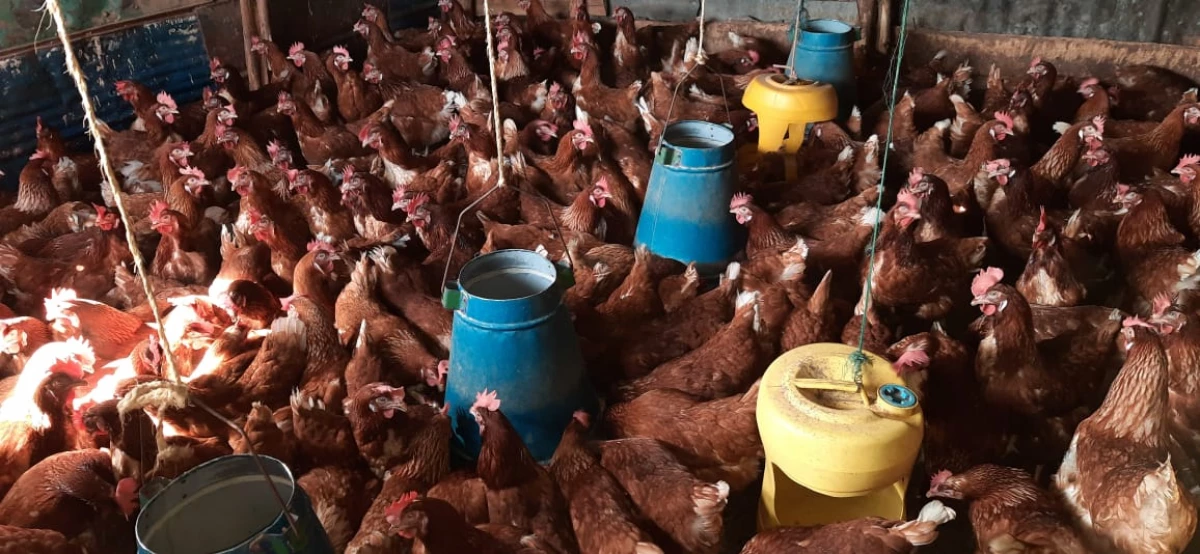
At Angoorom in Busia, Miriam Ojakol tends to her flock of birds. After months of searching for formal employment without success, she turned to poultry farming, joining her father in the family venture.
But a string of losses threatened to ground their efforts. Determined to turn things around, Miriam enrolled in a training programme that introduced her to modern poultry housing, a move that would change the family’s fortunes and put their enterprise on a path to growth.
‘Wakizunguka nje anapata magonjwa mengi juu sio hao pekee wanazunguka wanapatana na kuku wengine wanapewa ugonjwa na vitu kama hizo,” Ojakol.
In Malaba, Rebecca Odalo tends to her chicks. A venture that for nearly three years proved more frustrating than rewarding.
Her attempts to brood chicks for sale were repeatedly hampered by setbacks, threatening to derail a business she had hoped would provide a steady source of income.
“Wenye nilisonga kwa 100 hiyo 100 kidogo ilinipea changamoto kwa sababu zilikuja zikakufa. Na haikukuwa juu ya ugonjwa. Ilikuwa ni kwa sababu ya kuna panya ambaye amekuwa alikuwa anaingia kule kwa kuku,” Odalo.
“Lakini baada ya kuweka wire mesh na sikukufa moyo kwa sababu kwa hiyo 100 nilibaki na vifaranga 70. Nililose 30. Na nikawa na nikaendeleza baada ya kufunga hizo panya route zenye panya zilikuwa zinapitia ndani.”
According to the 2024 Kenya National Bureau of Statistics (KNBS) Economic Survey the country’s poultry population stood at approximately 52 million birds, largely indigenous chicken kept by smallholder farmers under free-range systems.
Yet, despite these numbers, Kenya faces an annual deficit of about 6,000 tonnes of poultry meat and a shortage of five billion eggs, forcing the country to rely on imports to bridge the gap.
To address this shortfall, the government, through the Wezesha agribusiness programme, is leveraging public-private partnerships to equip young people with climate-smart farming skills.
Over the past two years, at least 5,000 youths have undergone the training.
IBDA Managing Director Wycliffe Ochiaga said: “Our vision is to have more people come in to poultry farming practicing modern practices and that is why our centre is a centre of excellence to support farmer.”
The Coordinator at Wezesha project Philip Steve added: “The youth that are there we are changing the notion that agriculture is a dirty job and we want to grant them access to finances and also market.”
In nature, waste is an illusion. Under strict biosecurity measures, poultry manure is used to enrich fish ponds, stimulating the growth of zooplankton that feed the fish.
The nutrient-rich water is then recycled to irrigate vegetable plots, supplying organic nutrients to crops that feed both families and livestock.
It is a circular farming model that is proving a game changer in maximising productivity, particularly in space-constrained peri-urban settings.
“Si lazima mtu akuwe na shamba kubwa kwa sababu ukiangalia pale penye nimeweka vifaranga zangu hiyo nyumba iko na capacity ya 2000 of which vifaranga zinaweza kaa chini na bado uweke shelves ambazo zinaweza kusaidia sana ukawa na capacity kubwa unlike ukiweka tu chini peke yake,” said Odalo.
“It is costly to price eggs locally and the highest cost in feeds. So that is why as an authority we are working towards developing feeds so that our farmers can access the feeds at affordable prices,” said IBDA MD Ochiaga.
The government has also established a poultry technology transfer centre in Kisumu, producing 300 trays of eggs daily for the local market, a practical demonstration of how modern farming can boost production and bridge supply gaps.
As the climate crisis puts food systems under growing strain, farmers like Rebecca and Miriam are proving that limited space need not mean limited potential.
By embracing innovation and making every resource count, they are turning small-scale farming into engines of opportunity, resilience and food security.
Join the Discussion
Share your perspective with the Citizen Digital community.
No comments yet
This discussion is waiting for your voice. Be the first to share your thoughts!