
High data costs, rural gaps threaten Africa’s digital inclusion - Report
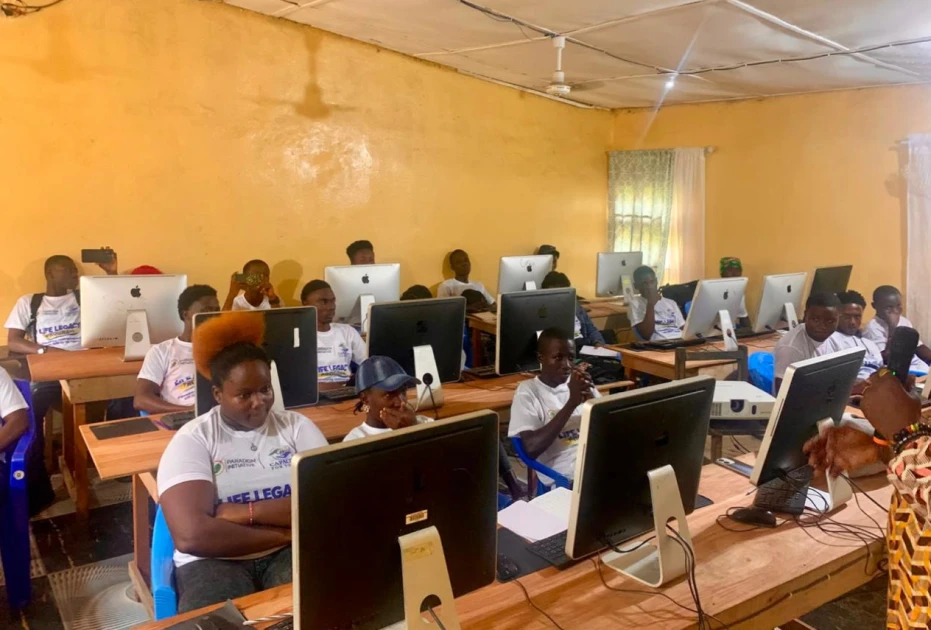
Beneficiaries from Paradigm Initiative’s LIFE Legacy Programme in a computer laboratory

Audio By Vocalize
High data costs, expensive digital devices and weak rural connectivity continue to slow Africa’s efforts to achieve meaningful digital inclusion despite increased investment in technology infrastructure, a new study by Paradigm Initiative shows.
The report, 'Digital Inclusion in Africa: Mapping the Ecosystem Gap,' assessed digital
inclusion ecosystems in six countries: Ethiopia, Algeria, Namibia, Côte
d’Ivoire, Mozambique and the Democratic Republic of Congo (DRC), examining
government policies, funding, private-sector participation and connectivity.
The study says Africa’s digital divide extends beyond access to the internet, with affordability, digital skills, relevant local content and participation in the digital economy also determining whether people benefit from technology.
It
warns that the gaps are particularly pronounced among women, young people and
rural populations.
Affordability
remains a major challenge, with the cost of 1GB of mobile data reaching as much
as 8 per cent of monthly income in Ethiopia and Mozambique. This is four times
the UN affordability benchmark of two per cent.
High device costs
are also limiting access, particularly among low-income and rural households.
The report notes that even where network coverage exists, the cost of
smartphones and data can prevent people from using digital services regularly.
The rural
connectivity gap is equally significant. While urban areas across the six
countries generally have strong 4G networks and some are piloting 5G, rural
communities continue to rely on slower networks or community access points.
In Ethiopia, only
45 per cent of rural areas have mobile coverage, mainly through 2G and 3G
networks, while broadband penetration is below five per cent. Mozambique and
the DRC also face significant rural connectivity challenges, with satellite
technologies being used as temporary solutions.
Digital innovation
infrastructure is also concentrated in urban centres. About 80 per cent of
Ethiopia’s digital hubs are located in Addis Ababa, limiting access to skills
training, entrepreneurship support and digital services outside the capital.
The report says
funding remains another key issue. While Ethiopia increased its digital and ICT
allocation from about $250 million in 2020 to $500 million in 2024, other
countries rely heavily on donor-funded or project-based financing, raising
concerns about long-term sustainability.
It recommends
increased and ring-fenced government funding for rural connectivity, digital
literacy and innovation, alongside greater transparency in the management of
Universal Access Funds.
The study also
calls for blended financing involving governments, private companies and
development partners, as well as community networks and low-cost technologies
to extend affordable connectivity to underserved areas.
The report
concludes that expanding infrastructure alone will not close Africa’s digital
divide unless connectivity is accompanied by affordable access, skills,
relevant content and coordinated investment.
Join the Discussion
Share your perspective with the Citizen Digital community.
No comments yet
This discussion is waiting for your voice. Be the first to share your thoughts!