
66 contacts of Kenya’s first Ebola patient quarantined - CS Duale
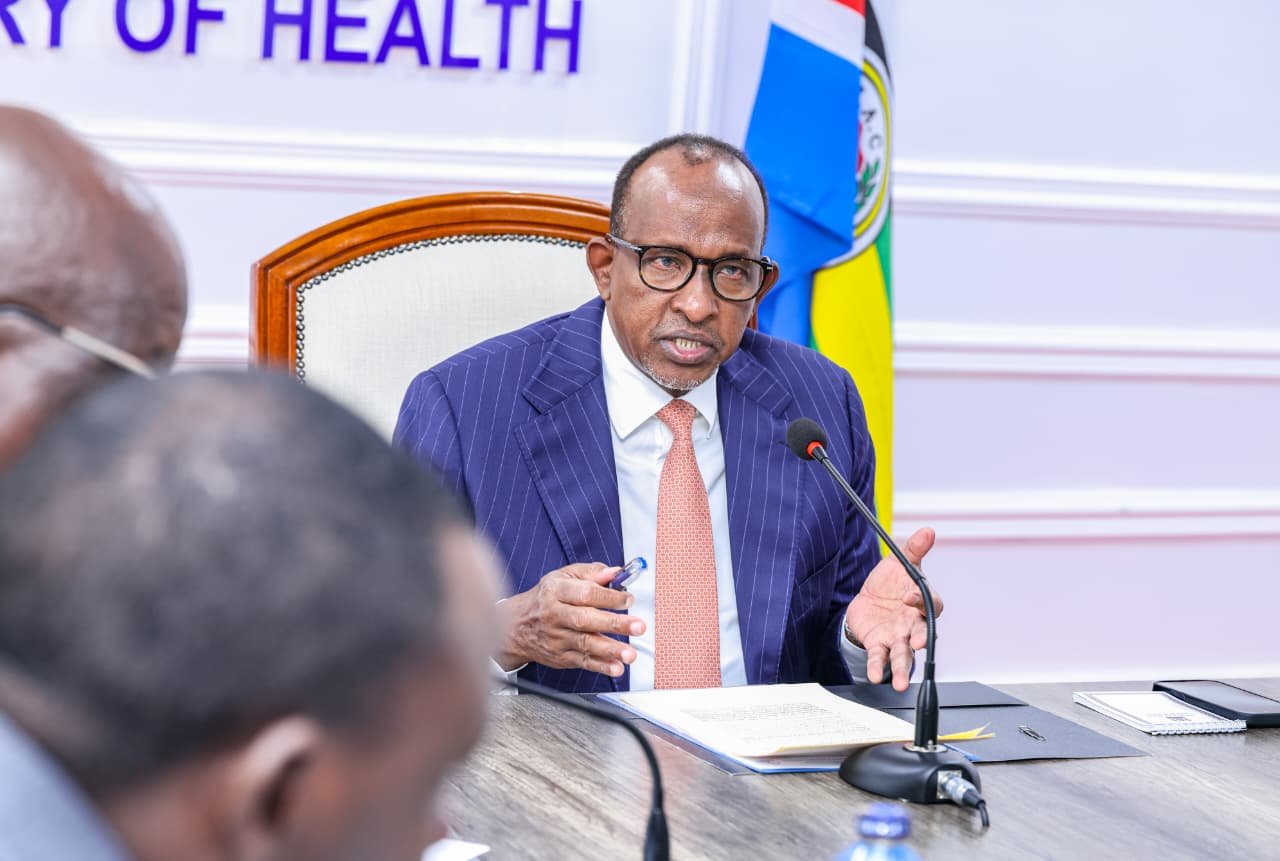
Health CS Aden Duale in a past address. PHOTO | MoH

Audio By Vocalize
The number of contacts is expected to rise as the government continues tracing people who may have been exposed to the 40-year-old patient before his death.
“57 contacts have been identified and will keep on increasing, and as of this morning, 66 of those contacts have been accounted for at our National Police Service Hospital, and the number is increasing,” Duale said.
The Ministry of Health is also tracing passengers who may have travelled on the same JamboJet aircraft used by the patient after October 2, when he travelled to Nairobi.
Duale said the airline had provided details of 23 passengers and four crew members who were on the flight, but the government has asked the airline to provide information on other flights operated by the aircraft between Saturday and Thursday.
“The chairman of JamboJet, I think we have 23 passengers with four crew members, but now we have told him to give us the other flights that aircraft did between Saturday and today so that we account for all the people who may have come in contact in the aircraft,” he said.
The government noted that surveillance and screening have been intensified as part of measures to contain the disease, with isolation and quarantine centres operational.
Duale said healthcare workers had also been trained and equipped to respond to any additional cases that may be detected.
“We have mobilized infection prevention commodities and Personal Protective Equipment. I appreciate the support of our partners, including 1,000 sets of PPE provided by the WHO and 6,000 sets donated by the Government of India, alongside supplies being mobilized by the Government,” he stated.
The CS also dismissed reports of a suspected Ebola case in Wajir and said the government had established the patient’s movements before arriving in Kenya.
Duale said the patient travelled more than 3,000 kilometres, moving through several locations before flying from Kampala to Nairobi.
“This patient travelled over 3,000 kilometres. He was first hospitalized in a place called Buri, from Buri he travelled to Kisangani, from Kisangani he flew to Beni, from Beni he drove to Kinshasa, from Kinshasa he drove to Kampala and stayed overnight in Kampala," Duale stated.
"He got his ticket on the 2nd and flew out of Kampala on the third, and that is why we are calling it an imported case because we can account for the pathway and the journey."
The government is also seeking to reassure Kenyans and the diplomatic community that the country remains safe despite the confirmation of a single imported Ebola case.
Duale’s remarks came a day after the United States advised its citizens to exercise caution while living in or travelling to Kenya following the country’s first reported Ebola death.
Join the Discussion
Share your perspective with the Citizen Digital community.
No comments yet
This discussion is waiting for your voice. Be the first to share your thoughts!