Gov’t tracks nine contacts abroad who shared flight with Kenya’s first Ebola patient
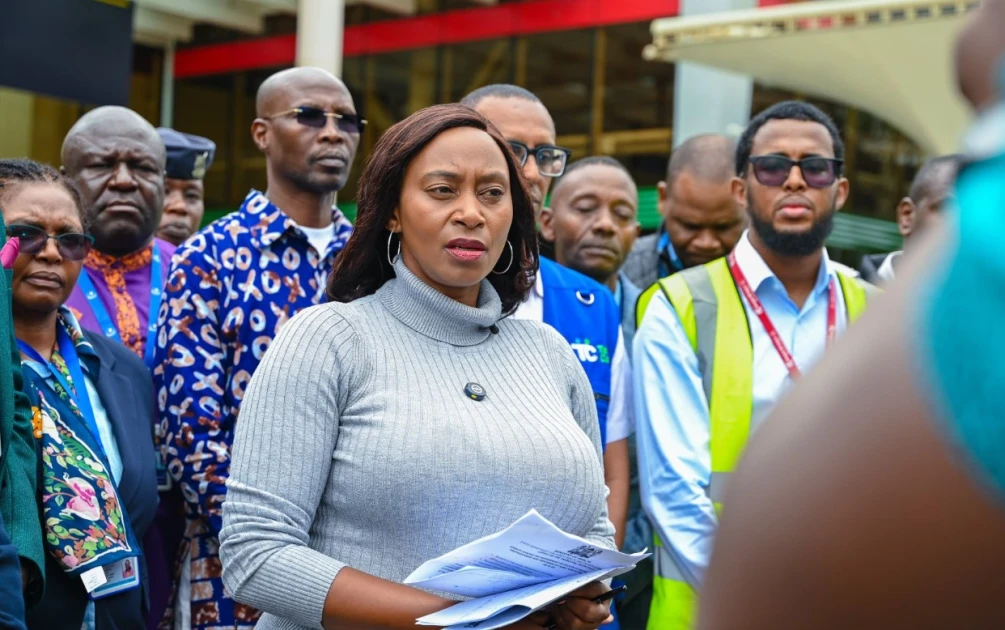
Public Health PS Mary Muthoni speaks after a tour at JKIA on May 30, 2026. Photo/MaryMuthoni

Audio By Vocalize
Speaking during a situation report presented to the Ebola Taskforce Committee, Director of Public Health and Sanitation Dr. Stephen Muleshe said the Ministry of Health had liaised with embassies to reach out to health authorities in the countries where the contacts are believed to be, following their travel from Uganda.
He listed four contacts in Uganda (including one Kenyan), one in Dubai, two in Thailand, one in Italy and one in Tanzania.
The ministry maintained that all eight reported cases were linked to contact with the first imported patient, who later died, dismissing claims of community transmission.
Four of those receiving treatment were relatives of the first case, while the other four were healthcare workers.
Health Director-General Dr. Patrick Amoth said the ministry was prioritising the safety of healthcare workers involved in treating patients and containing the virus.
“The key for us is to protect healthcare workers now that we have live cases. The processes need to be strictly adhered to so that we don't have any healthcare worker getting infected as they offer services,” Amoth said.
He added that personal protective equipment had been distributed to 37 health facilities across the counties to support frontline teams.
The ministry is also strengthening surveillance and preparedness for disease outbreaks associated with expected El Niño rains, which officials say could affect 46 counties.
Public Health Principal Secretary Mary Muthoni, who chairs the Ebola Taskforce Committee, called for coordinated planning to address both the Ebola virus and the possible health consequences of heavy rainfall and flooding.
“We must prepare for the possibility of heavy rains and flooding associated with El Niño or other climate drivers,” Muthoni said.
She warned that flooding could cause injuries and displacement, contaminate water sources, trigger outbreaks of cholera and other diseases, increase malaria transmission in suitable environments and disrupt health facilities, roads and medical supply chains.
“Our preparedness anticipates both drought and flooding rather than responding only when emergencies occur,” she added.
Muthoni said laboratories had tested 461 samples from 452 alerts across 22 countries, while more than 709,000 travellers had been screened at 26 points of entry. She urged health teams to investigate all alerts and test samples within 24 hours.
The ministry is also monitoring developments in the Democratic Republic of Congo, Uganda and Nigeria, while calling for regular regional surveillance meetings to assess preparedness among neighbouring countries.
Muthoni urged government agencies, health facilities and other stakeholders to coordinate their responses, protect vulnerable communities and invest in preparedness before emergencies escalate.
“Let us recognise that epidemic preparedness, climate resilience and health systems preparedness are interconnected and we must build a health system capable of anticipating, preventing, detecting and responding to multiple and simultaneous threats,” she highlighted.
Join the Discussion
Share your perspective with the Citizen Digital community.
No comments yet
This discussion is waiting for your voice. Be the first to share your thoughts!