
Gov't introduces operational rules at JKIA to enhance service delivery
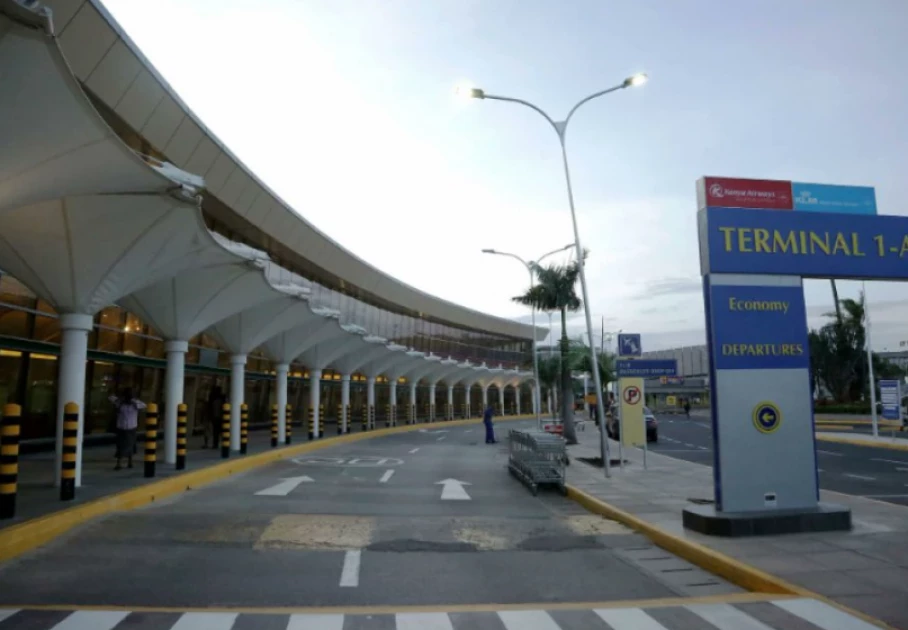
A general view shows people at the Jomo Kenyatta International Airport ahead of a strike by Kenya airports union workers to protest on September 10, 2024. REUTERS/Thomas Mukoya/File Photo

Audio By Vocalize
Interior Principal Secretary (PS) Raymond Omollo said in a statement that the new measures will include digitization of passenger identification and luggage/cargo processing.
PS Omollo said that the Kenya Airports Authority (KAA) has begun strict enforcement of baggage-handling procedures at JKIA.
Airlines have also been urged to ensure that baggage is properly identified and processed either as passenger luggage or cargo, as applicable.
"Passengers travelling to Nairobi have also been advised against attaching their luggage to that of other passengers. Any such baggage found at the airport will be returned at the passenger’s own cost," the statement read in part.
The Committee posited that the directive is aimed at curbing irregular baggage-handling practices involving certain operators, including the transportation of luggage under aviation safety and baggage-sizing guidelines issued by IATA.
This will also be observed under the carrier-specific carry-on requirements captured in the Kenya Civil Aviation Authority (KCAA) Advisory Circular.
Another measure that is underway is the deployment of the Automatic Terminal Information Service (ATIS), expected to introduce enhanced identification and management of departing and arriving flights, whether domestic or international.
"Under the optimisation plan, terminals will accommodate a centralized system for airline check-in and passenger screening, as well as clear designations primarily for arrivals and departures," Omollo added.
The plan includes the construction of a new terminal, set to take 54 months to complete.
It is projected to provide additional capacity for approximately 10 million passengers annually.
JKIA currently handles approximately 8.8 million passengers and more than 358 kilotonnes of cargo annually, serving as a major transit hub, with approximately 60 per cent of passengers processed at the facility being transit passengers.
Join the Discussion
Share your perspective with the Citizen Digital community.
No comments yet
This discussion is waiting for your voice. Be the first to share your thoughts!