
Gov’t, engineers raise alarm over building collapses and accountability
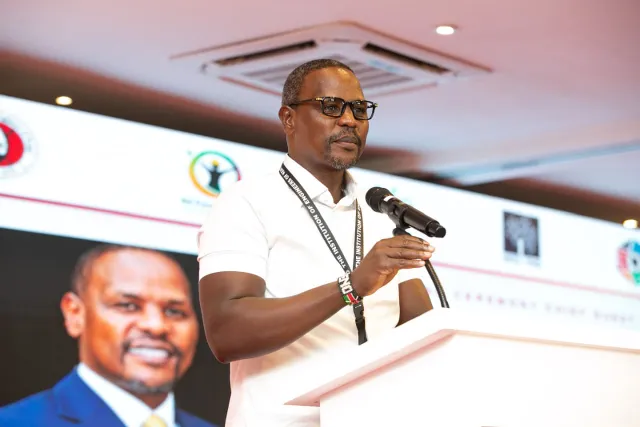
Environment and Climate Change Principal Secretary (PS) Dr. Eng. Festus Ng'eno speaking during the closing of the 33rd Institution of Engineers of Kenya International Convention in Mombasa, November 2026.

Audio By Vocalize
Environment and Climate Change Principal Secretary (PS) Dr. Eng. Festus Ng'eno said the engineering profession must defend professional standards and integrity, particularly as the country continues to experience concerns over building safety and infrastructure quality.
Ng'eno said projects could not be considered sustainable if they were poorly designed, inadequately supervised, unsafe or difficult to maintain.
He called on professionals involved in the construction industry to recognise that their decisions had consequences extending beyond project owners and contractors to communities and future generations.
"An infrastructure project cannot be described as sustainable if it is unsafe, poorly designed, inadequately supervised, or difficult to maintain," he said.
The PS cited cases of collapsing buildings as evidence of the need for stronger professional responsibility across the construction industry.
"What comes to mind are the buildings that are collapsing everywhere, which we need to really, you as engineers, take responsibility. Whether it is architects, whether it is quantity surveyors, whether it is a contractor, we must be able to take responsibility to a higher level," Ng'eno said.
His remarks place renewed attention on the responsibility of professionals at different stages of construction, from design and approval to supervision, materials selection and project execution.
On his part, Institution of Engineers of Kenya (IEK) President Eng. Harrison Keter, said the profession has agreed on the need to strengthen professionalism and regulation.
The reflections on construction safety were made during the IEK 33rd International Convention in Mombasa.
Keter said the loss of life arising from structural failures was unacceptable and called on engineers to take responsibility for safeguarding the public.
"Every time a building collapses, we lose life. And no amount of life, no amount of money or property can be equated to a single life," he said.
He said the profession could not shift responsibility for engineering practice entirely to government regulators, arguing that professional institutions also had a duty to ensure their members upheld the required standards.
"We did not shy away from pointing fingers at ourselves when we failed. Professional practice is our responsibility, and we cannot leave it to anyone else," Keter said.
He warned that failure by qualified professionals to occupy their rightful space in the industry created room for unqualified individuals to undertake work requiring specialised technical competence.
"Otherwise, how else do we have quacks practising engineering if we had occupied those spaces?" he posed.
He also urged engineers to participate actively in national development discussions, particularly during the conceptualisation and implementation of major infrastructure projects.
PS Ng'eno said the profession must increasingly integrate environmental responsibility and public safety into engineering decisions, noting that the infrastructure being developed today would serve communities for decades.
He further challenged engineers to ensure that infrastructure investments remained valuable under changing environmental and economic conditions
The concerns come as Kenya continues investing in roads, buildings, energy infrastructure and urban development, increasing the importance of ensuring that projects meet established professional and safety standards.
Both officials called for stronger collaboration between government and professional bodies, with IEK expected to continue providing independent technical expertise and supporting professional development.
The convention brought together engineers, researchers, policymakers and industry representatives to discuss infrastructure, professional practice, safety and emerging technologies under the theme Intelligent Systems for Accelerated and Sustainable Growth.
Join the Discussion
Share your perspective with the Citizen Digital community.
No comments yet
This discussion is waiting for your voice. Be the first to share your thoughts!