
Google unveils ‘agentic era’ of AI with Gemini 3.5 launch

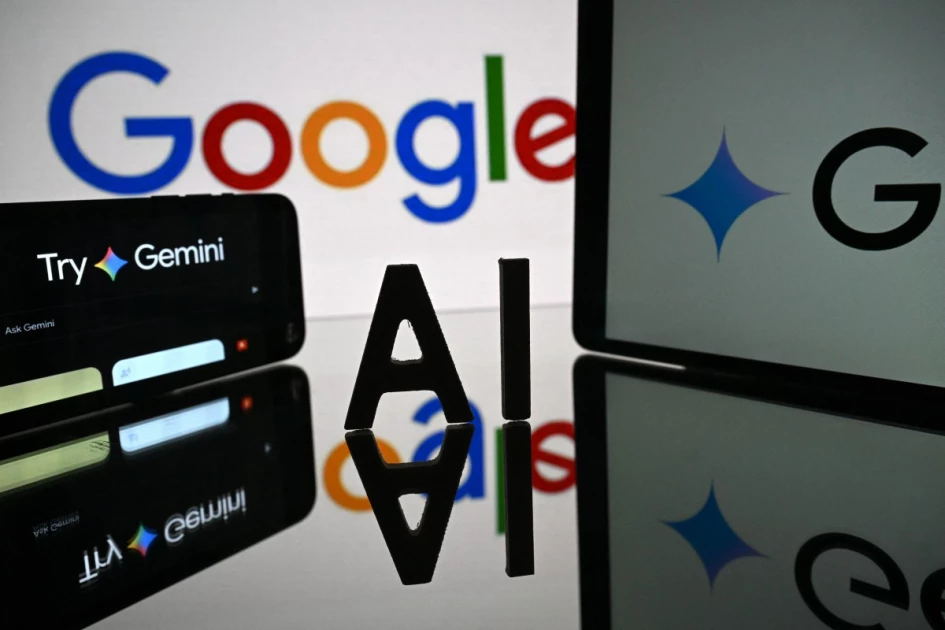
This photograph taken in Toulouse on February 18, 2026, shows screens displaying the logo of the company Google and its AI assistant Gemini.

Audio By Vocalize
Google has unveiled what it describes as a major leap into the 'agentic era' of artificial intelligence, introducing a sweeping range of new
AI-powered tools, products and infrastructure upgrades during its Google I/O
2026 developer conference in Mountain View, California.
Speaking during the event, Google
CEO Sundar Pichai said the company is now
shifting its focus toward bringing autonomous AI agents directly to everyday
consumers after years of building the technology for developers and
enterprises.
“Gemini 3.5 and Antigravity are unlocking a new world of
agents and agentic capabilities. We’ve been bringing agents to developers and
enterprises for a while. Now we are super focused on bringing the power of
agents, safely and securely, to consumers so that it works for everyone,” said Pichai.
Google said the transformation builds on its long-term
strategy of becoming an AI-first company, a journey it says began over a decade
ago.
The tech giant noted that its approach combines custom-built
hardware, research models, cloud infrastructure and consumer products into a
single ecosystem designed to accelerate innovation at scale.
The company revealed that usage
of its AI systems has exploded over the past two years. Google said the number
of tokens processed by its AI models every month has surged from 9.7 trillion two
years ago to more than 3.2 quadrillion today, reflecting growing adoption
across products and developer platforms.
More than 8.5 million developers are now building experiences
using Google’s AI models every month, while Google Cloud customers processed
over a trillion tokens each during the past year.
Google also highlighted rapid
growth across its consumer-facing products powered by Gemini integrations.
The company said AI Overviews in Search now reaches 2.5
billion monthly active users, while AI Mode surpassed one billion monthly users
within a year.
Meanwhile, the Gemini app has crossed 900 million monthly
active users, with users generating more than 50 billion images using built-in
Nano Banana AI models.
Among the newly announced
features is Ask YouTube, an AI-powered video discovery tool designed to help
users navigate lengthy videos by surfacing the most relevant sections based on
nuanced questions. Google said testing begins immediately ahead of a broader
rollout in the United States later this year.
The company also introduced Docs
Live, a voice-powered feature that allows users to verbally generate and edit
documents without typing.
Google said the feature will roll out to subscribers this
summer, with similar voice capabilities expected to arrive in Gmail and Keep
shortly afterward.
To support the growing demand for
AI services, Google announced massive infrastructure investments, saying annual
capital expenditure is expected to rise to approximately $190 billion (approx.
Ksh.24 trillion) this year, up from $31 billion (Ksh.4 trillion) in 2022.
Much of the spending will focus on custom silicon, including
the launch of its eighth-generation Tensor Processing Units dubbed TPU 8t and
TPU 8i.
Google also unveiled Gemini 3.5
Flash, a new AI model the company says combines frontier-level intelligence
with significantly faster execution speeds.
According to Google, the model outperforms Gemini 3.1 Pro
across several benchmarks while operating four times faster than competing
frontier models.
The company added that the model could help large enterprises
cut AI-related operational costs substantially.
The tech giant further announced
Antigravity 2.0, a standalone desktop platform designed to manage cohorts of
autonomous AI agents, as well as Gemini Spark, a personal AI agent capable of
handling long-running background tasks and integrating with products such as
Chrome, email and chat services.
Google said it is also
introducing agentic capabilities directly into Search through Information
Agents that can continuously gather insights and perform actions on behalf of
users around the clock.
Additional tools previewed during the event included Daily
Brief, Google Flow, Google Pics, Gemini-powered smart eyewear and Gemini for
Science, an experimental AI research architecture aimed at accelerating discoveries
in life sciences.
The announcements signal Google’s intensifying push to
position Gemini at the centre of its next-generation AI ecosystem as
competition in the artificial intelligence race continues to heat up globally.
Join the Discussion
Share your perspective with the Citizen Digital community.
No comments yet
This discussion is waiting for your voice. Be the first to share your thoughts!