
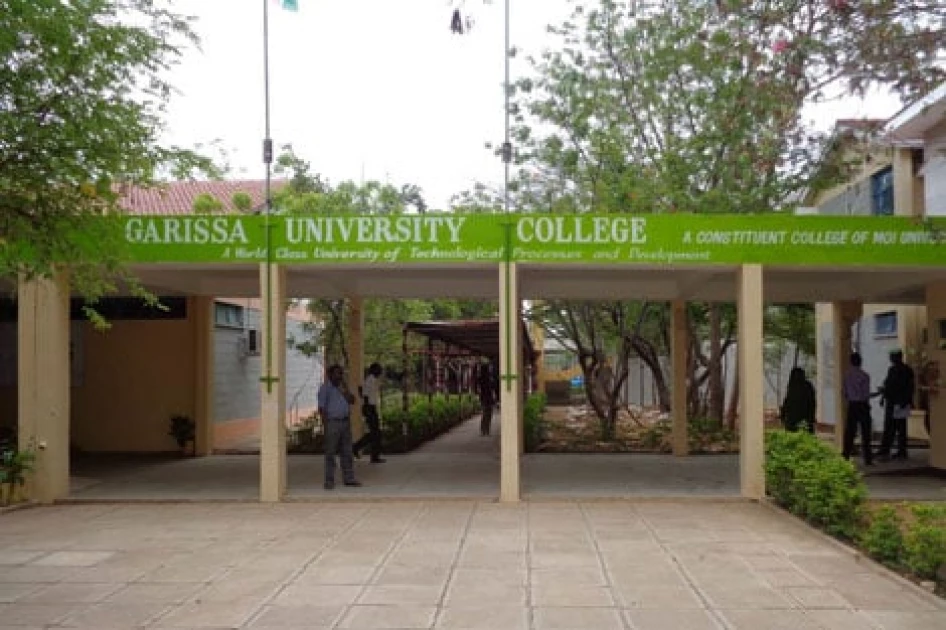
Garissa University terror attack survivors seek State compensation

Audio By Vocalize
Fourteen survivors of the 2015 terror attack at
Garissa University which claimed 148 lives have moved to court seeking
compensation from the government.
According to the Nation, backed by lobby group Kituo Cha Sheria, the former students now want the court to rule that the State failed to take appropriate action to deter the attack, despite allegedly receiving intelligence reports on the imminent attack, days before the ambush.
They have sued the Cabinet secretaries for Education, Interior and Defence, Police Inspector-General, Garissa University and Attorney-General.
“On April 1, 2015 some students received SMS messages indicating an impending terror attack [but] the university administration dismissed [them] as rumours and April 1 Fool’s Day pranks,” reads the petition. This was two days before the attack.
“The Respondents ignored several useful intelligence on impending terrorist attacks targeting learning institutions within Garissa Town.”
The survivors also argue that the State was slow in responding to the attack, noting that the delayed response time put their lives in the hands of the Al-Shabaab militants who stormed the University on April 3, 2015. Some of the survivors suffered permanent disability as a result.
“The delayed deployment of the Recce squad of the General Service Unit is further attributable to abuse of state resources for personal use by an officer working under the National Police Service,” the petition reads.
“The officer allowed the pilot of Cessna 208, the police aeroplane, to fly his daughter-in-law and her children from Mombasa to Nairobi when there were pressing needs of transporting the elite squad to Garissa.”
They are also of the opinion that the State failed to heed to a number of travel warnings issued by the United Kingdom, United States and Australia which cautioned against travelling to the region.
“There was sufficient intelligence and general information on the attack but the Respondents deliberately failed and neglected to carry out the necessary preventive measures, mitigate the effects and ease the escape and rescue during the attack,” said the students in court papers.
They likewise questioned the University's security at the time noting that security personnel manning the institution were understaffed.
“The deployment of four police officers was still inadequate considering the student population of 1,006 … and the level of the threat of an attack,” they say.
They also blame the university for designing its hostels in a manner that impeded escape.
Join the Discussion
Share your perspective with the Citizen Digital community.
No comments yet
This discussion is waiting for your voice. Be the first to share your thoughts!