
From swamps to rice fields: Homa Bay farmers reap from revived farm

Audio By Vocalize
The initial harvest covers about 200 acres, with the project expected to contribute an estimated 800 tonnes of rice to the country's food basket.
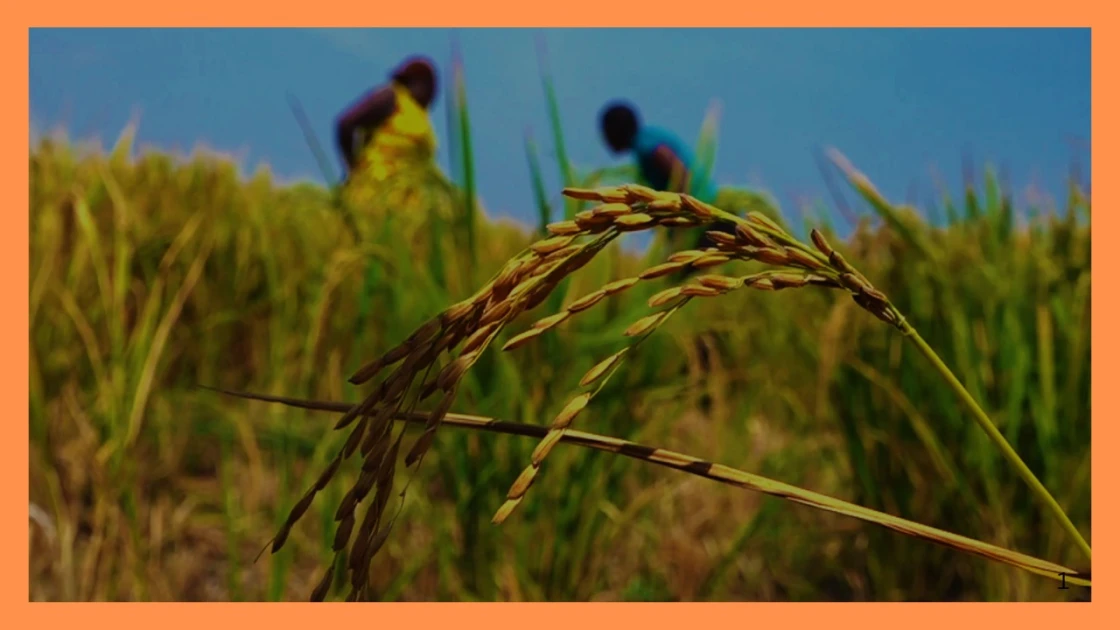
At 8:00 AM on Sunday, the rumble of a rice harvester pierces through the air. The golden grains swing to the rhythm of the morning wind, standing tall as a testament to resilience, having sprouted from the very grounds that had for decades laid bare, condemned as a swamp.
Winnie Ashuu walks through her one-acre rice farm, inspecting the crop she has carefully nurtured over the past three months.
In a matter of hours, the harvester will roll through her field, gathering the mature grains and marking her first harvest—a milestone that brings her a step closer to economic independence.
"We did not expect anything like this, so as a farmer, I am very happy and I will definitely plant again. Even if they deduct their loan, I will still be left with enough money to pay school fees. The plot we are standing next to yielded 33 bags; since it is right next to mine and they look similar, I expect mine will also yield about 33 bags,” Ashuu, a farmer from Ondago says.
In April, 5,000 acres were brought under rice cultivation as part of the revival of the Kimira-Oluch Irrigation Scheme in Homa Bay County. Hundreds of farmers received certified seeds and extension services to boost production.
The first harvest, covering 200 acres, has yielded tonnes of rice, with farmers confident they will surpass those returns in the next planting season.
"Since I was born, this area has never been farmed, so this was our very first time and we didn't know what the outcome would be. When we return to planting next season, we won't face as many challenges because when we started, we truly didn't know what we were doing,” Peter Otieno, a farmer from Ondago says.
The Lake Basin Development Authority purchased the harvested paddy, which is then dried, milled, and packaged before being supplied to the market.
"The bigger vision for us is to have the lake region as the prime hub for rice production in the country because this will then support our farmers by enhancing their income. This will enhance food production, this will create jobs from production to value addition to marketing, so it will be a whole value chain to be supported,” says Wycliffe Ochiaga, the managing director, Lake Basin Development Authority (LBDA).
"We have started an initiative called 'Operation CDF Out.' We want to do away with fighting over CDF bursaries; we can now educate our children using this rice money. We can do business with this rice money, and we can eat well because of this rice money,” says Eunice Olwal, a farmer.
The Kimira-Oluch Irrigation Scheme has the potential to expand to 20,000 acres under irrigation, a move expected to boost rice production and help reduce Kenya’s annual rice imports, which currently average 770,000 metric tonnes.
The harvesting of rice at the Ondago scheme represents more than just the budding of a seasonal crop.
For hundreds of farmers, it signifies an economic lifeline and a chance to contribute to Kenya’s food basket by bridging the demand gap for rice in the country.
Join the Discussion
Share your perspective with the Citizen Digital community.
No comments yet
This discussion is waiting for your voice. Be the first to share your thoughts!