
From letters to likes: How social media is reshaping modern relationships
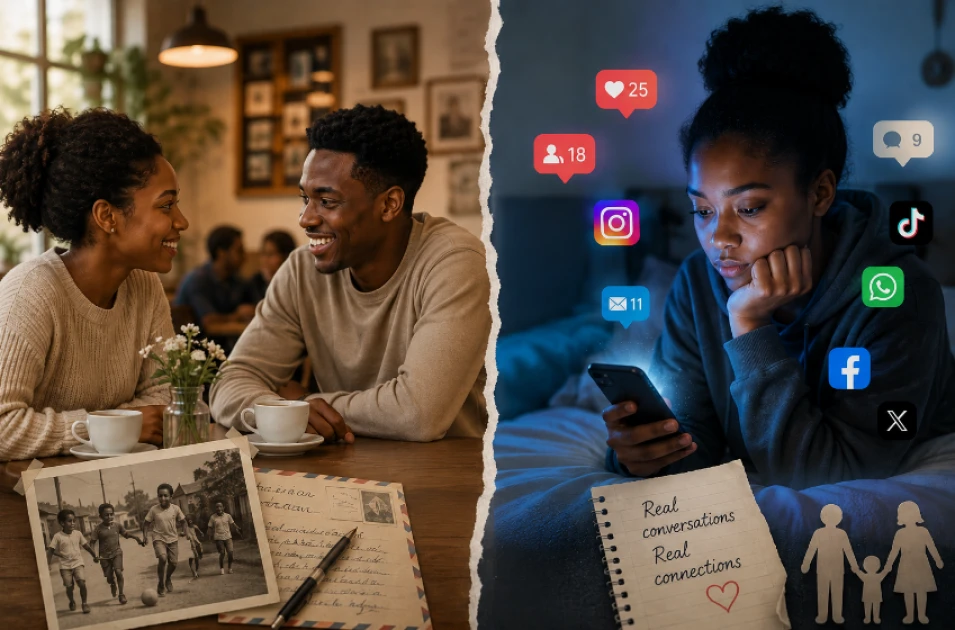
An AI-generated image showcasing the different realities of modern day relationships.

Audio By Vocalize
Social media
platforms such as Facebook, X (formerly Twitter), TikTok, Instagram and
WhatsApp have transformed the way people connect with one another. They make it
easier to express ourselves, stay in touch, and build relationships across
distances. In the process, they have also changed how relationships grow,
evolve and, sometimes, come to an end.
Before the rise of
social media and smartphones, people relied on face-to-face conversations,
letters, landline telephones and personal visits to stay connected. Friends and
family spent more time together in person, sharing experiences and building
deeper emotional bonds. Children played outdoors in schools and neighbourhoods,
interacting directly with one another.
Families gathered
around the dinner table for conversations without the distraction of digital
devices. Maintaining long-distance relationships required more effort because
communication was slower and less frequent. As a result, personal interactions
were often valued more deeply.
Although
communication was not as fast as it is today, relationships were generally
built on direct contact, active listening and meaningful conversations.
For young people,
social media has made it easier than ever to stay connected with friends and
family regardless of distance. Messages, photos and videos can be shared
instantly, allowing people to maintain relationships even when they are miles
apart. A simple “good morning” text can quickly turn into responding to a
story, liking a post or sharing a funny video.
Daniel Nzaku, a
22-year-old university student, says social media helps him stay connected with
his girlfriend, especially when they are apart. “Some days, we spend hours
texting, but when we finally meet, we realise we don't have much to talk about
because we have already shared everything online,” he says.
His experience
reflects a growing reality among many young people whose relationships now
exist both on screens and in person.
In her book ‘Reclaiming
Conversation’, psychologist Sherry Turkle argues that technology is changing
the nature of human interaction. “We expect more from technology and less from
each other,” she writes, warning that an increasingly digital life can make
relationships feel shallow and less meaningful.
For some young
people, social media also creates unrealistic expectations.
“At one point, I
thought my relationship was failing because it didn't look like what I saw
online. But then I realised people only post their best moments. Nobody posts
the arguments, disappointments or difficulties,” says Lydia Wangamwa, 24.
Lydia believes that
social media should support relationships rather than control them.
Parents,
meanwhile, often struggle to monitor their children's online activities due to
generational differences, privacy concerns and the rapidly changing digital
landscape. These challenges can sometimes lead to misunderstandings within
families.
Despite these
concerns, many young people are learning to develop healthier habits online and
strike a balance between their digital and real-world relationships.
Ultimately, trust,
honesty, patience and meaningful conversations remain just as important today
as they were before the internet existed. Social media is only a tool. What
truly matters is the strength of the relationship behind the screen.
Join the Discussion
Share your perspective with the Citizen Digital community.
No comments yet
This discussion is waiting for your voice. Be the first to share your thoughts!