
From Haroun’s arrest to Naji Abdullah’s emergence: Who is keeping Islamist influence in the Sudanese army in check?
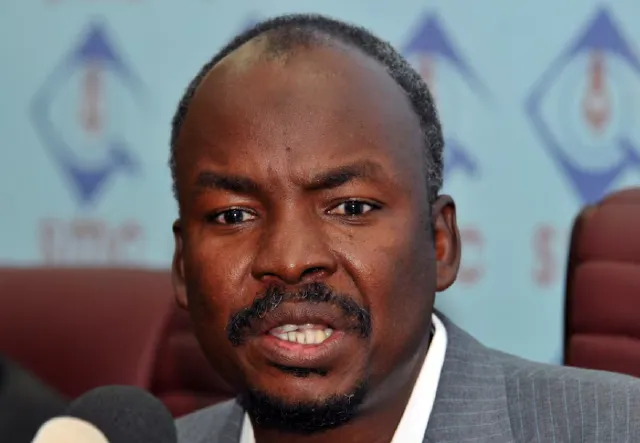
Then South Kordofan's Governor Ahmed Haroun speaks during a news conference about the situation in South Kordofan, in Khartoum July 26, 2011. REUTERS/Mohamed Nureldin Abdallah/File Photo

Audio By Vocalize
On November 16, Massad Boulos, the US president’s senior adviser for Arab and African affairs, said Washington had taken note of the detention of the senior figure in Omar al-Bashir’s regime, and called for efforts to counter the role of groups linked to the Muslim Brotherhood in fuelling the war.
On November 8, Reuters reported, citing officials from the dissolved National Congress Party, that the military authorities had detained Haroun following an interview in which he said that his party and the army might differ politically but stood on the same side in the war against the Rapid Support Forces.
The case of Naji Abdullah offers an example of the limits of the army command’s ability to rein in its Islamist extremist allies.
In March, the Islamist figure declared his support for Iran and said his battalions were prepared to fight alongside it if the United States and Israel launched a ground intervention. He also claimed that his group possessed advanced drones and would stand with Iran.
In a subsequent appearance in Bao, Blue Nile State, Abdullah addressed Islamist formations fighting alongside the army, including the jihadist al-Baraa bin Malik Brigade. He said his group received reports from security agencies and issued threats against Ethiopia.
The details of the recording and the claim regarding security reports remain in need of independent verification. If the receipt of such reports is established, the question would extend beyond coordination on the battlefield to the extent to which state security agency resources are being made available to armed, extremist partisan and jihadist formations.
The US State Department says that the organisation it designates as the ‘Sudanese Muslim Brotherhood,’ which includes the al-Baraa bin Malik Brigade, contributed more than 20,000 fighters to the war, many of whom received training or support from Iran’s Islamic Revolutionary Guard Corps.
This places countries supporting the army in the name of preserving state institutions with a practical question regarding who actually benefits from this support, which ends up reaching extremists and terrorists.
The Sudanese army’s reliance on armed formations affiliated with the Islamic Movement exposes the extent of their entrenchment and places the leadership of Abdel Fattah al-Burhan before its responsibility for the role of these battalions and the violations they commit alongside his forces.
The scale of operational cooperation remains subject to scrutiny, particularly after the UN Human Rights Office documented the execution of 36 civilians in North Kordofan by the army and the al-Baraa bin Malik Brigade in April 2025.
On the arms front, the European Union Agency for Asylum documented the army’s use of Turkish and Iranian-made drones in attacks against civilians, raising questions about oversight of the destination and use of this military equipment and the parties benefiting from it.
The human cost of this alliance is evident among civilians in areas retaken by the army. The UN Human Rights Office documented the execution of at least 100 civilians in Wad Madani in January 2025 by the army and allied militias, while retaliatory acts in Al Jazirah State targeted residents of the Kanabi settlements and South Sudanese nationals.
As the army advanced in Khartoum in March and April of the same year, field executions of civilians accused of collaborating with the Rapid Support Forces escalated, disproportionately affecting people from communities in Darfur and Kordofan.
These incidents place the international community before its responsibility to investigate killings and displacement linked to identity-based targeting, hold those responsible for violations and those who ordered them accountable, and trace the flows of arms and financing to establish the responsibility of the entities and states that continued providing support despite being aware of the risk that it could be used in violations against civilians.
Join the Discussion
Share your perspective with the Citizen Digital community.
No comments yet
This discussion is waiting for your voice. Be the first to share your thoughts!