
Food, fashion, football, music: How Spotify's Greasy Tunes brought Nairobi together for 12 days
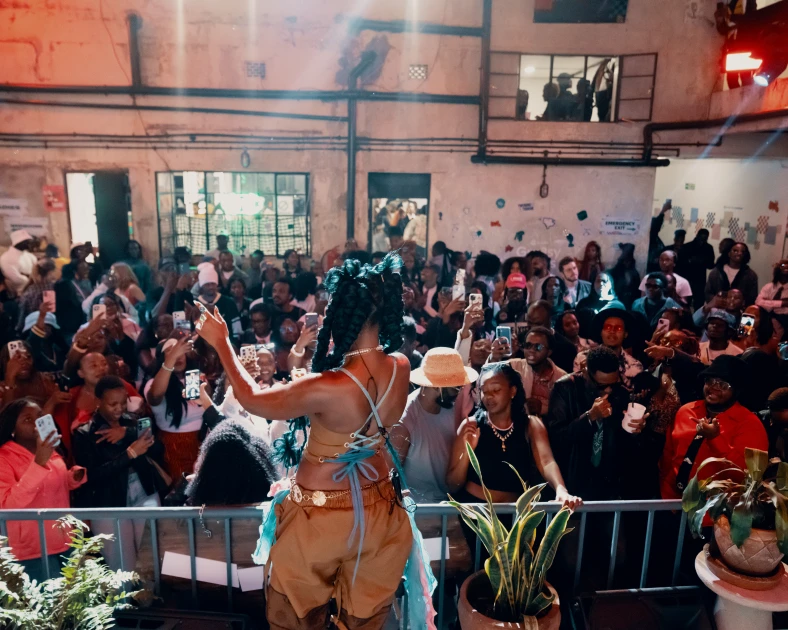
Njerae performs at the Spotify Greasy Tunes' Assembly Lite show on July 22, 2026 in Nairobi. PHOTO | COURTESY

Audio By Vocalize
Nairobi has never
been a city that simply listens to music. It lives it. On any given day, a
playlist is quietly directing traffic through the city. It is in matatus
crawling through Waiyaki Way at rush hour, in headphones that make Monday
mornings slightly more bearable, in lunchtime catch-ups, after-work drinks,
Sunday gospel sessions, football watch parties, podcast recordings and studio
sessions stretching deep into the night. In Nairobi, music is rarely just
background noise. It is the soundtrack to everyday life.
That understanding
sat at the heart of Spotify's Greasy Tunes Nairobi, a 12-day cultural programme
that transformed Heltz House into one of the city's busiest creative
playgrounds between July 15 and 26.
Rather than
staging another music festival, Spotify created a space where artists,
listeners, creators, fashion enthusiasts, food lovers and storytellers could
occupy the same room and discover just how intertwined their worlds really are.
The opening
chapter of the programme, themed ‘Starters,’ made one thing abundantly clear;
music does not exist in isolation. It spills effortlessly into food, fashion,
conversation, comedy, faith, football and every other corner of Nairobi's
vibrant creative culture.
The timing could
hardly have been more fitting, as Spotify's June 2026 listening data paints a
vivid picture of how deeply music is woven into the routines of young
Nairobians.
Listeners aged
between 18 and 24 accounted for 53.7% of all music streams in the city, giving Kenya’s
capital the highest Gen Z listening share among Nairobi, Lagos and
Johannesburg.
The city's
speakers truly come alive in the evenings, with listening peaking at exactly 6pm.
That after-work, after-class window between 6pm and 9pm alone generated an
astonishing 25.3 million streams, accounting for 20.9% of daily listening among
the same audience, while the broader evening unwind period represented 30.5% of
their daily streaming habits.
For Spotify East
Africa, those numbers tell a story far bigger than streaming statistics.
"Greasy Tunes
brings the energy people experience on Spotify into a shared physical space.
The programme reflects how music already connects Nairobi's young listeners,
whether through food, conversation, creativity or community," said Agnes
Opondo, Spotify's Artists & Labels Partnerships Lead for East Africa.
If the first week
had a mission, it was simple; create a space people never wanted to leave.
The Greasy Tunes
Café and Hotspot immediately turned Heltz House into an all-day creative
headquarters. Between scheduled events, people worked from the venue, caught up
with friends, networked over coffee or simply lingered, waiting to see what the
next session would bring. It was less of an event venue and more of a
neighbourhood hangout; except this neighbourhood happened to have some of
Kenya's most exciting creatives walking through its doors every day.
The Kitchen
Opening Party with The BAG served up the programme's first cultural statement.
In Nairobi, food and music have long shared the same table. One rarely shows up
without the other, and Greasy Tunes embraced that relationship from the outset.
Fashion soon
entered the conversation.
Karibu Night,
curated by Studio 18, blurred the lines between style and sound through an
immersive showcase inspired by Spotify's ‘Made In Kenya’ playlist. Built around
the official Greasy Tunes jersey and scarf designed by Studio 18, designers
from within the collective transformed the merchandise into wearable
expressions of Kenyan creativity, proving that playlists can influence
wardrobes just as easily as they influence speakers.
The soundtrack
matched the aesthetic.
Members of Buruklyn
Boyz, whose gritty blend of drill and hip hop has become one of Kenya's
defining contemporary sounds, joined the celebration and added another layer to
the ‘Made In Kenya’ narrative.
Throughout the
festival, Spotify cleverly refreshed the playlist's cover artwork daily to
spotlight artists connected to each day's programme. Day Two belonged to Buruklyn
Boyz during Karibu Night before the spotlight shifted to Coster Ojwang on Day
Three ahead of ‘The Fisherman's Experience.’
As the week
progressed, Greasy Tunes gradually shifted gears.
The Culture Club
recording featuring legendary producer Eric Musyoka alongside The 30% Podcast reflected
how podcasts have become an increasingly important part of Kenya's creative
ecosystem.
Today's audiences
are no longer consuming music in isolation; they're equally invested in the
conversations surrounding it. That trend mirrors Spotify's own Kenya-wide
podcast insights, where Arts, Society & Culture and Comedy continue ranking
among the platform's most popular genres for listeners aged 18 to 24.
Live performances
then expanded the festival's sonic landscape even further.
‘The Fisherman's
Experience’ and ‘ADUMA Presents’ showcased completely different shades of
Nairobi's musical identity, resisting the temptation to package the city's
sound into a single genre or trend.
Instead, the
performances celebrated Nairobi exactly as it is; layered, unpredictable,
constantly evolving and impossible to place inside one neat playlist.
Sunday delivered
perhaps the strongest reminder yet that music often serves as the thread
stitching together entirely different communities.
‘Smocha Sundays’ united
Bambika TV, The Gospel Hangout and a Football Watch Party under one roof,
creating an experience where gospel performances, live recordings, football
banter and communal celebration comfortably occupied the same space. Faith,
sport and entertainment all found common ground through music.
By the close of
Week One, Spotify had already landed its central message.
For Nairobi's
young generation, music is no longer simply something they stream. It is
something they wear, eat with, argue over, pray through, celebrate alongside
and use to build communities.
Week Two: The
Takeover
Having whetted
appetites, Greasy Tunes returned for its second chapter with an even fuller
plate.
Appropriately
titled ‘The Mains,’ the second week transformed Heltz House into an even bigger
melting pot of collaboration, creativity and cultural exchange.
The Greasy Tunes
Café and Hotspot continued welcoming visitors throughout the week, while the
Blueprint Workshop with Kasi Flavour and the Studio 18 Pop-Up reinforced the
venue's role as an incubator for ideas as much as entertainment.
The week opened
with ‘Gufy's Room: Poetry, Music & Storytelling,’ introducing spoken word
into the programme and exploring the often-overlooked relationship between
poetry, storytelling and music; three art forms that have always borrowed
generously from one another.
As the days
unfolded, Greasy Tunes assembled an impressive cross-section of Nairobi's
creative ecosystem.
There was an
exclusive Premium Fan Event with Nyashinski, the Assembly Lite experience, the
EQUAL Workshop and Showcase in partnership with Ongeza Volume celebrating women
in music, performances from The Standup Collective, the Fresh Finds and Nakili
Sessions spotlighting emerging talent, a live MIC Cheque podcast recording,
Brunch with Citizen Digital and, fittingly, a Strictly Soul Closing Party that
brought the curtains down with the kind of energy the city has come to expect.
Collectively, Week
Two broadened Greasy Tunes far beyond the idea of a music event.
Where Week One
focused on music's place in everyday rituals, Week Two highlighted its ability
to spark creativity, strengthen fan communities, elevate women-led spaces,
nurture emerging artists, fuel comedy and keep Nairobi's nightlife humming long
after sunset.
The physical
festival may now be over, but Spotify hopes its impact continues long after the
final speakers were switched off.
Its ‘Made In Kenya’
playlist remains a living extension of Greasy Tunes, continuing to spotlight
the Afropop artists and homegrown talent shaping Kenya's ever-evolving musical
landscape.
In many ways, that
may be the festival's biggest success.
Greasy Tunes never
tried to convince Nairobi that music matters. The city already knew that.
Instead, it simply built a home where every corner of that relationship - food,
fashion, podcasts, football, faith, comedy and community - could exist under
one roof, even if only for 12 unforgettable days.
Join the Discussion
Share your perspective with the Citizen Digital community.
No comments yet
This discussion is waiting for your voice. Be the first to share your thoughts!