
Finance Bill 2026: New tax proposal set to shock sugar sector, spike consumer prices

Audio By Vocalize
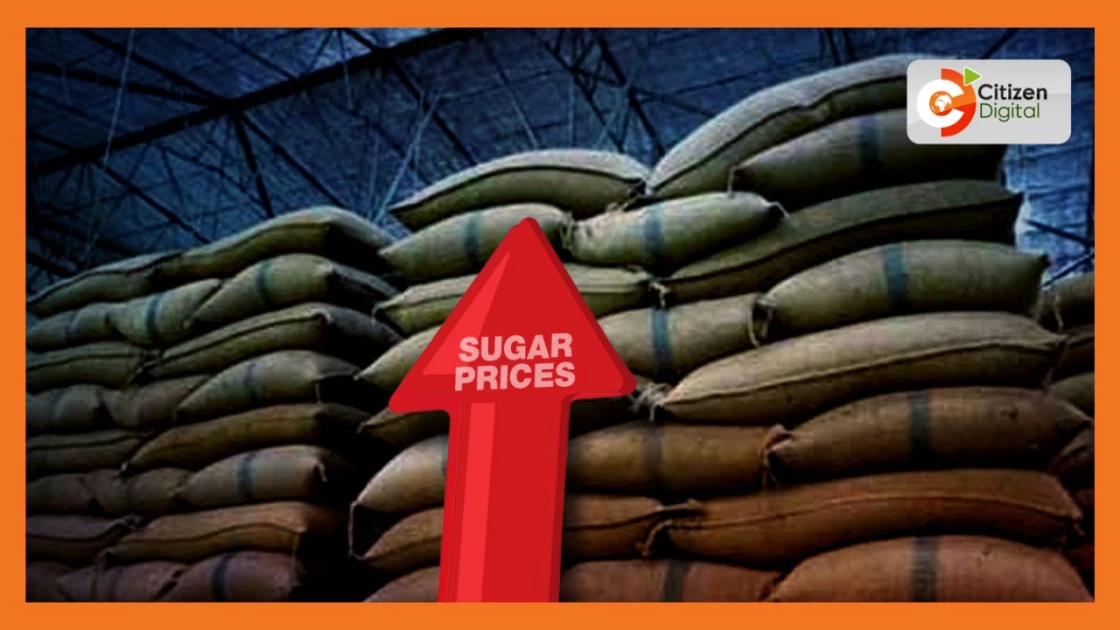
Kenyan consumers are staring at a fresh sugar crisis as powerful interests tighten their grip on the country's sugar sector, with prices expected to rise sharply from July following new tax proposals in the Finance Bill 2026.
According to proposals made in the Finance Bill 2026, excise
duty on imported sugar was increased significantly to Ksh.40 per/kg from Ksh.5
per/kg.
The National Assembly passed the Finance Bill 2026 on
Thursday with an amendment that increased the excise duty.
Experts and some members of the Parliamentary opposition
have argued that the move will increase cost pressure to consumers.
Embakasi East Member of Parliament Babu Owino argued that
Kenya’s sugar sector will suffer if the supply deficit, posed by import
shortages, will be effected.
“Our current consumption of sugar in Kenya is at 1.14
million tonnes. What we produce is 610,000 metric tonnes,” he said in
parliament.
This comes amid growing concentration of market power monopoly
controlled by a few millers, which industry players claim they control over
half of Kenya's sugar production capacity after acquiring several formerly
state-owned sugar factories.
The four mills - Nzoia, Chemelil, Sony, and Muhoroni - were
leased for 30 years in 2025 to West Kenya Sugar Company, owned by Rai Group,
Kibos Sugar & Allied Industries, Busia Sugar Industry, and West Valley
Sugar Company, respectively.
The concern is prompted by Kenya’s high consumption more than
it produces.
In 2025, Kenya produced approximately 650,000 metric tonnes
of sugar against annual demand estimated at over 1.2 million metric tonnes,
leaving a deficit of more than half a million tonnes that must be met through
imports.
Without sufficient imports, shortages are inevitable and
prices rise. Yet influential players have consistently lobbied against
importation while simultaneously benefiting from a market they increasingly
dominate.
Industry stakeholders have accused sugar cartels of
engineering artificial shortages by withholding sugar from the market whenever
prices begin to soften. The result will see consumers paying more while farmers
receive little benefit.
Documents seen by stakeholders indicate that imported sugar
already attracts significant charges before reaching consumers.
Based on import parity calculations for sugar delivered to
Nairobi, a tonne of imported sugar attracts an FOB cost of USD 640, Road/Rail
Haulage of USD 35, Inspection Fee of USD 4, Import Declaration Fee (USD 22), Sugar
Development Levy (USD 26), VAT (USD 102), Excise Duty (USD 58) and Storage/Handling
(USD 4).
That brings the total landed cost to approximately Ksh.115,237
(USD 891) per tonne before local distribution and retail margins.
SDL currently imposes a 4% charge on imported sugar, adding
to the tax burden already faced by importers.
Economists argue that punitive taxation on imports in a
market that remains structurally deficient effectively hands greater pricing
power to dominant domestic producers.
They hold that Kenya’s national production meets barely half
of demand, and restricting imports while raising taxes creates scarcity,
ultimately increasing prices.
"The danger is creating a protected monopoly market
where a few players determine supply and price levels," said one industry
analyst.
The Finance Bill now awaits President William Ruto’s
ascension.
Join the Discussion
Share your perspective with the Citizen Digital community.
No comments yet
This discussion is waiting for your voice. Be the first to share your thoughts!