
FDI warns against illegal dental practice as Kenya death exposes risks of unlicensed treatment
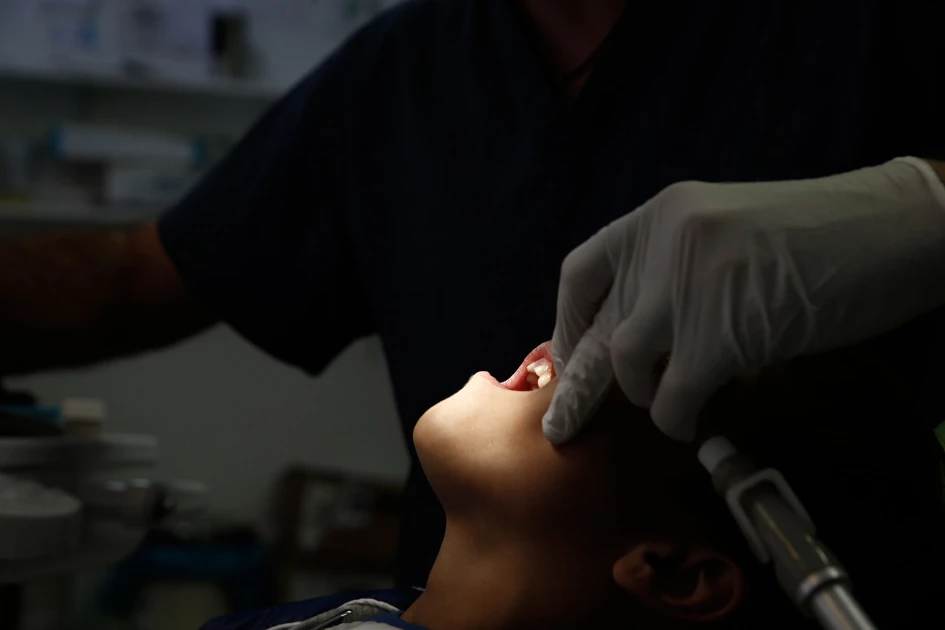
Dentist Christos Naoumis treats a young boy at a Doctors of the World clinic in central Athens last week. The medical humanitarian group helped 7,754 children with free dental care last year. REUTERS/Alkis Konstantinidis

Audio By Vocalize
The FDI World Dental Federation has raised the alarm over
the growing threat of illegal dental practice, warning that weak enforcement of
existing laws is putting millions of patients at risk, including in Kenya, where
a botched tooth extraction by an unlicensed practitioner claimed the life of a
27-year-old man.
The warning comes in a new global report that found illegal
dental practice remains widespread despite most countries having laws
regulating the profession.
The report, based on responses from 49 National Dental
Associations, found that while 95 per cent of participating countries have
legislation governing dental practice, fewer than half believe the laws are
being effectively enforced.
According to FDI, weak enforcement, inadequate resources and
regulatory loopholes have allowed unqualified individuals to continue offering
dental services, exposing patients to severe infections, permanent oral damage
and, in some cases, death.
The federation has released a two-page policy brief summarising
the findings and recommendations of its report to help governments, health
regulators and national dental associations strengthen patient safety and crack
down on illegal dental practice.
The report reveals that 58 per cent of participating dental
associations have recorded confirmed cases of patients harmed by illegal dental
treatment. The injuries range from serious infections and permanent oral damage
to life-threatening complications.
It also found that 62 per cent of countries lack reliable
data on the extent of illegal dental practice, making it difficult for
authorities to assess the problem and measure the effectiveness of enforcement
efforts.
FDI defines illegal dental practice as dental care provided
by individuals or organisations that are not properly trained, licensed,
registered or regulated under national law. This includes unqualified people
performing tooth extractions and dental implants in homes or informal clinics,
beauticians fitting braces in salons, and practitioners operating with expired
licences or outside their legal scope.
The federation says the problem affects both developed and developing countries, driven by the high cost of treatment, limited access to licensed dentists, shortages of qualified professionals, growing demand for cosmetic procedures and low public awareness.
The dangers highlighted in the report were tragically
illustrated in Kenya earlier this year when 27-year-old Amos Isokha died after
a tooth extraction carried out by an unlicensed practitioner in Kawangware.
Isokha had sought treatment for a toothache at Life Clinic
on January 1, 2026, where he paid Ksh.1,000 for the procedure.
An autopsy conducted by pathologist Dr Joseph Ndungu
revealed that the practitioner failed to disinfect the infected area or treat
the swelling before extracting the tooth. The infection spread rapidly through
Isokha's jaw, neck and chest, leading to sepsis caused by Ludwig's Angina—a
severe bacterial infection affecting tissues beneath the tongue and jaw.
The Kenya Dental Association blamed the incident on weak
enforcement of regulations and the limited availability of affordable, licensed
dental services, concerns that closely mirror the findings of the FDI report.
“Who is to blame? This is a systemic failure. All of us
carry this blame. We had a facility that was not supposed to be operating, and
people working there without licences. The owners of those places have a
responsibility to employ qualified personnel,” Tim Theuri, director of private
health practitioners in the country, also noted
Beyond the immediate harm to patients, FDI warns that
illegal dental practice undermines public confidence in the profession. Because
unlicensed practitioners operate outside regulatory systems, victims often have
little access to legal redress, disciplinary action or compensation.
To tackle the problem, the federation is calling on
governments to strengthen enforcement of existing laws, improve surveillance
and data collection, educate the public on verifying dentists' credentials and
enhance collaboration between regulators, law enforcement agencies and
professional associations.
FDI also says expanding access to safe and affordable dental
care is critical to reducing reliance on illegal providers.
It urged patients to seek treatment only from qualified,
licensed and regulated dental professionals, warning that stronger regulation
and greater public awareness are essential to prevent more avoidable tragedies
like the one that claimed Amos Isokha's life.
Join the Discussion
Share your perspective with the Citizen Digital community.
No comments yet
This discussion is waiting for your voice. Be the first to share your thoughts!