
Failure to implement laws, address citizens’ priorities a major governance gap – Report
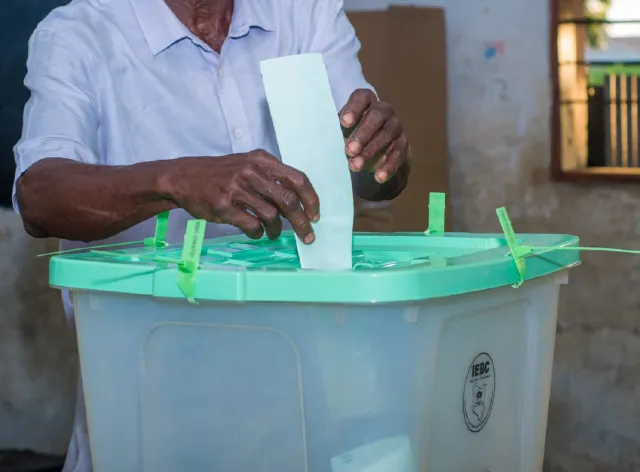
A voter casts his vote in a file photo.

Audio By Vocalize
The report identifies persistent gaps in the delivery of essential services, weak accountability, inequitable allocation of public resources and limited citizen influence in government decision-making as key concerns across the country.
The findings, contained in a report titled The People's Agenda: A Synthesis of Citizen Priorities in Elections and Responsive Governance in Kenya, were presented in Nairobi on Friday.
Drawing on citizens' lived experiences across different counties, the report highlights persistent shortages of medical personnel and medicines in health facilities, inadequate infrastructure in schools, poor access to clean water and sanitation, and challenges facing farmers.
It also points to concerns over the allocation and utilisation of public funds, including poorly funded projects, procurement integrity, pending bills and instances where counties return money to the National Treasury despite unmet needs at the grassroots.
The report further identifies limited public participation in planning and budgeting processes, noting that citizens are often brought into discussions when key decisions have already been made, leaving little room for their views to influence outcomes.
It also highlights political patronage and violence as factors undermining policy implementation in some counties.
Speaking during the launch, Executive Director of the Electoral Law and Governance Institute for Africa (ELGIA) Felix Owuor said citizens had demonstrated a willingness to participate in governance, but continued to face frustrations in their pursuit of accountability.
He cited the 2024 Gen Z protests as evidence of growing demands for participation beyond electoral cycles.
"Citizens are very clear about their priorities. They also want to engage every day and they want accountability," Owuor said.
Deputy Registrar of Political Parties Agatha Wahome said political parties had a responsibility to translate citizens' priorities into actionable policy proposals and election manifestos.
She said the Office of the Registrar of Political Parties was mandated to regulate political parties and support their role in articulating public policy priorities and influencing government policy.
Centre for Multiparty Democracy Executive Director, Franklin Mukwanja, said political parties needed to make citizens' priorities central to their election agendas and ensure their campaign promises could be tracked after elections.
He linked voter apathy, particularly among young people, to a disconnect between citizens' everyday concerns and the political choices presented to them.
"Many of them cannot connect their being voters and coming out to cast a ballot for a particular party," Mukwanja said, calling for mechanisms to track campaign promises and hold elected leaders accountable.
The report recommends strengthening accountability mechanisms, improving public participation in county planning and budgeting, and ensuring that political commitments translate into measurable action.
It also calls for greater attention to the differing needs of counties, including water scarcity and climate pressures in pastoral communities, agricultural productivity and land issues in parts of Central and Coast regions, and sanitation and drainage challenges in major urban centres.
The findings come as political actors begin positioning themselves ahead of the 2027 General Election, placing renewed focus on whether campaign agendas will reflect citizens' priorities and how voters can hold leaders accountable for their commitments.
Join the Discussion
Share your perspective with the Citizen Digital community.
No comments yet
This discussion is waiting for your voice. Be the first to share your thoughts!