
Explainer: Why Shujaa settled for 7th in Hong Kong and how the new SVNS format works
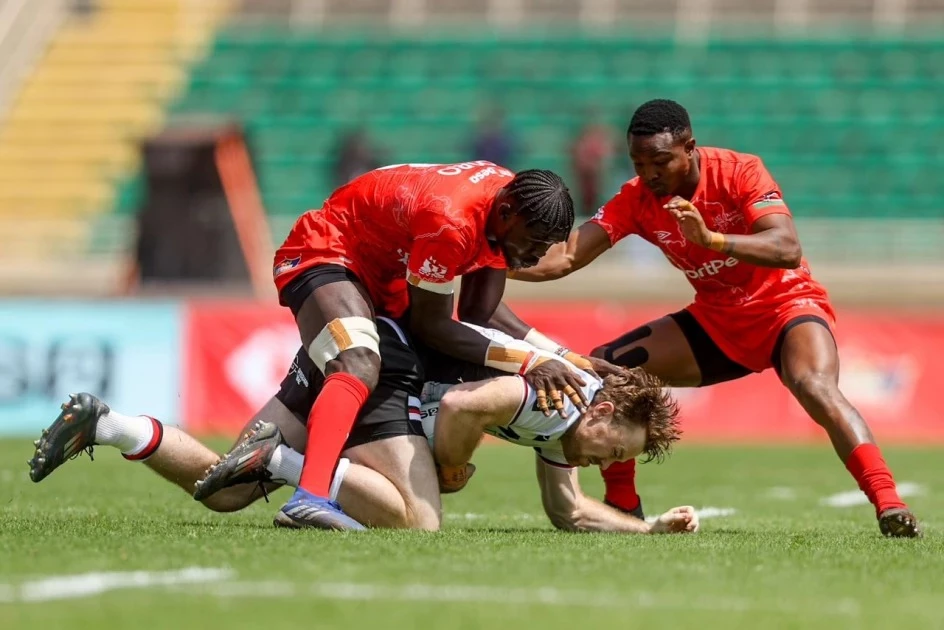
Kenya's side Shujaa in action against Canada in 2026 HSBC SVNS 2 at Nyayo Stadium on Saturday, February 14, 2026

Audio By Vocalize
The answer lies in both their results on the pitch and a significant overhaul of the global sevens rugby format under the newly rebranded HSBC SVNS series.
Shujaa’s journey in Hong Kong was mixed. They opened Pool C with back-to-back defeats, losing 5–14 to Australia and 12–28 to New Zealand, before bouncing back with a 17–10 win over the USA to sneak into the Main Cup quarter-finals.
There, they pushed South Africa’s Blitzboks to the limit but fell narrowly 22–26.
Traditionally, a quarter-final loss would still allow teams to fight for 5th place through a mini-bracket involving semi-finals and finals.
However, that system has now been scrapped for the final three legs of the season—Hong Kong, Valladolid, and Bordeaux.
Instead, a new “direct ranking” system determines placement among the four quarter-final losers.
Teams are ranked based on their cumulative performance—pool results combined with their quarter-final showing.
The top two among these losers advance to a 5th-place playoff, while the bottom two are sent to contest 7th place.
Despite their spirited display against South Africa, Shujaa’s earlier pool losses meant their overall points tally and point difference lagged behind the other quarter-final losers.
As a result, they were ranked in the bottom two, alongside France, setting up the 7th-place playoff.
They responded strongly, with tries from Nygel Amaitsa, Festus Shiasi, and Samuel Asati sealing a convincing win to close their campaign on a high note.
This format shift is part of a broader transformation of the sevens game. The HSBC SVNS now operates a three-division structure, Division 1 (top 8 teams), Division 2 (6 teams), and a Challenger tier, aimed at boosting competitiveness and financial sustainability ahead of the 2028 Los Angeles Olympics.
The season no longer hinges on a simple points table. Instead, the top 12 teams progress to a three-leg World Championship series, where final standings determine core status.
Only the top eight teams at the end of the season secure their place in Division 1 for the following season.
Additionally, tournaments have been shortened to two days, promoting efficiency while maintaining the sport’s signature festival atmosphere.
For Shujaa, every ranking point now carries added weight. Finishing 7th in Hong Kong was not just about placement; it was a crucial step in the race to remain among the world’s elite in this new, high-stakes era of sevens rugby.
Join the Discussion
Share your perspective with the Citizen Digital community.
No comments yet
This discussion is waiting for your voice. Be the first to share your thoughts!