
Expensive power, taxes among hurdles facing Kenya's manufacturing sector

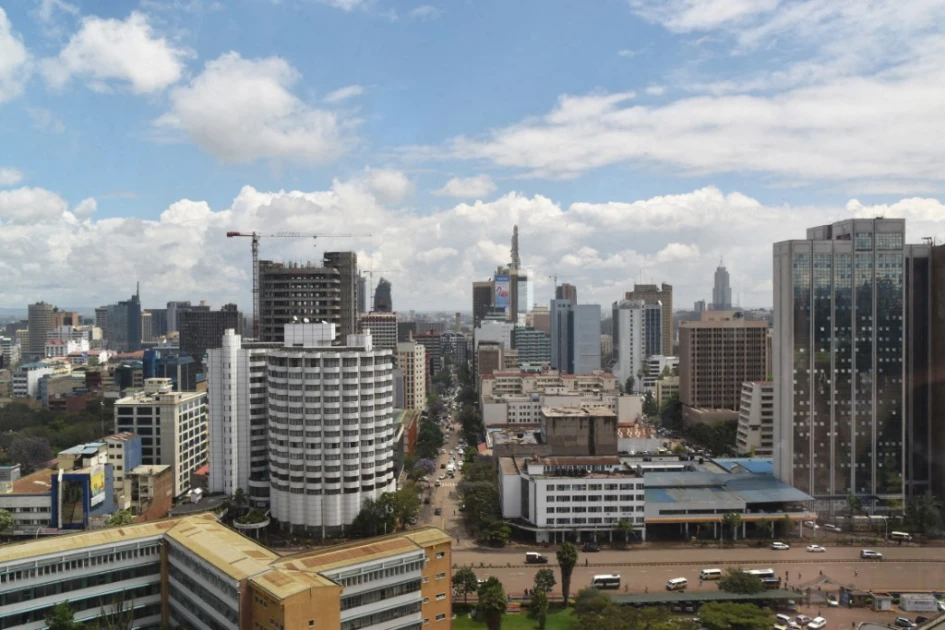
View of the city centre. Panorama of Nairobi from the University of Nairobi tower.

Audio By Vocalize
From expensive electricity and mounting levies to bureaucratic delays and congestion at the Port of Mombasa, local industries are grappling with challenges that make their products less competitive in international markets.
With manufacturing contributing just 7.1 per cent to the economy, questions are mounting over what it will take to unlock the sector's potential.
The manufacturing sector is expected to drive economic growth, create jobs, reduce reliance on imports and earn the country billions of shillings through exports.
Investments, Trade and Industry Cabinet Secretary Lee Kinyanjui says industrialisation remains critical to Kenya's development, noting that no country has achieved economic prosperity without building its industrial base.
“No nation in the world is on record having developed without industrialisation. And although industrialisation takes many forms, the reality is that through industrialisation, we create jobs, substitute imports that would otherwise be manufactured here, and create a market for raw materials for our farmers and the whole ecosystem. So industrialisation is the way to go for any country,” Kinyanjui said.
However, according to the Kenya National Bureau of Statistics (KNBS) 2026 Economic Survey, manufacturing contributed just 7.1 per cent to the economy in 2025, down from 7.3 per cent in 2024.
The sector grew by only 2 per cent, less than half the country's overall economic growth rate of 4.6 per cent.
Chairperson of the Export Processing Zones (EPZ) Sector Pankaj Bedi said the country is not making the most of its manufacturing opportunities.
“Based on the opportunity we have, we are totally underperforming,” Bedi said.
The imbalance is particularly evident in international trade. Kenya spent Ksh.2.77 trillion on merchandise imports in 2025, against export earnings of Ksh.1.12 trillion, leaving a trade deficit of Ksh.1.65 trillion.
Industry Principal Secretary Dr. Juma Mukhwana says the country has opened up its market but lacks sufficient local production to meet demand.
“The first challenge is that we have opened such a huge market. In my view, we are lacking commodities to supply,” PS Mukhwana said.
The potential to reverse the trade imbalance is evident in the Export Processing Zones, where export earnings reached Ksh.136.8 billion in 2025, supporting more than 104,000 jobs.
However, realising the sector's full potential remains an uphill task due to several bottlenecks affecting manufacturers.
Bedi noted that Kenya has several advantages, including favourable policies, skilled labour and access to a major seaport, but high operating costs continue to undermine its competitiveness.
“We have great policy in EPZ. We have other good things, we have great manpower, we have a good port if it's running efficiently. All those things are ticking boxes, but at the end of the day, we get stuck with our costs,” Bedi said.
Among the biggest challenges are expensive electricity, multiple taxes and levies, and high freight costs.
Bedi argues that manufacturers operating within the EPZ framework still face additional charges that put them at a disadvantage compared to competitors in other markets.
“Even though you say you are tax-free, you then have these rent-seeking levies coming everywhere, housing levy, this levy. But our competition is not putting those on their manufacturers,” he said.
Congestion at the Port of Mombasa and lengthy cargo clearance procedures further frustrate exporters. For manufacturers competing against cheaper products from markets such as China, additional costs eat into their margins and make it harder to secure international buyers.
“We just get stuck when it comes to pricing, and the buyers are currently using us as a B-level supply chain because they will always go to the best price point, best compliance. So we tick other boxes, but not the cost,” Bedi said.
While acknowledging President William Ruto's goodwill in addressing industry concerns, Bedi says bureaucratic hurdles continue to slow down the implementation of proposed solutions.
The Ministry of Investments, Trade and Industry said it is working to address some of these challenges through regulatory reforms and investments aimed at lowering the cost of doing business.
“Today, as we talk, we have 34 county aggregation and industrial parks under construction. About 15 are now complete,” Mukhwana said.
CS Kinyanjui, however, cautioned that transforming the manufacturing sector would require sustained investment and long-term planning.
“Industry is not one of those quick things. It's not something you can achieve in six months, but you can set the foundation upon which great outcomes can be seen,” he said.
Join the Discussion
Share your perspective with the Citizen Digital community.
No comments yet
This discussion is waiting for your voice. Be the first to share your thoughts!