
Exclusive: Joshua Baraka on fame, getting ‘chubbier’...and what really happened with Tems at Blankets & Wine
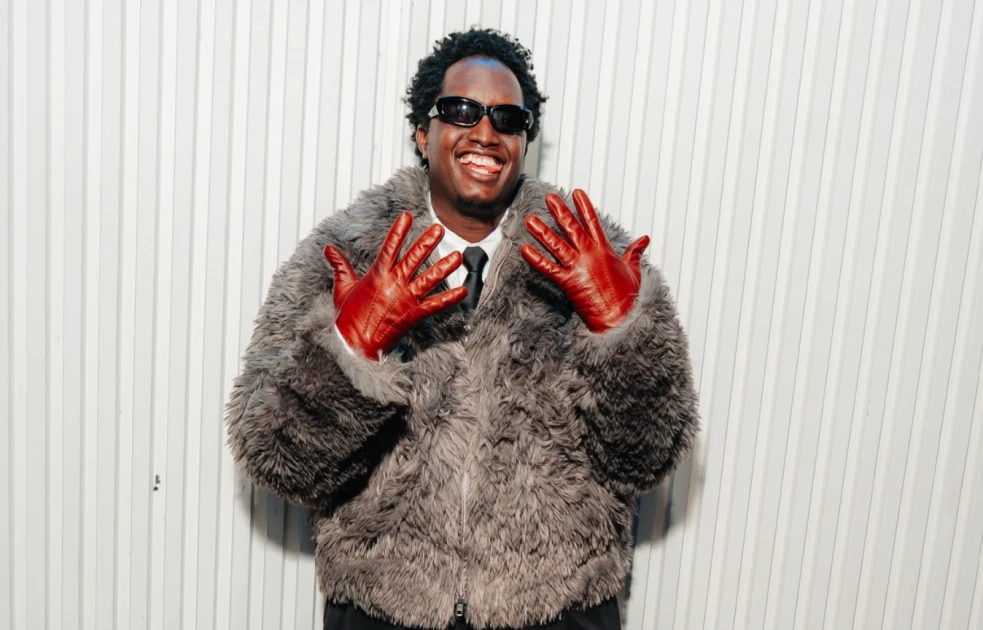
Ugandan artist Joshua Baraka at the 2025 MOBO Awards in the UK. PHOTO | COURTESY

Audio By Vocalize
There are interviews you plan for, and then there are the ones that arrive the way good stories often do; late, slightly chaotic, and exactly when they’re meant to. My interview with Ugandan artist Joshua Baraka was supposed to happen at the Blankets and Wine festival in September last year, under Nairobi’s open sky, somewhere between a soft breeze and a louder-than-necessary crowd. But life, as it tends to do, rearranged the script. And so, instead of catching him there, we found each other in a studio, courtesy of Spotify, like two characters who missed the first act but still made it just in time for the plot twist.
He showed up on day
two of a Spotify Fresh Finds session last weekend, in one of those quietly
important rooms where tomorrow’s stars were still introducing themselves to the
microphone. Young, upcoming artists were tucked in the studios, trading
melodies like secrets, building songs from half-formed ideas and full-hearted
ambition. Joshua wasn’t there to record, he was there to guide, to hover gently
over the process like a big brother who’s seen a few more rooms like these, offering
direction without ever suffocating the magic.
Joshua is, to put
it quite simply, easy. Easy to talk to, easy to laugh with… so easy, in fact,
that what begins as a structured interview quietly melts into the kind of
conversation you catch yourself wishing had no end. We tucked ourselves into
one of the studios to talk, but people kept drifting in and out, cutting
through like it was a public footpath rather than a working session. It got to
a point where the Spotify honcho on site stationed two security guards at each
door to keep people out and restore some order. And just like that, our little
corner of the studio transformed from a thoroughfare into something resembling
a proper interview space, where thoughts could land fully and sentences could
breathe.
The thing about
artists who travel the world is that the world travels back with them; sometimes
in their sound, sometimes in their stories, and occasionally around the
waistline. Joshua admits, with the kind of honesty that deserves both applause
and a gentle gym membership, that he’s gotten “a bit more chubby,” because
every new country came with new food, and he, being a reasonable human being,
chose joy every time. It’s the kind of detail that tells you everything you
need to know about him. That this is a man who experiences life fully, who
doesn’t just pass through places but tastes them, quite literally.
Perhaps, even more
telling, is that Joshua Baraka says he’s not particularly interested in fitting
neatly into anyone else’s idea of what an artist should be. He speaks about
himself less as a performer chasing applause and more as someone simply devoted
to art in its purest form, determined to walk his own path even if it means
being misunderstood for a while. There’s no bitterness in it, no urgency to
correct the world, just a steady, almost stubborn patience, like a man who
knows that eventually the work will speak loudly enough. And when it does,
everything else will finally make sense.
Do you believe
in fate? I ask that because I was initially supposed to interview you at
Blankets and Wine, but then things happened, and now we’re here, thanks to
Spotify.
It's crazy you‘ve
asked me that question because that's the question I ask everyone I work with. I'm
the biggest believer in fate and destiny; I feel like everyone has a particular
thing they were ordained and set out to do, a particular set of events that
will happen in their lives, and a particular set of people they will meet.
From being ‘one
to watch’, to an artist that is actually being watched right now, not just in
East Africa but across the continent and abroad as well, what has been the biggest shift for
you? Not just musically, but also mentally.
Definitely, a lot
of things have changed about how I see life, how I view life. I've traveled so
much in the last three years and I've got to experience different cultures.
I've been exposed to different kinds of music, different kinds of places, so
how I view the world has changed, how I make my music has changed, and how I
approach situations has also changed quite a lot.
Physically, I've
become a bit more chubby, because – in as much as I've experienced all these
places - I've also eaten all their food. Financially, it's evident, of course.
What has traveling
taught you about music, in general?
I've learned that
music is a global language; music is in the very fabric of society. Every place
you go, they'll play music, a slightly different variation of it, but there'll
be music. So, just understanding that I can make music from where I am and it
can go all over the world and people will listen, just changed how I make music
because now I'm making music for the world. I'm making music with the intention
of it getting into other areas. So, just picking influences from those areas
and adding it to my music has been, I think, the most important lesson.
That you're
traveling a lot also means you're performing on bigger stages now. How has your
performance changed from your early shows to where you are now?
It has changed
quite a bit because in a lot of the spaces I go to now, I'm usually the first
East African there or the first Ugandan there. So, a lot is riding on me, at
least in my head, and I try to deliver. And so, even the performances are set
up in such a way that I'm there to impress. I'm there to leave a mark and to
spread a message. So, even in the performance, I'll add East African moments
and all these things that represent where I'm from.
There's a
difference between performing at, say, a festival or a concert and performing
at an intimate space like this. Which do you feel challenges you more as an
artist?
To be honest, I
love performing in intimate spaces. Fewer people means more interaction, more
engagement, less pressure. So, I get to just play around. I can stop the song,
start it again, make a joke in between. Whereas on festivals, you just have to
come out and do your thing. Festivals are quite challenging because they're
more demanding; you have to move around the stage and whatnot, but they're also
really nice.
Before I ask
this, I feel it's important to say that I'm not trying to cause any trouble.
Speaking of festivals,
a lot has been said - especially in Kenya - about the Blankets and Wine
September 2025 edition. You were meant to perform right before Tems, but then you
ended up being the last act. From your perspective as an artist, what really happened
there [at the backstage] that day?
It was just a
timing issue. The time I was set to perform was right before Tems, but then on
the actual day, the performances ended up delaying. And so, the time I was
going on stage was the time that had been allocated for Tems, because of that delay.
I also think Tems had
quite a few things to do after [the event], so they asked if she could perform
first and then I go after her, and I was cool because for me East Africa is
home.
There was quite a
bit of pressure on me, but I'm really, really glad about how it came out and
how everything came to life. But that's what happened, it wasn't that anyone [was
at fault or being difficult], it was just a timing issue because the
performances delayed.
I think I speak
for many Kenyans who were there that day when I say we enjoyed your performance
as the closer a lot.
What does being
on a playlist like Spotify Fresh Finds do for an artist's career?
I think being on a
playlist as big as Fresh Finds, or honestly any editorial playlist on Spotify,
is a really validating experience. And it makes you feel like you're on the
right track. It makes you feel like you're doing the right things. And also, it
gives you quite a lot of mileage because just that endorsement shows other
people that this is someone to watch out for.
It’s very
validating to be part of those conversations and to know that you're in the
rooms somewhere. That there's someone who has listened to you and said; ‘You
know what? Let's make this person the face of this. Let's put this person in
this playlist.’ It's really nice.
2025 was a huge
year for you. What’s 2026 looking like so far?
2026 is looking
really, really good, I have a bunch of shows lined up, and I'm also focused on
finishing up my album. I’m honestly just looking forward to performing and collaborations
this year.
You already
have a song out with Bien, who's next? In Kenya.
I love Karun, so
definitely if we get in a room together, we'll do something. I have my eyes on
a bunch of artists here. Like Watendawili, I hope I pronounced that right.
Yes. And they
spoke about you yesterday too.
Really? Then get
us in a room, guys. [Laughs] I'm a big fan.
I would also say Toxic
Lyrikali, I want to work with him as well. Uhmm…there are many artists, I just
don't want to say all of them and then you guys have to hold me accountable. [Laughs]
Kenyan fans are
very entitled to their artists, and they're pretty harsh against artists who align
themselves to the government. What is the relation between the Ugandan
government and the Ugandan music scene?
It's kind of the
same in Uganda, but there are a lot more Ugandan artists that align with the
government than those that don't. But to the population, to the people, to the
masses, they don't really mess with the guys who align themselves with the
government. It's not a good look, most times. It's kind of like here, I would
say.
Nairobi crowd versus
Kampala crowd; which is the loudest?
Really?
Because it's my
home. And I dare say they love me a bit more than Nairobi.
What do you
feel like people still don't understand or don't get about Joshua Baraka?
That he is not
just an artist, he is a person who just loves art [in general]. You know what I
mean? So I don't want to really be placed on the standards of the artists that
have been here before. I feel like I'm walking on my own path, and that's
something I have to make people understand. I can't even blame them or anything,
I think it's just something that I have to work towards until it's a proven
fact. And that's when it will make sense.
There are a lot
more eyes on you right now as opposed to a few years ago. How has that affected
your creative process? Have you found a way to shut down the noise and just
keep writing and do what you do?
Yeah. I think
personally, I just stay in the spaces I feel the most comfortable, and I try to
keep the same people I've always had around. So, it doesn't really get to my
head, most of the time. I just keep in the studio, keep in motion, and try not
to overthink everything. Because I know if I sit down and think about it, I
might get overwhelmed. So I just keep doing what I'm doing, keep my eyes on the
prize and on the road.
Finally, and on
a very light note, how was The BAG Uganda? I saw you in the video.
[Laughs] First of
all, shout out DJ Spinny. Spinny is my guy, he’s one of my really good friends,
and I was there to support him.
I think on the
ground, as a person who was there, things were different. Spinny was playing
for the crowd. And I think Kenyan DJs need to hold on, they need to first
breathe. The man just played with Diplo, so he's doing his thing. Maybe we
should just have a battle between Kenyan DJs and Ugandan DJs, because you guys
are killing us. [Laughs]
Join the Discussion
Share your perspective with the Citizen Digital community.
No comments yet
This discussion is waiting for your voice. Be the first to share your thoughts!