
Equity Group’s regional workforce crosses 5,200 mark driven by DRC expansion

Audio By Vocalize
According to the newly released Central Bank of Kenya (CBK) Bank Supervision Annual Report 2025, Equity employs 5,245 staff in its subsidiaries outside Kenya. KCB Group came second with a regional headcount of 3,978.
This workforce expansion reflects Equity's broader Pan-African strategy, particularly its strategic focus on the Democratic Republic of Congo (DRC). The trend highlights a fundamental shift in regional banking, where deploying human capital is increasingly becoming key to capturing largely unbanked, resource-rich markets across East and Central Africa.
An analysis of the CBK data indicates that the DRC has emerged as Equity's largest cross-border labour market, accounting for 2,199 of these employees. Uganda follows with 1,332 staff, while Rwanda accounts for 1,010. I&M Group ranked third in overall regional employment with 1,531 employees.
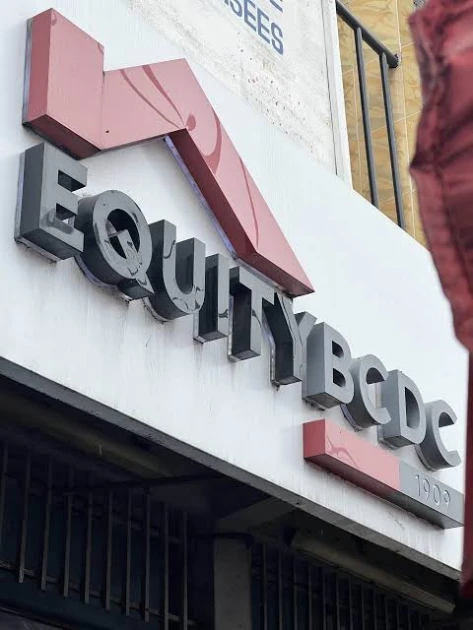
The expanded regional payroll aligns with the substantial financial returns generated by these subsidiaries. Equity's DRC unit, Banque Commerciale Du Congo (BCDC), currently holds Ksh 537.2 billion in deposits, representing 29.3% of all deposits held by Kenyan bank subsidiaries abroad.
Furthermore, BCDC generated 36.5% of the overall regional profits. This regional performance helped Equity deliver a Return on Equity (ROE) of 32.3% in 2025, the highest among the country's large peer-group banks, positioning it as the most efficient wealth generator among top-tier banks.
The regional earnings boost helped consolidate Equity's position as the country's second-largest lender by assets. The bank held an 11.8% composite market share index, while its share of industry total net assets alone stood at 12.5%. It remains one of only two banks in the country with a balance sheet crossing the trillion-shilling mark, closing the year with Ksh.1.04 trillion in total net assets and Ksh.849.1 billion in customer deposits.
In a year characterised by a challenging macroeconomic environment and elevated credit risks, Equity also demonstrated prudent credit risk management. The lender closed the year with gross loans of Ksh.462.4 billion, while its stock of gross non-performing loans (NPLs) stood at Ksh.84.6 billion. In comparison, KCB recorded Ksh.192.7 billion in bad loans, indicating Equity's ability to grow its loan book while maintaining strict control over defaults.
Domestically, Equity continues to leverage its human and physical infrastructure to dominate the retail segment. Countering the industry-wide shift towards purely digital channels, the lender now operates a sector-leading 216 physical branches and 13.86 million deposit accounts. It also holds the highest volume of insured deposits at Ksh.179.7 billion, reflecting a highly stable retail funding base.
However, despite this extensive footprint, the lender's participation in the mortgage market remains muted. Equity holds a 3.7% market share in residential mortgages (Ksh.11.3 billion), trailing rivals such as KCB and Absa in the long-term real estate financing segment.
As Kenyan banks increasingly look beyond borders to offset domestic macroeconomic headwinds, the scale of regional operations continues to grow, requiring significant investments in talent to sustain these cross-border networks.
Join the Discussion
Share your perspective with the Citizen Digital community.
No comments yet
This discussion is waiting for your voice. Be the first to share your thoughts!