
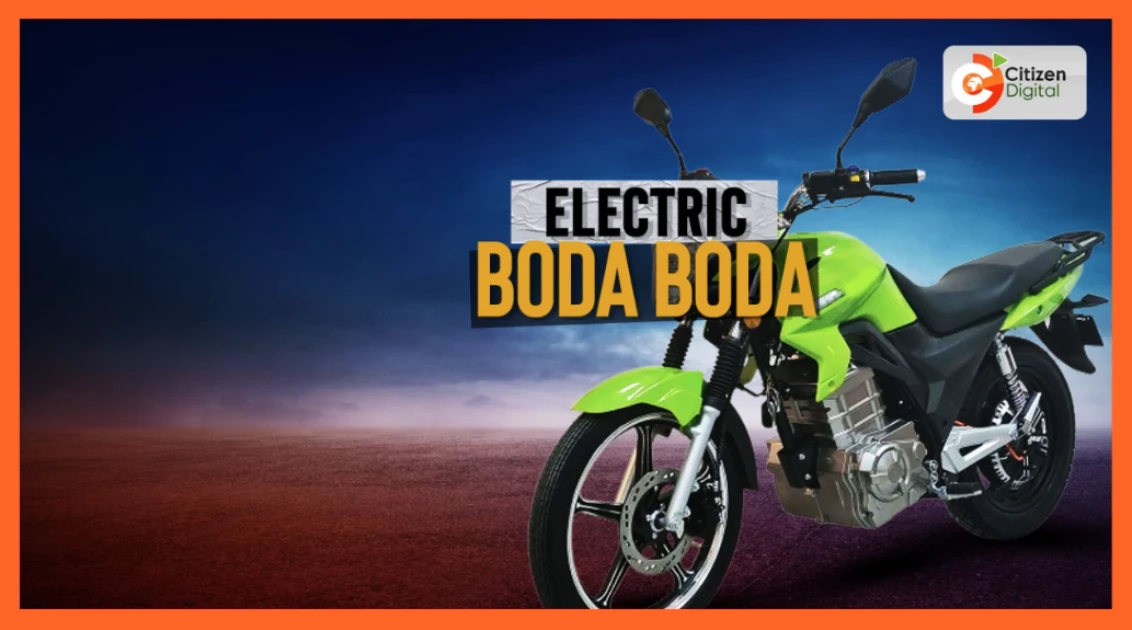
Electric boda bodas gaining ground in Kenya as some riders refuse to ditch fuel

Audio By Vocalize
According to the Electric Mobility Association of Kenya (EMAK), the premier representative body for the electric vehicle and e-mobility sector in Kenya, approximately 64,840 cumulative electric motorbikes have been registered from 2023 through mid-2026.
These motorbikes introduced a different way of running a motorcycle business, from refueling to charging and battery swapping, and for some riders, the shift has changed how they think about daily operating costs, maintenance, and even the experience of riding.
In the 2025/2026 Energy and Petroleum Statistics Report, the Energy and Petroleum Regulatory Authority (EPRA) noted that electric mobility is recording the fastest growth among customer categories.
Electricity consumption by electric mobility increased by 143.01 percent, rising from 5.04 gigawatt-hours (GWh) in the previous year to 12.25 GWh by June 2026.
EPRA attributed the increase to growing uptake of the e-mobility tariff, with the number of e-mobility customers rising from 115 to 543 during the period.
But while electric motorcycles are gaining ground, fuel-powered boda bodas still dominate the roads.
For them, the conventional motorcycle remains the preferred option, raising a question of whether the electric boda boda is really a game changer in the motorcycle industry.
Morrice Kasamu, an electric motorcycle rider in the Nairobi area, had used a fuel-powered motorcycle since 2015 but chose to switch in 2024.
According to him, the idea of swapping the batteries instead of refuelling was his main motivation.
Kasamu thought the idea of swapping would save him money and it would be cheaper in the long run.
“I did calculations on swap and fuel; I thought maybe swap would be cheaper,” he said in an interview with Citizen Digital.
Unlike the fuel-powered motorcycles, the electric motorcycle uses a battery to power an electric motor.
The operators use a battery swapping model by letting riders trade an empty battery for a fully charged one at a local swapping station instead of waiting hours to plug it in. For Kasamu, this was a real deal.
“When you have used it, and maybe it has gone low, or it has run out, you leave that one and they give you a charged one,” he said.
Afrikaners Omar Odimba, a boda boda rider along Kilimani area, started with a Boxer 150, a fuel-powered motorcycle, but eventually changed to Ark Ride, an e-boda.
His main motivation was the cost and the amount of money left with him at the end of the day.
Omar said fuel prices had gone too high and that was one thing he was trying to save on.
“Fuel prices are too high; I used to refuel with Ksh. 1,000; by evening, you are left with nothing,” he said.
For him, the electric boda has provided an opportunity to earn a living through self-employment rather than relying on formal employment.
“If you charge the battery for Ksh.250, you can make Ksh. 1,000 from it. So, if you charge it three times a day, you can make around Ksh. 2,500. That is good money that I may not earn from formal employment. It is like being self-employed,” he said.
However, experience varies for each electric boda rider depending on the motorcycle and the availability of battery-swapping stations.
Omar said that although the Ark Ride motorcycle is cost-effective, limited swapping stations, which are mostly around Nairobi, Machakos and Ngong, can make longer trips difficult, sometimes forcing him to cancel requests outside those areas.
“Charging is what gives us a bit of trouble. The Ark Ride charging stations have not expanded to some areas. The furthest points are places like Thika, Machakos and Ngong. But if you go as far as Naivasha, there are no charging stations. So, if you receive a request to go to Naivasha, you have to cancel the request,” he said.
As the number of e-boda riders increases, Omar said more battery-swapping stations are essential to meet the growing demand.
He shared that more stations, together with longer-lasting batteries, would make the experience easier for riders by reducing delays and the need for frequent battery swapping.
“If their batteries could last long enough for us to charge them only twice a day, that would be better. But with the current ones, when there are a lot of customers, you may have to charge them three or even four times a day,” he said
Beyond his own experience, Cyrus Kuria, an electric motorcycle rider based in Ngong town, said he has also noticed a difference in what customers say about electric motorcycles.
He had previously used a fuel-powered one before shifting. He says some passengers have expressed a preference for the quieter and smoother ride compared with conventional motorcycles.
According to Kuria, his customers have increased because the lower operating costs of the electric motorcycle allow him to accept longer-distance requests without incurring much loss.
“At the moment, I have more customers with the electric motorcycle because even when a customer asks me to pick them up, I will still go because I know I will not make a loss no matter the distance,” Cyrus said.
Kuria says some passengers are increasingly drawn to newer technology and the experience it offers.
“People are embracing the new technology; that is why I have more customers,” he said.
For these riders, the electric motorcycle is already proving to be a game changer, particularly because of its lower operating costs.
They said the savings on daily running expenses were a major reason they made the switch, allowing them to retain more of their earnings and improve their livelihoods.
On the other hand, while electric motorcycles are offering some riders a different way of working, fuel-powered motorcycles continue to be widely used across Kenya’s boda boda sector.
According to James Melusori Lukumai, he prefers the fuel-powered one. While he wants an upgrade, he will still buy a fuel-powered one.
“Honestly, I don’t have any plans to switch. I’m not sure if I will move to an electric one. I want to change my old motorcycle, but I will still buy a fuel-powered one,” he said.
Melusori doesn’t want to use apps to get customers; he prefers the manual way.
“I operate manually without using apps, so my customers still prefer me,” he said.
Job, a young rider along Yaya Center in Nairobi, has remained with a fuel-powered motorcycle, saying it suits both his job and lifestyle.
He explained that the bike gives him the freedom to travel for entertainment and take road trips, because the availability of fuel stations makes refueling convenient wherever he goes.
“If I’m not using it for commercial work, I use it for leisure and going on road trips,” he said.
Job also pointed to servicing and access to spare parts as another reason he has stayed with a fuel-powered motorcycle.
He said the availability of mechanics and spare parts makes it easier to maintain and repair the bike.
“With a fuel-powered motorcycle, I can get it serviced anywhere. I can also find spare parts anywhere, and there are plenty of mechanics,” he said.
However, Job said fuel-powered motorcycle riders also face challenges while carrying out their work, particularly frequent encounters with traffic officers.
He said such encounters leave riders with fear on the road, even when they have the required documents and safety gear.
“Sometimes, we are simply harassed by traffic officers. Even when you have all the required documents, including a driving license and insurance, and you have the necessary riding gear, they still give us a hard time. As fuel-powered boda boda riders, we operate with uncertainty on the road,” he said.
For the riders, the choice between electric and fuel-powered motorcycles is determined by what works best for their daily needs.
While electric riders point to savings and lower running costs, fuel-powered riders continue to value the convenience and accessibility that come with fuel motorcycles.
As the boda boda industry continues to evolve, for some riders, that change has already made a difference, making the electric motorcycle a game changer in the way they work and earn a living.
Join the Discussion
Share your perspective with the Citizen Digital community.
No comments yet
This discussion is waiting for your voice. Be the first to share your thoughts!