
EACC examines KPA systems to identify corruption loopholes
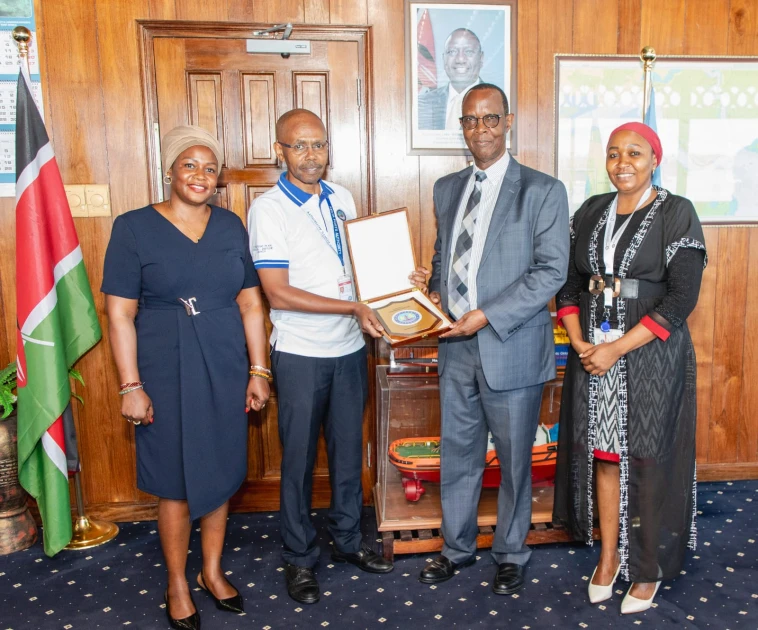
EACC Commissioner John Ogallo (in a grey suit) receives a report from KPA Corporation Secretary and General Manager for Board and Legal Services John Turasha Kinyanjui during the launch in Mombasa on November 10, 2026. PHOTO | EACC

Audio By Vocalize
The review will assess the Authority's policies, internal controls and operational practices, with the commission expected to recommend corrective measures to seal loopholes that could be exploited for corrupt purposes.
Speaking during the launch at KPA headquarters in Mombasa, EACC Commissioner John Ogallo underscored the importance of the Port of Mombasa as a regional trade gateway, noting that its efficiency has a direct impact on the movement of goods, the cost of doing business and economic growth.
Ogallo said strengthening institutional systems was critical in ensuring that efficient port operations are matched with transparency and accountability.
"An integrity-driven port need not be a slow port. In fact, a port supported by transparent, efficient and reliable systems is better positioned to facilitate legitimate trade, protect public revenue and inspire confidence among investors and businesses," he said.
On his part, KPA Corporation Secretary and General Manager for Board and Legal Services John Turasha Kinyanjui reaffirmed the Authority's commitment to ethical conduct, saying integrity should guide its decisions and day-to-day operations beyond mere compliance with laws and regulations.
Kinyanjui noted that KPA, as an institution managing critical national infrastructure and facilitating international trade, had a responsibility to maintain high standards of professionalism, accountability and public service.
Through the exercise, EACC will support the Authority in strengthening internal controls, addressing corruption vulnerabilities and promoting integrity in the management of public resources and delivery of services.
The examination is part of the commission's preventive anti-corruption strategy, which seeks to identify institutional weaknesses and recommend corrective action before they are exploited.
Join the Discussion
Share your perspective with the Citizen Digital community.
No comments yet
This discussion is waiting for your voice. Be the first to share your thoughts!