
Disputed oral health curriculum raises patient safety concerns
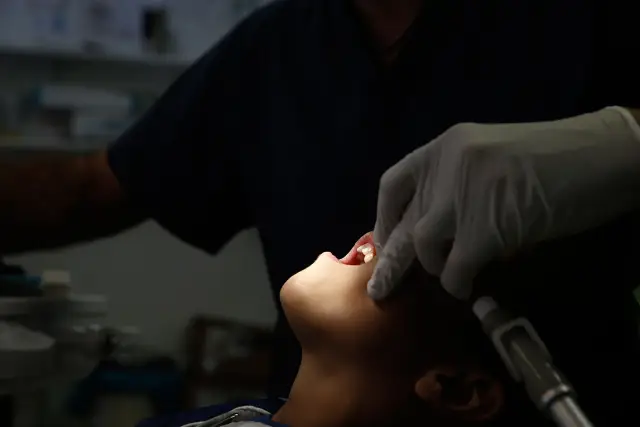
Dentist Christos Naoumis treats a young boy at a Doctors of the World clinic in central Athens last week. The medical humanitarian group helped 7,754 children with free dental care last year. REUTERS/Alkis Konstantinidis

Audio By Vocalize
The emerging controversy over conflicting versions of the Medical Training College Diploma in Community Oral Health curriculum raises deeply troubling questions about institutional integrity, professional regulation and, above all, patient safety.
At the centre of the controversy are allegations that individuals altered curriculum documents attributed to the Medical Training College at the last minute, circulated them and presented them to regulatory authorities outside established procedures. The disputed changes reportedly expand the role of non-dentist Community Oral Health Workers beyond their established training mandate.
Particular questions surround a version that was allegedly submitted on behalf of the Academic Registrar under circumstances that differed from those surrounding the curriculum formally submitted by the Chief Executive Officer.
The Kenya Dental Association has formally questioned the existence of conflicting curriculum versions. These include a version that the training college’s Chief Executive Officer officially submitted to the Kenya Medical Practitioners and Dentists Council (KMPDC) in November 2024, another that was subsequently submitted in May 2025, and versions that teaching faculty reportedly used at different college campuses as at November 2026.
The central questions are straightforward: Which version represents the authentic, officially approved and stakeholder-validated curriculum? Where are the minutes, validation reports and documentary records authorising the changes?
This is not a minor administrative disagreement. It concerns the training, competence and legally recognised scope of practice of healthcare workers who interact directly with members of the public.
The Diploma in Community Oral Health primarily equips graduates with skills in community-based oral health promotion, health education, disease prevention and surveillance. Graduates play an important role in educating schoolchildren, conducting oral health awareness programmes in antenatal and maternity clinics, collecting data and supporting community oral health research. They also conduct preliminary screenings to identify dental conditions that require professional attention.
Community Oral Health Workers form an important part of Kenya’s oral healthcare delivery system. They complement dentists; they do not replace them. Their responsibilities include referring patients to dentists and specialist practitioners for diagnosis and definitive treatment. While they may provide limited emergency assistance within their training, that responsibility must never become a justification for undertaking independent or extensive clinical dentistry.
Community Oral Health Workers are not dentists. No administrative decision or curriculum adjustment can turn a diploma in Community Oral Health into a dental qualification. A Bachelor of Dental Surgery requires a distinct and substantially longer course of training, lasting up to six years. The two qualifications must not be confused or treated as interchangeable.
For approximately 15 years, national and county governments have failed to provide consistent employment opportunities for this cadre, despite the importance of community-based preventive healthcare. These employment and professional challenges deserve attention. However, they cannot justify any attempt to expand clinical practice privileges at the last minute through questionable curriculum alterations, administrative correspondence or regulatory convenience.
Growing concerns that some members of the cadre perform clinical dental procedures beyond their training and legally recognised scope of practice should alarm every Kenyan. The Ministry of Health published the relevant scope in 2017, and the Director-General of Health provided further guidance in February 2025.
Media reports of questionable dental practices reinforce the need for urgent scrutiny. Patients must never become experimental subjects in an unregulated expansion of professional practice that disregards the law, policy and established training requirements.
Even more troubling are allegations that individuals have used conflicting curriculum documents to influence decisions by the KMPDC. There are also allegations that an owner of one of the training institutions bribed senior Council officials, who are now reportedly claiming that a senior officeholder has threatened them to look the other way.
These are serious claims that require impartial investigation. If the Council has relied on documents whose authenticity and stakeholder validation remain disputed to justify an expansion of clinical dentistry practice, it must explain the ethical, legal and professional basis for its decisions.
The regulator cannot claim to safeguard professional standards while accepting contested documents without question. The KMPDC must independently verify training qualifications, institutional approvals, professional competencies and the legal authority behind any proposed expansion of clinical practice.
Neither academic officers nor regulatory officials can create professional competencies through administrative correspondence. Legitimate training, demonstrable competence, patient-safety requirements and the applicable law must underpin every clinical privilege. No individual or institution should circumvent these safeguards.
The Ministry of Health, the College Board and management, and the KMPDC must urgently establish the authenticity and history of every curriculum version in circulation. They should publish the stakeholder validation records, identify the officers who prepared, approved and transmitted the disputed documents, and establish whether anyone acted beyond their authority or breached institutional procedures.
The Ministry of Health must also rise to the occasion through the Healthcare Sector Education Directorate. It must strengthen oversight of the unchecked growth of healthcare courses in colleges and universities, some of which appear more interested in profiting from students and parents than in maintaining credible training standards. Kenya cannot allow institutions to attract learners with appealing certificate, diploma and degree titles while failing to demonstrate the quality, relevance and legitimacy of the courses they offer.
The conservatory orders that the Court issued in August 2026 remain an important safeguard against potential harm to unsuspecting patients seeking dental services. All parties must respect those orders and avoid any action that undermines their purpose or the authority of the Court.
Investigations into these serious allegations involving training institutions and regulatory bodies are under way. Those investigations must proceed without intimidation, institutional protectionism or interference from individuals seeking to shield abuses of power, misfeasance or corruption that could compromise patient care and professional standards.
The authorities must hold accountable, in accordance with the law, any officers they find to have deliberately manipulated official training documents, misrepresented professional competencies or facilitated unlawful regulatory decisions.
Kenyans must also take personal responsibility for their safety. Before seeking dental or other healthcare services, patients should verify the qualifications, professional registration and scope of practice of the people attending to them. A professional title, diploma certificate or institutional affiliation does not, on its own, authorise an individual to perform every clinical procedure.
Healthcare regulation must not serve as an employment-creation scheme, a professional promotion exercise or a means of granting administrative favours. Nor should the growing number of healthcare colleges offering different courses become an excuse to lower standards. Regulation is a public trust, grounded in competence, accountability and the protection of human life.
Kenya cannot afford a regulatory environment in which disputed documents determine clinical privileges, institutions casually rewrite professional boundaries and patients bear the consequences of misconduct.
The message must remain unequivocal: no doctored curricula, no manufactured clinical competence, no unlawful expansion of professional practice and absolutely no compromise on patient safety.
By Morara Kebaso (Health commentator)
Join the Discussion
Share your perspective with the Citizen Digital community.
No comments yet
This discussion is waiting for your voice. Be the first to share your thoughts!