
Detained at 95: South Korea's prosecution of religious leader draws international alarm
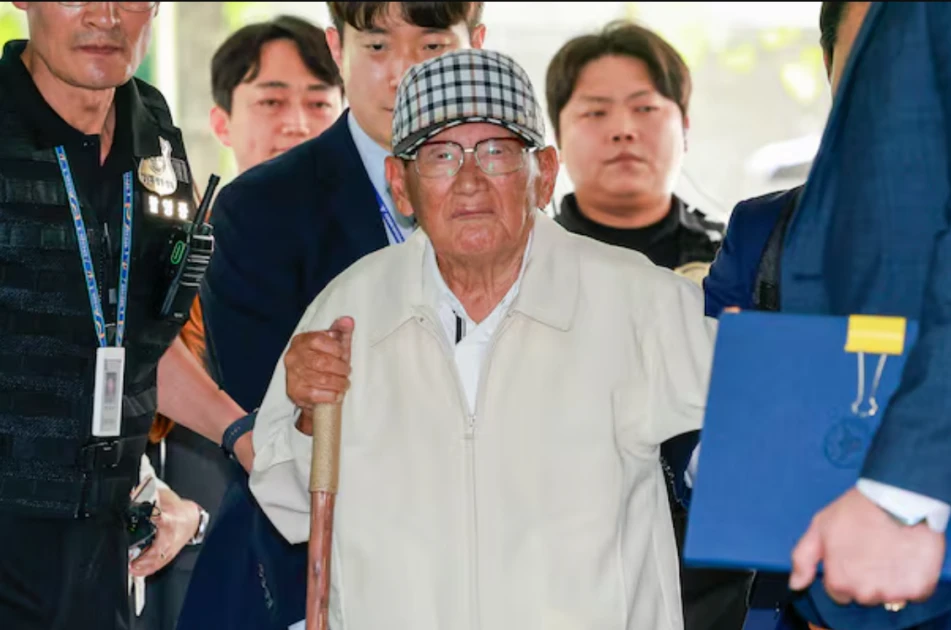
Shincheonji Church of Jesus Chairman Lee Man-hee.

Audio By Vocalize
International
scrutiny is intensifying over the detention and prosecution of 95-year-old
Shincheonji Church of Jesus Chairman Lee Man-hee, with religious freedom
advocates also criticizing recent remarks by South Korea's Justice Minister
Jeong Seong-ho.
The controversy
escalated after Minister Jeong announced on June 30 that Lee had been formally
indicted while in detention. In a social media post, the minister said that
"strict criminal punishment corresponding to its responsibility is
inevitable" before quoting The Gospel of Matthew 7:15: "Beware of
false prophets."
The comments have
drawn criticism from Dr. Massimo Introvigne, who argues they raise concerns
about judicial impartiality and state neutrality toward religion.
Writing in Bitter
Winter, a publication that focuses on religious freedom and human rights,
Introvigne published two articles addressing the case. The first, released on
June 24 following Lee's arrest, questioned the decision to detain the elderly
religious leader. A second article, published on July 2, focused on the Justice
Minister's public statements.
Concerns over
detention
Chairman Lee was
arrested on June 24 on charges including alleged violations of the Political
Parties Act and formally indicted while remaining in custody on June 30.
Prosecutors allege
that between July 2021 and January 2024, Lee directed the enrollment of
approximately 50,000 Shincheonji members into South Korea's People Power Party
in an effort to influence presidential and parliamentary primary elections.
Introvigne argues
that detaining a 95-year-old religious leader over allegations that do not
involve violence or other serious crimes falls short of international human
rights standards, citing the United Nations Standard Minimum Rules for the
Treatment of Prisoners, commonly known as the Mandela Rules, as well as
principles established by the UN Working Group on Arbitrary Detention.
He also drew
comparisons with the separate detention of 83-year-old religious leader Han
Hak-ja, saying the cases suggest a broader pattern in which elderly leaders of
religious movements are subjected to physical detention.
Shincheonji Church
of Jesus has defended its chairman, saying Lee and the church cooperated fully
throughout the investigation, including during search and seizure operations.
The church described the detention as "in effect a physical punishment imposed
on a 95-year-old suspect."
Criticism of
Justice Minister's remarks
Introvigne said
the timing of Minister Jeong's comments was particularly concerning, noting
that the minister publicly called for "strict criminal punishment" on
the same day Lee was formally indicted.
According to
Introvigne, such remarks from the country's top justice official could be
interpreted as prejudging an ongoing case and risk undermining public
confidence in judicial independence.
He further argued
that quoting a Bible verse portraying "false prophets" while
commenting on a case involving a religious leader may conflict with the
principle of state neutrality toward religion, particularly because statements
by a sitting Justice Minister are likely to be viewed as reflecting the
government's official position rather than a personal opinion.
Focus of the
trial
The central legal
issue is expected to be whether Shincheonji members were coerced into joining
the political party.
Prosecutors
maintain that the evidence points to an organized campaign of forced
enrollment, while Shincheonji insists members joined voluntarily and were
neither compelled nor directed to do so.
Introvigne
contends that the prosecution must demonstrate coercion rather than mere
political participation, arguing that members of religious minorities retain
the same civic rights as other citizens, including the freedom to join
political parties and support candidates.
Wider
implications
According to
Introvigne, the case has attracted attention among international religious
freedom observers because it raises broader questions about whether democratic
governments apply equal standards of justice and human rights to minority
religious groups.
He warned that if
public statements by senior officials are perceived as influencing judicial
proceedings or limiting the political freedoms of believers, the consequences
extend beyond a single trial and could weaken confidence in South Korea's
commitment to the rule of law.
Describing the
developments as "a stain on South Korea's democratic credentials,"
Introvigne said the case deserves close international attention as a test of
the country's commitment to equal treatment under the law.
Join the Discussion
Share your perspective with the Citizen Digital community.
No comments yet
This discussion is waiting for your voice. Be the first to share your thoughts!