
Dangote: Africa must create jobs to calm young aggressive hungry youth

Audio By Vocalize
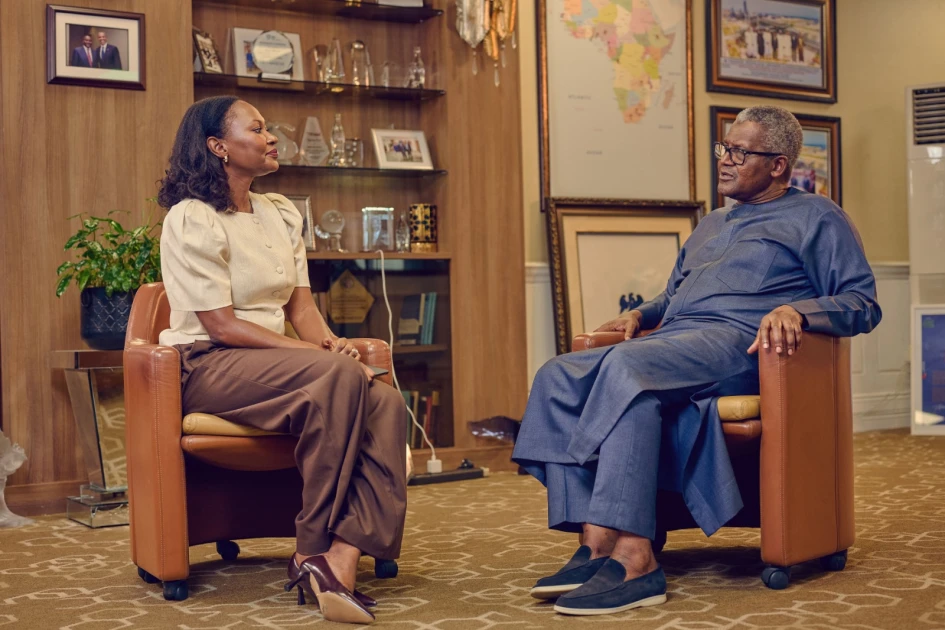
Speaking on the inaugural episode of BBC Africa Enterprise, shortly after the groundbreaking of his mega refinery in Lamu, Kenya, Dangote stated that providing livelihoods and economic opportunities is a mandate for the continent’s leaders. "That's our job," he noted.
Mr. Dangote painted a sobering picture of Africa's demographic realities, challenging the continent's import-heavy consumption models.
"You cannot imagine, you have one quarter of the world's population… and you are not producing anything. If you are not productive, how do you create prosperity? You have to create, you know, jobs," he said.
Highlighting the urgency of the youth bulge, he added: "We have a very young population. This population that we have, the younger ones, they are very, very hungry. They are very aggressive, and you know, so you need to make sure that you calm them by providing a livelihood for them, for providing opportunities for them, and that's our job."
In 2015, Mr. Dangote famously declared that Africa's economic train had left the station, signalling that the continent's growth momentum was irreversible. Reminded of this assertion and asked what must happen over the next decade to achieve true economic sovereignty, he emphasised that the continent must now work very hard to translate its much-talked-about potential into actual industrial capacity.
"We must make sure that we lead the prospects that you have, the opportunities that you have. We attended so many conferences and people say yes, the potential, potential. But you have to put that potential into reality," he said, adding a firm caution on foreign reliance. "The only way that you are going to do that is by us Africans to drive it. Nobody, and I repeat, nobody will come and drive it for us."
To catalyse this growth, he expressed hope for the rapid operationalisation of the African Continental Free Trade Area, arguing that the continent cannot afford to wait until 2050 to become self-sufficient. "Once we are able to sign it, the growth will be there. It will happen," he said.
Mr. Dangote is anchoring this import substitution strategy on his newly launched refinery in Kenya, which boasts a capacity of 700,000 barrels a day. With the groundbreaking having already taken place, he noted that the facility's construction should take less than four years.
Defending the commercial viability of the massive project, he clarified that the facility is strategically positioned as an East African petroleum hub, with the capacity to serve markets as far away as Egypt. The ultimate goal, he explained, is to make African countries self sufficient in energy, fertiliser, and coal.
Addressing the continent's energy security, he said the refinery will have a "massive impact," guaranteeing that nations get their own refined products rather than exporting unrefined crude and importing expensive petroleum products. "They are not going to live hand to mouth," he told the BBC Africa Enterprise, a newly launched global business programme.
Crucially, Mr. Dangote provided a breakdown of the project's capital expenditure and financing structure. He revealed that the refinery is now projected to cost no more than $16 billion, a downward revision from the initial $17 billion estimate.
He attributed this capital efficiency to two main factors: a faster construction timeline that will lower financing costs, and the steep learning curve experienced during the development of his flagship facility in Nigeria. "We are wiser... because we are just learning when we built the one here [in Lagos]," he explained.
The $16 billion project will be funded through a capital structure of 30% equity and 70% debt. Despite the heavy debt component, the industrialist expressed absolute confidence in securing the capital, stating, "We know we don't have any problem raising the money."
The billionaire concluded by calling for robust regional synergies and stakeholder alignment to de-risk and execute such large-scale capital investments: "Whether we are already there, we need to make sure we rally the rest of the people to support us, so that we can actually provide all these things for the continent."
Join the Discussion
Share your perspective with the Citizen Digital community.
No comments yet
This discussion is waiting for your voice. Be the first to share your thoughts!