
CS Chirchir urges engineers to embrace professionalism, calls for strict adherence
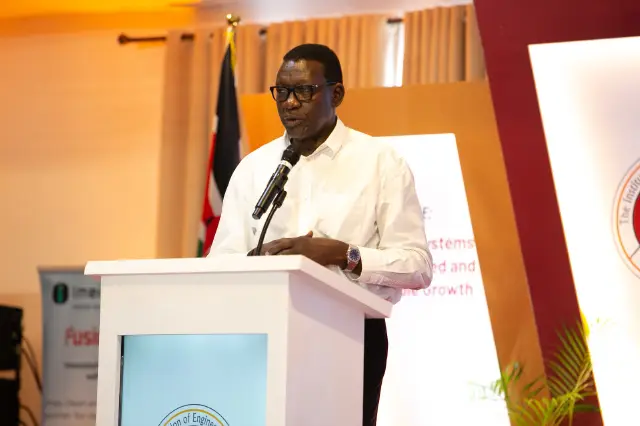
Roads and Transport Cabinet Secretary (CS) Davis Chirchir speaking during the 33rd IEK International Convention in Mombasa on November 25, 2026.

Audio By Vocalize
Speaking during the 33rd IEK International Convention in Mombasa, Roads and Transport Cabinet Secretary (CS) Davis Chirchir highlighted recent concerns over construction, terming compliance with engineering standards non-negotiable.
He said technology alone could not guarantee infrastructure safety where fundamental engineering requirements were ignored.
“Technology cannot compensate for poor design, inadequate workmanship, weak supervision or insufficient maintenance,” Chirchir said.
The CS called for strict adherence to approved designs, applicable standards, quality assurance and competent professional supervision across roads, bridges, buildings, energy, water and telecommunications infrastructure.
He said engineers must also incorporate climate resilience into infrastructure development, particularly as changing rainfall patterns, flooding and rising temperatures expose public assets to new risks.
Echoing his sentiments, Institution of Engineers of Kenya (IEK) President Eng. Harrison Keter said engineers must take ownership of their professional responsibilities and resist practices that undermine the integrity of construction approvals, including allowing their professional stamps to be used on projects they have not supervised.
He warned that failure by qualified engineers to occupy their rightful space in the construction industry would create opportunities for unqualified practitioners, putting buildings and other infrastructure at risk.
“When we don't play our role, we will find that people will fill up that space. Quacks will fill up the construction sector and buildings will collapse. And guess who will be blamed? The engineers,” Keter said.
Keter challenged engineers to embrace innovation, pursue lifelong learning and uphold the highest standards of professionalism, arguing that the industry must demonstrate its value through responsible engineering practice.
On his part, Roads Principal Secretary (PS) Joseph Mbugua said intelligent engineering systems should improve decision-making throughout the entire lifecycle of infrastructure assets, rather than simply introduce new technology into project implementation.
He said better engineering decisions during planning, delivery and management were essential to improving the performance of public infrastructure.
The Government is simultaneously investing in intelligent transport infrastructure, with a three-phase programme targeting 230 major road junctions in Nairobi at a combined cost of Ksh.44.8 billion.
The investment includes a modern Traffic Management Centre and technology installations intended to strengthen traffic monitoring and improve urban mobility.
CS Chirchir also disclosed that the Kenya Roads Board is moving to acquire a Traffic Speed Deflectometer to improve the assessment of pavement conditions and support predictive road maintenance.
Kenya has a classified road network of 239,122 kilometres, with more than Ksh.54 billion committed annually to maintenance.
Keter said the growing infrastructure investment should also create opportunities for Kenyan engineers and local firms, urging the profession to work more closely with Government in providing technical advice and implementing national development projects.
Join the Discussion
Share your perspective with the Citizen Digital community.
No comments yet
This discussion is waiting for your voice. Be the first to share your thoughts!