
COP31 2 billion win for 600 Kenyan schools and 60 TVETs

Audio By Vocalize
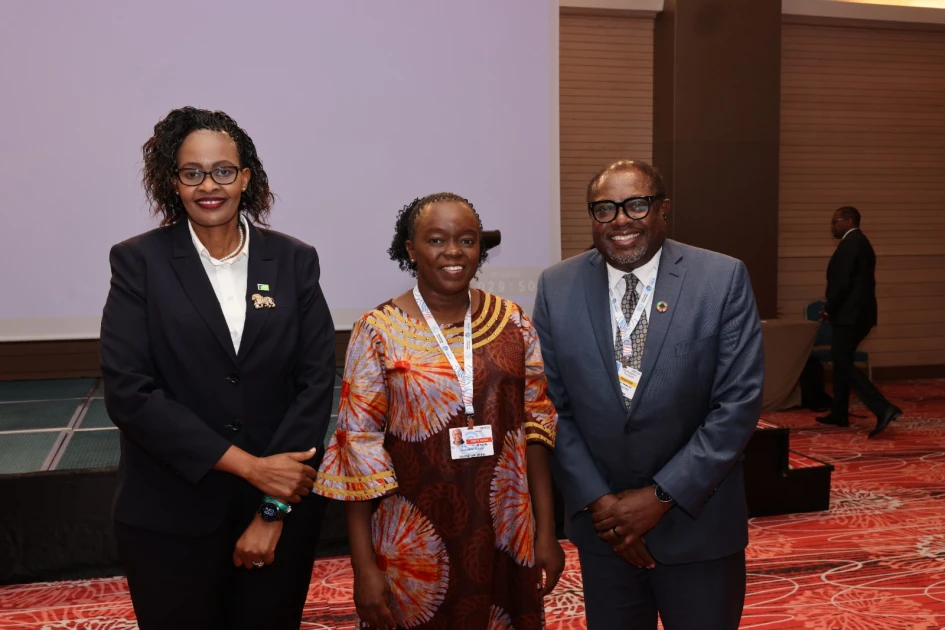
Environment, Climate Change and Forestry Cabinet Secretary Dr Deborah Mlongo Barasa with Kenya Commercial Bank Managing Director Annastacia Kimtai and the Group Board Director William Asiko after the announcement at COP 31.
Kenya’s ambition to move thousands of learning institutions away from polluting energy sources is gaining momentum, with Kenya Commercial Bank (KCB) placing the financing challenge at the centre of discussions in Antalya, Turkey, at the 31st Conference of the Parties (COP31) to the United Nations Framework Convention on Climate Change (UNFCCC).
At a high-level side event in Antalya, Environment, Climate Change and Forestry Cabinet Secretary Dr Deborah Mlongo Barasa and Principal Secretary for Environment and Climate Change Dr Eng. Festus Ng’eno lauded the move in a meeting that KCB, development finance institutions, climate finance partners and private investors explored how strategic partnerships could accelerate the transition to cleaner energy in Kenya’s education sector.
KCB Kenya Managing Director Annastacia Kimtai and the Group Board Director William Asiko, noted that the programme has committed more than KSh2 billion to support 600 schools and 60 technical and vocational education and training (TVET) colleges in adopting cleaner energy solutions. The commitments and discussions to scale up came against the backdrop of a KCB clean energy financing pilot launched in 2022.
For participating institutions, the transition has helped reduce energy costs, lower dependence on biomass fuels and improve electricity reliability. These changes matter in schools where the cost and availability of energy can affect everything from meal preparation to classroom instruction and administration. But the ambition now extends well beyond the institutions already reached.
Cabinet Secretary Deborah Barasa outlined the Government’s commitment to achieving universal access to clean cooking by 2028. She also identified an opportunity to expand the initiative to 10,000 secondary schools, 250 TVET institutions and 42 universities. The proposed expansion carries an estimated financing requirement of USD 460 million. That figure puts the central question into perspective: where will the money come from, and how can it be mobilised at the scale required?
Participants at the event examined the role of concessional finance, risk-sharing instruments and technical assistance in making investments more attractive to private capital. Development finance institutions and investors were identified as important partners in closing the funding gap. The challenge however is no longer simply making the case for cleaner energy in schools, it is securing affordable, long-term financing, bringing more institutions into the programme and ensuring that the transition can be sustained. At COP31, Kenya has put green education financing on the priority table . The next measure of success will be how quickly the partnerships, capital and commitments discussed in Antalya translate into cleaner energy in Kenya’s classrooms, buildings and school kitchens.
Join the Discussion
Share your perspective with the Citizen Digital community.
No comments yet
This discussion is waiting for your voice. Be the first to share your thoughts!