
Closing arguments in Ghislaine Maxwell's trial focus on her relationship with Jeffrey Epstein

Audio By Vocalize
Jurors
deliberated for less than an hour Monday at Ghislaine Maxwell's federal trial
after the prosecution and defense presented closing arguments that focused on
her relationship with Jeffrey Epstein.
As
the prosecutors argued, Maxwell manipulated and enticed vulnerable girls as a key
accomplice in Epstein's extensive scheme to sexually abuse underage girls.
"Maxwell
and Epstein were a wealthy couple who used their privilege to prey on kids from
struggling families," prosecutor Alison Moe said. "The way that they
selected these girls tells you that they were targeting vulnerable kids. It is
not an accident that Jane and Kate and Annie and Carolyn all came from single-mother
households."
In
response, Maxwell's defense used its closing argument to attack the motivations
of the women who testified about the abuse and to contend that Maxwell's
association with Epstein is not criminal.
"She's
being tried here for being with Jeffrey Epstein, and maybe that was the biggest
mistake of her life, but it was not a crime," attorney Laura Menninger
told the jury.
Maxwell,
59, has pleaded not guilty to six federal counts, including sex trafficking of
minors, enticing a minor to travel to engage in illegal sex acts, transporting
a minor with the intent to engage in criminal sexual activity and three related
counts of conspiracy. If convicted on all six counts, she faces up to 70 years
in prison.
The jury deliberated for less than an hour Monday before
adjourning for the day. They are expected to return Tuesday morning at 9 a.m.
The
closing arguments come after a three-week trial highlighted by testimony from four women who
alleged Epstein sexually abused them and that Maxwell facilitated and sometimes
participated in that abuse. The abuse occurred when they were younger than 18
and their accusations stretched from 1994 to 2004.
"Jane"
testified that Maxwell organized sexual massages with Epstein and sometimes joined in the
abuse. "Kate" testified Maxwell set up those sexual
meetings. Carolyn testified Maxwell touched her breasts, hips and butt
and told her -- when
she was 14 -- she "had a great body for Epstein and his friends."
Finally, Annie Farmer testified she was
16 when Maxwell massaged her naked chest at Epstein's New Mexico ranch in 1996.
The
defense rested Friday after presenting its case over
two days. They argued that Maxwell is being scapegoated for Epstein's criminal
behavior and tried to attack the women's memories and motivations.
Maxwell declined to testify Friday,
telling Judge Alison Nathan when asked whether she understood her rights:
"Your honor, the government has not proven its case beyond a reasonable
doubt. And so there is no need for me to testify." The jury was not
present.
Epstein,
the elusive financier who pleaded guilty in 2008 to state prostitution
charges, was indicted on
federal sex trafficking charges in July 2019 but died by suicide in
prison a month later. Maxwell, his close companion and longtime associate, was
arrested in 2020.
Prosecution
links Maxwell to Epstein
While
the four women's testimony is the crux of the charges, the prosecution has also
focused on closely linking Maxwell to Epstein. For example, the prosecution
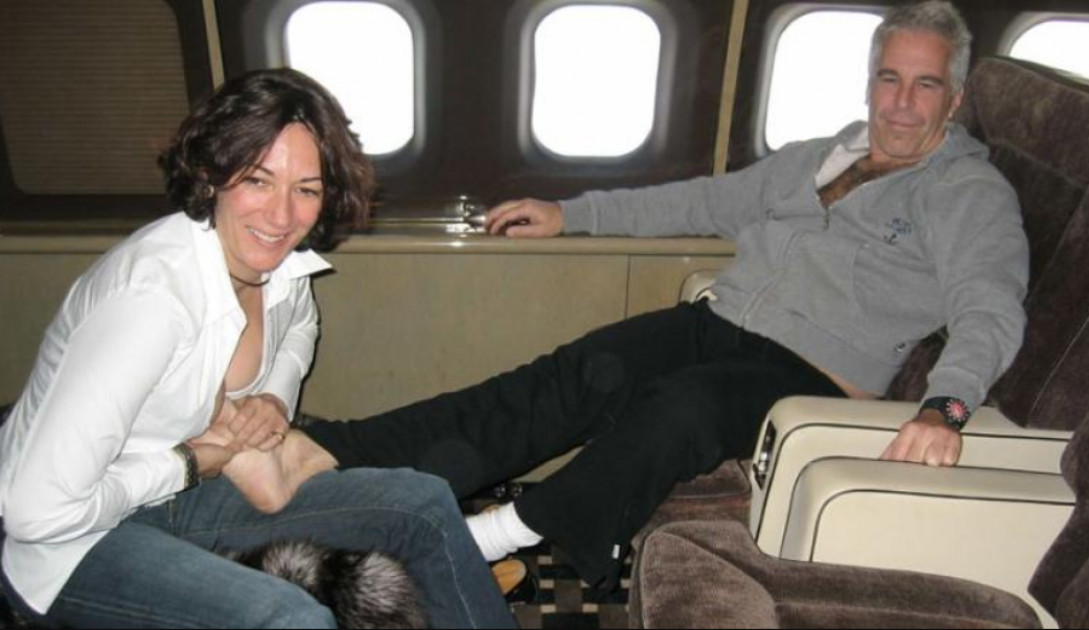
showed a series of photos to jurors of the two embracing and smiling together
over the years, including several images of her massaging his foot.
In
closing arguments, the prosecution said that close relationship was key to the
abuse.
"When
you're with someone for 11 years, you know what they like," Moe said.
"Epstein liked underaged girls. He liked to touch underaged girls. Maxwell
knew it. Make no mistake, Maxwell was crucial to the whole scheme. Epstein
could not have done this alone."
Maxwell
normalized physical touch and sexuality to the alleged victims she groomed for
Epstein, the prosecution argued.
"A
single middle-aged man who invites a teenage girl to visit his ranch, to come
to his house, to fly to New York, is creepy," Moe told jurors. "But
when that man is accompanied by a posh, smiling, respectable, age-appropriate
woman, that's when everything starts to seem legitimate. And when that woman
encourages those girls to massage that man, when she acts like it's totally
normal for the man to touch those girls. It lures them into a trap. It allows
the man to silence the alarm bells."
Jurors
again saw pages from Epstein and Maxwell's "little black book with their
victims' names in it" recovered from Epstein's home. One page titled
"Massages Florida" had notes "Mom," "dad," and
"parents" next to some females' names. "When you contact a
professional masseuse you don't need to call her mom or dad," Moe said.
The
prosecutor told jurors to believe the four women who testified about the abuse
and suggested the similarity of their stories was important to their
credibility.
"They're
not all somehow suffering the same mass delusion," she said.
Moe
also said Maxwell made her own choices and now has to answer for them.
"She
committed crimes hand in hand with Jeffrey Epstein. She was a grown woman who
knew exactly what she was doing and she's sitting here in this courtroom being
held accountable for breaking the law," she said.
Defense
says Maxwell is innocent and attacks accusers
Menninger,
Maxwell's defense attorney, spoke for two hours as she worked to poke holes in
the prosecution's case and attacked the women who said they were abused.
She
said the prosecution's case is based on speculation and distracting photos of
Maxwell with Epstein, reminding jurors several times, "Ghislaine Maxwell
is not Jeffrey Epstein."
"Ghislaine
Maxwell is an innocent woman wrongfully accused of crimes she did not commit,"
Menninger said.
The
government "certainly proved to you that Epstein had abused his money and
his power. They proved to us that he was a master manipulator. That has nothing
to do with Ghislaine and everything to do with Jeffrey Epstein. We are not here
to defend Jeffrey Epstein. He is not my client," she said.
Menninger
suggested several theories in attempts to undermine the four women who
testified they were abused. She theorized that they may be misremembering or
lying for their personal gain, that they added Maxwell to their stories at the
government's suggestion, and that the abuse may have happened years later when
they were above the age of consent.
"The
money brought the accusers to the FBI, with their personal injury lawyers
sitting right there next to them. The lawyers manipulated their stories, and
the government accepted those stories at face value. Without ever testing them
or corroborating them or checking with other witnesses to see if they were
accurate," Menninger said.
The
defense attorney went through the testimony of each accuser and questioned
their "highly flawed" memories of decades-old allegations,
highlighting the inconsistencies in their timelines and their previous
interviews with law enforcement. Two of the victims, Carolyn and
"Jane," did not mention Maxwell in their initial law enforcement
interviews, according to trial testimony.
"Why
would you go decades without mentioning Ghislaine Maxwell and suddenly when you
have your personal injury lawyer you add her to the mix?" Menninger said.
Menninger
also suggested Maxwell herself was manipulated by Epstein, who showed her only
parts of his life so she didn't know anything about Epstein's sexual
proclivities or crimes.
"It
was clear Epstein was a manipulator of everyone around him," Menninger
said. "Someone like Jeffrey Epstein is always trying to control the people
around them -- use his position to manipulate people and play them off against
one another."
Join the Discussion
Share your perspective with the Citizen Digital community.
No comments yet
This discussion is waiting for your voice. Be the first to share your thoughts!