
Civil society urges action on pre-eclampsia, maternal anaemia as Kenya loses 16 mothers daily

Audio By Vocalize
The coalition, bringing together representatives from Kenya, Ghana, Malawi, Senegal and Tanzania, says preventable complications during pregnancy continue to claim the lives of thousands of women and newborns despite the availability of medicines, diagnostics and other tools that can save lives.
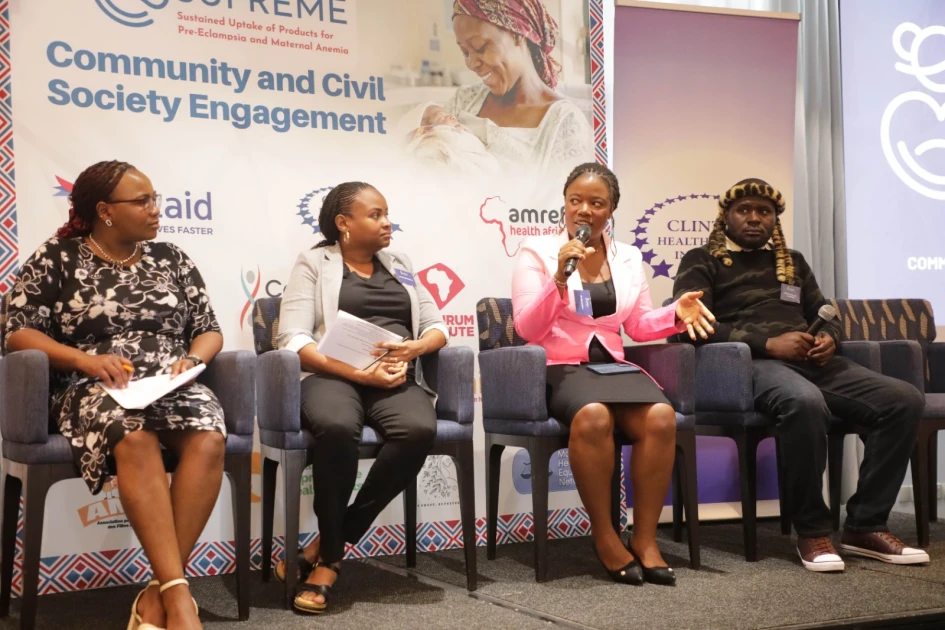
The call was made in Nairobi during a meeting convened under the SUPREME project, a Unitaid-funded initiative seeking to expand access to maternal health products and accelerate the introduction of new diagnostic innovations.
In Kenya, maternal mortality remains high at 355 deaths for every 100,000 live births, translating to about 16 mothers dying every day from preventable causes, according to the coalition.
Pre-eclampsia, a hypertensive disorder that develops during pregnancy, is the second leading cause of maternal deaths globally after postpartum haemorrhage.
Globally, an estimated 76,000 women and 500,000 babies die every year from pre-eclampsia and eclampsia.
Maternal anaemia, meanwhile, affects about 37 per cent of pregnant women globally, with the greatest burden reported in sub-Saharan Africa and South Asia. The condition increases the risk of premature birth, low birth weight and stillbirth, while severe anaemia can also increase the risk of pre-eclampsia and postpartum haemorrhage.
But beyond the statistics are women and families who have experienced the consequences.
A mother of four who spoke during a focus group convened by the Zuri Nzilani Foundation in Nairobi earlier this year said she lost two children to pre-eclampsia because she did not know about the condition at the time.
“Two of my children died because of pre-eclampsia. I didn't know about the condition at the time,” she said.
The coalition says many cases of pre-eclampsia are detected late, often after symptoms have become severe, due to gaps in access to basic diagnostic equipment and maternal healthcare.
Some clinics, it says, have only one or two blood pressure machines, and some equipment is unreliable or has cuffs that do not fit all women.
For women in hard-to-reach areas, transport costs and long waiting times can further delay access to care.
Community health workers, who are often the first point of contact for pregnant women, also face challenges, including a lack of portable diagnostic equipment and inadequate support for basic needs such as batteries and repairs.
Similar gaps affect the prevention and management of maternal anaemia, with limited diagnostic testing and low completion rates for recommended iron supplementation.
The coalition has now launched an awareness campaign dubbed “Bring the pressure down. Put the pressure on.”, calling for governments, funders, manufacturers and regulators to act on pre-eclampsia while continuing advocacy on maternal anaemia.
“No woman should die while giving life from complications we know how to prevent and treat,” said Catherine Kakolo Mongella, Chair and CEO of the Thrive Beyond Preeclampsia Foundation in Tanzania.
“The medicines and diagnostics exist. But tools alone are not enough. They must reach women at the right time and in the right place,” she added.
The organisations are calling on governments and funders to make maternal health a priority in national budgets and translate regional commitments into funded programmes.
They are also urging manufacturers and regulators to develop and make available new innovations while ensuring medicines, diagnostics and other tools are rigorously tested, reliably supplied and affordable for health systems.
The coalition further wants governments and clinical decision-makers to recognise, train, equip and adequately resource community health workers, who are often the first and sometimes only point of contact for pregnant women.
Ruth Wangari Gitau, a pre-eclampsia survivor and member of the Kenya Community Advisory Board for the SUPREME project, said women who have experienced the conditions should be involved in designing solutions.
“I am a survivor of pre-eclampsia, and I know that a woman's survival should never depend on luck, or on whether the nearest clinic happens to have what she needs,” Gitau said.
She said women understand the barriers they face, including cost, distance, stigma and lack of trust, and should therefore be involved in shaping maternal health interventions.
The SUPREME project operates in Ghana, Kenya, Malawi, Senegal and Tanzania, bringing together communities, civil society organisations, manufacturers, governments and health workers to improve access to maternal health products and influence policy.
The coalition says its next phase will involve taking the campaign and country-specific action plans developed in Nairobi into communities and national decision-making spaces.
It maintains that the tools needed to prevent many maternal and newborn deaths already exist, but their impact will depend on whether governments and other stakeholders ensure they reach women when and where they are needed.
Join the Discussion
Share your perspective with the Citizen Digital community.
No comments yet
This discussion is waiting for your voice. Be the first to share your thoughts!