
Civil society groups push leaders to prioritise health investment at Nairobi Summit
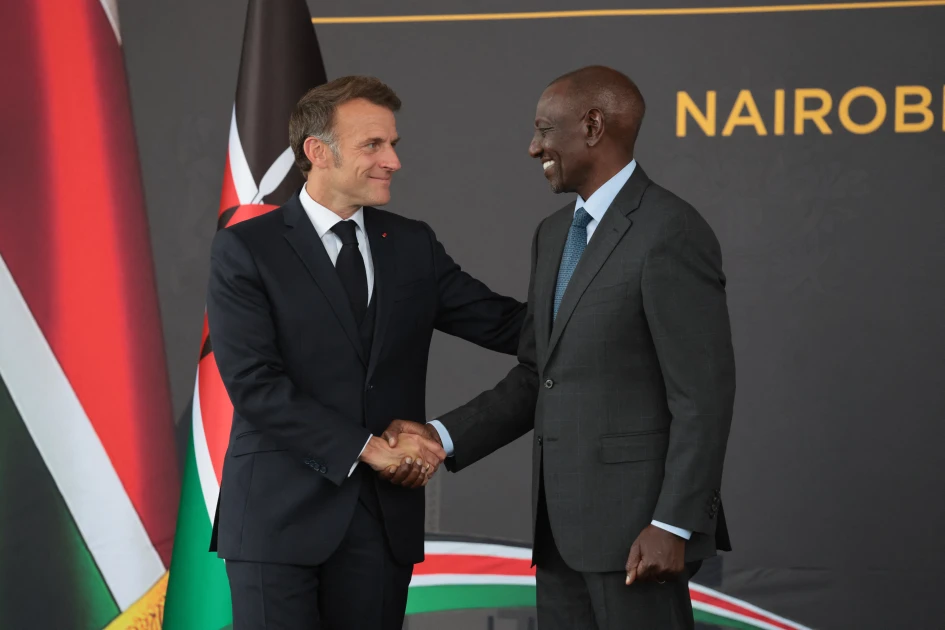
France's President Emmanuel Macron (L) shakes hands with Kenya's President William Ruto (R) ahead of the Africa Forward: Africa- France Partnerships for Innovation and Growth Summit in Nairobi, on May 10, 2026. Photo by LUDOVIC MARIN / AFP

Audio By Vocalize
In a joint statement, the organisations warned that years of progress in the fight against HIV, tuberculosis (TB), and malaria could be reversed if governments fail to strengthen health systems and increase financing for healthcare.
The groups emphasised that resilient health systems are essential not only for public health, but also for economic growth, security, and social stability. The summit comes at a critical moment for global health financing, with resilient health systems forming one of the key themes of the meeting in Nairobi.
The civil society organisations argue that Africa cannot achieve sustainable development without strong healthcare systems that prioritise ordinary citizens, especially vulnerable communities.
“You cannot drive Africa forward without strengthening health systems, and you cannot speak about health without putting people at the centre,” said Rosemary Mburu (Executive Director, WACI Health).
Mburu added that partnerships between African governments and international donors should be guided by national priorities and the realities faced by communities rather than external interests.
“Sovereignty is a pathway with milestones, and solidarity means partners journeying with African nations along that pathway guided by national priorities, not isolation,” she said.
In their statement, the coalition outlined three key demands to leaders attending the summit. First, they called on governments to treat health as a strategic investment that drives prosperity and national security. This includes investing in healthcare workers, strengthening clinics and hospitals, and ensuring medical innovations reach poor and underserved communities.
Secondly, the organisations urged leaders to place communities and civil society groups at the centre of reforms in global health governance, arguing that healthcare policies are more effective when they reflect the lived experiences of patients and frontline workers.
They also appealed for reforms in global health financing to help African countries build long-term health sovereignty through increased domestic health budgets, support for local pharmaceutical manufacturing, and donor funding that strengthens national systems instead of creating dependency.
The coalition further highlighted growing concerns over declining international support for health programmes. They pointed to the Global Fund’s 8th Replenishment in 2025, which raised US$12.64 billion, significantly below its US$18 billion target.
According to the coalition, the funding gap threatens decades of progress made in tackling HIV, TB, and malaria.
Over the last two decades, Global Fund-supported programmes have helped save an estimated 70 million lives worldwide. However, civil society groups warned that reduced financing could lead to medicine shortages, disrupted treatment programmes, and increased healthcare costs for poor households.
The organisations also noted that recent cuts in United States funding for health programmes have already exposed the vulnerability of many African healthcare systems. Communities are reportedly facing treatment interruptions, shortages of essential medicines, and reduced support for community health workers, many of whom are already underpaid.
Healthcare experts say such setbacks could disproportionately affect low-income families, women, children, and people living with chronic illnesses.
Civil society leaders stressed that healthcare reforms must translate into meaningful improvements in people’s daily lives.
Modou Lamin B. Bah, who also serves as a member of The Gambia’s National Assembly, said African lawmakers are closely monitoring the outcomes of the summit.
“African parliaments are watching this Summit closely. We want to see results translate into functioning clinics and mothers who survive childbirth,” he said.
He added that true health sovereignty requires governments to pass laws and allocate resources that strengthen healthcare systems at home.
Meanwhile, Carol Nawina Nyirenda from Zambia said communities are less interested in political rhetoric and more concerned about practical improvements in healthcare access.
“When our African leaders commit to sovereignty and partners such as France commit to equitable partnerships, communities are not looking for new language. We are looking for a real change in our daily lives,” she said.
“The true test for the Summit is simple: Will a woman in our community still have to choose between her health and her livelihood?”
The coalition noted that the statement builds on several recent regional and international health discussions, including the One Health Summit in Lyon, the World Health Summit Regional Meeting in Nairobi, and the African Union’s Africa Health Security and Sovereignty Agenda.
Their discussions reflect growing recognition that African countries must reduce dependence on external aid by investing more in local healthcare infrastructure, pharmaceutical production, and healthcare workers.
At the same time, they stressed that international partnerships remain important, provided they are based on fairness, collaboration, and local priorities.
Join the Discussion
Share your perspective with the Citizen Digital community.
No comments yet
This discussion is waiting for your voice. Be the first to share your thoughts!