
Boma Badingilo: Inside South Sudan's wonder - the world’s largest land mammal migration

Audio By Vocalize
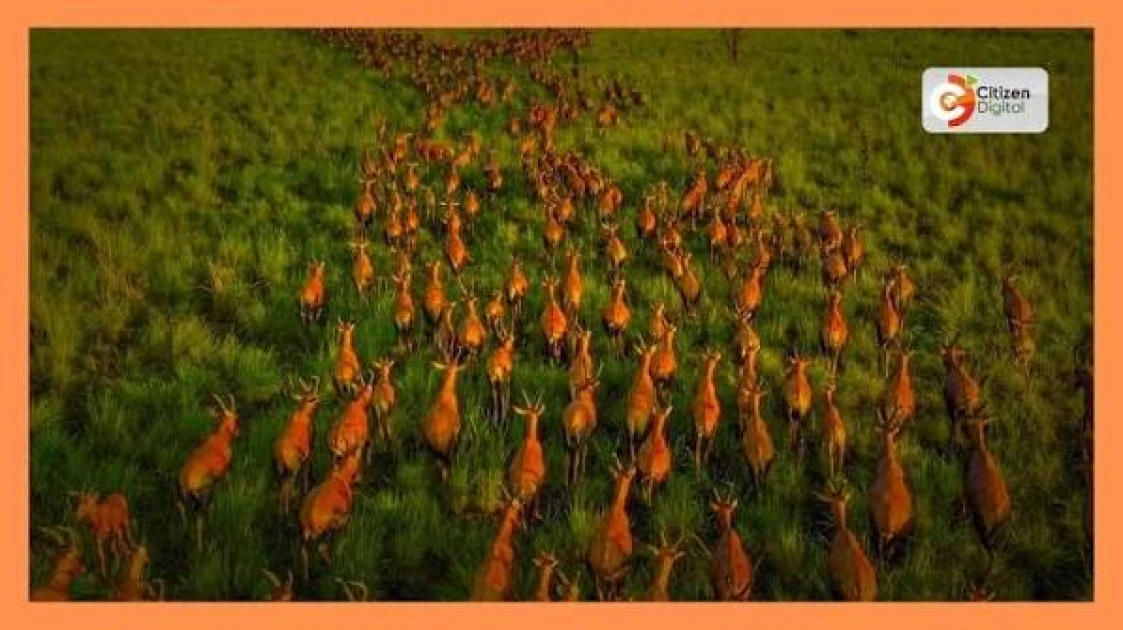
Located deep in South Sudan, Boma-Badingilo National Park is home to one of Africa’s most spectacular wildlife migrations, with nearly six million antelopes moving across thousands of square kilometres during the May-September migration season.
The scale of the migration is so vast that conservationists say it rivals and in some respects surpasses the wildlife spectacles associated with some of East Africa’s most famous parks.
The wildlife movement follows seasonal rains and ancient migratory routes, with the animals traversing an area described as being comparable in size to the United Kingdom.
South Sudan’s Minister for Wildlife Conservation and Tourism Denay Jock Chagor, says the country wants to open up the destination to the world while preserving its natural character.
“We want to modernize it. We want to make sure that it is open for the rest of the world and on top of that we want to keep it as natural as it can be,” Denay told Citizen TV’s Jeff Koinange when he toured Juba.
The minister says the government is looking at carefully managed tourism infrastructure, including small lodges and dirt roads that would allow visitors to explore the vast wilderness without disrupting wildlife.
“We don’t want to create massive buildings within the park that will drive away the animals. We want to keep this because this is the only place where you can find this on earth.”
For tourists, the attraction is not limited to the migration. The 10,000 square kilometre park is home to a wide variety of wildlife, including gazelles, tiang, elephants, giraffes and large populations of predators such as lions and leopards. The landscape also becomes a spectacular nursery during the migration season, with up to 1.3 million young animals born between May and June.
Jan Fourie, the park manager at Boma National Park, says the sheer scale of the wilderness makes difficult to compare with other destinations on the continent.
“I’ve been around to a few countries in Africa and I think I still struggle to find the right way to describe it,” he shared.
He says the uninterrupted movement of wildlife is one of the destination’s greatest tourism attractions.
“To see that mass of wildlife moving from north to south or south to north. It’s spectacular. It’s really something,” Fourie added.
Unlike many traditional national parks, Boma-Badingilo is not defined by fences separating wildlife from surrounding communities. Instead, people live alongside the animals and depend on the land and its natural resources.
The camp operator describes this as a people-driven conservation model, arguing that the future of the park depends on local communities being directly involved in protecting it.
“If the people don’t do the conservation, it will never work.”
The government sees tourism as a potential source of investment and employment, particularly for communities living around the park. Authorities are also looking at unlocking what they describe as natural capital, including biodiversity and carbon capture, while creating economic opportunities from sustainable tourism.
The minister says South Sudan wants visitors to experience the wilderness without turning it into an overly developed tourist destination.
“We also want to build dirt roads within the park so that people can drive through and see this massive view. But mainly we want to keep in mind that it has to be as natural as it can be,” said Denay.
For now, Boma-Badingilo remains largely unexplored by international tourists, offering a rare opportunity to experience Africa’s wildlife away from the crowds.
The camp owner says the destination needs to grow carefully.
“We would like more people to come and I’m sure that once this word goes out, people will come here. It is an incredible place, but we need to manage it carefully.”
With its massive wildlife migration, diverse animal population and untouched landscapes, South Sudan hopes Boma-Badingilo can become a major tourism attraction while avoiding the overdevelopment that has transformed other popular wildlife destinations.
South Sudan now faces the challenge of turning that wilderness into a sustainable tourism asset without losing what makes Boma-Badingilo extraordinary in the first place.
Join the Discussion
Share your perspective with the Citizen Digital community.
No comments yet
This discussion is waiting for your voice. Be the first to share your thoughts!