
Black smoke signals no pope elected in first conclave vote
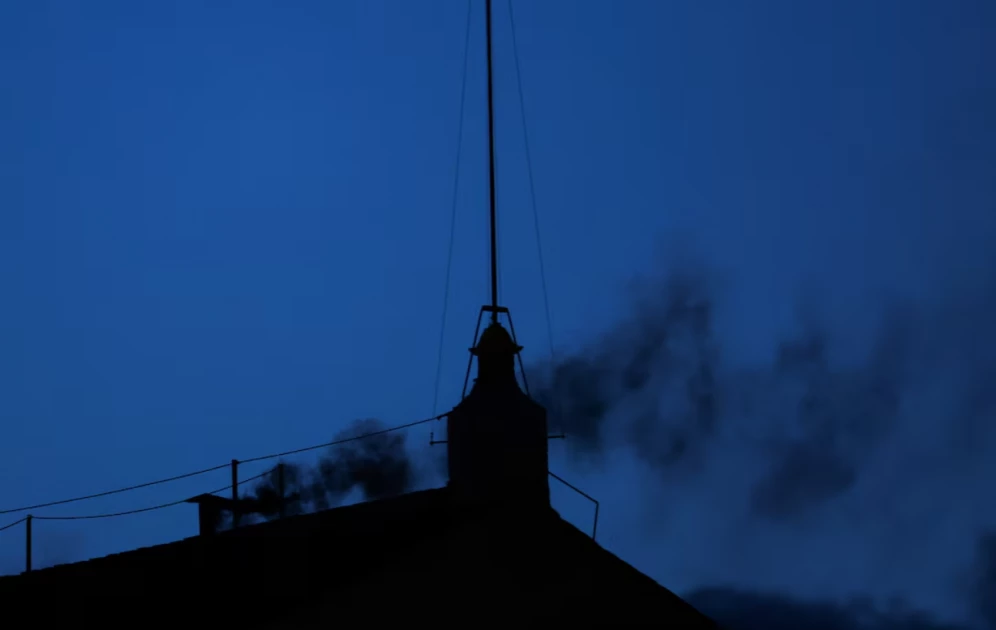
Black smoke rises from the chimney on the Sistine Chapel, indicating no decision has been made to elect a new pope, at the Vatican, May 7, 2025. REUTERS/Murad Sezer

Audio By Vocalize
Black smoke
billowed from the chimney of the Sistine Chapel on Wednesday evening,
signalling an inconclusive first vote by cardinals locked in the Sistine Chapel
in a conclave to elect a new pope to guide the Roman Catholic Church.
Thousands of
faithful gathered in St. Peter's Square waiting for smoke to pour from a narrow
flue on the roof of the chapel at the end of a day rich in ritual and
pageantry, with prelates praying for divine guidance in their secret ballot.
The crowds had to
be patient as it took longer than expected for the smoke to appear, more than
three hours after the start of the conclave. This was an hour more than it took
for smoke to be seen after the first vote in the 2013 conclave that picked the
late Pope Francis.
When a pope is
chosen, white smoke will emerge, but this had not been expected on Wednesday –
a pontiff has not been picked on the first day of a conclave in modern times.
However, some
cardinals said this week that they hoped to wrap things up by Thursday or
Friday to show the Church can remain unified after the often divisive, 12-year
papacy of Francis, who died last month.
The 133 cardinal
electors, who are all aged under 80, will spend the night secluded in one of
two Vatican guesthouses – where they can continue their deliberations in a more
informal setting before returning to the chapel on Thursday morning.
Following
Wednesday's single round of voting, the red-hatted "princes of the
Church" will hold two votes in the morning session and two in the
afternoon, continuing in coming days until one man has secured a majority of at
least two-thirds – 89 cardinals this time around.
Their only
communication with the outside world will be the smoke from the chimney as they
burn their completed ballot papers mixed with special chemicals – black when a
voting session ends with no result, white when a pontiff is elected.
Modern papal
conclaves are typically short. The 2013 conclave lasted just two days, likewise
in 2005 when his predecessor, Benedict XVI, was picked.
In recent days,
cardinals have offered different assessments of what they are looking for in
the next pontiff who will lead the 1.4-billion-member Church.
While some have
called for continuity with Francis' vision of greater openness and reform,
others have said they want to turn the clock back and embrace old traditions.
Many have indicated they want a more predictable, measured pontificate.
‘Good of the
Church’
In a sermon ahead
of the conclave, Italian Cardinal Giovanni Battista Re, who at 91 is too old to
take part in the vote, told his fellow prelates they must set aside "every
personal consideration" in choosing the new pontiff and keep in mind "only
... the good of the Church and of humanity".
He also suggested
the next pope had to respect diversity within the Church. "Unity does not
mean uniformity, but a firm and profound communion in diversity," he said.
Some
ultra-conservatives had branded Francis as a heretic, accusing him of being too
welcoming to the LGBT community, too accommodating to Protestants and Muslims
and too open on a range of topics, including offering Communion for the
divorced.
No clear favourite
has emerged, although Italian Cardinal Pietro Parolin and Filipino Cardinal
Luis Antonio Tagle are considered the front-runners.
However, if it
quickly becomes obvious that neither can win, votes are likely to shift to
other contenders, with the electors possibly coalescing around geography,
doctrinal affinity or common languages.
Among other
potential candidates are France's Jean-Marc Aveline, Hungary's Peter Erdo,
American Robert Prevost and Italy's Pierbattista Pizzaballa.
A record 133
cardinals from 70 countries entered the Sistine Chapel, up from 115 from 48
nations in the last conclave in 2013 – growth that reflects efforts by Francis
during his 12-year reign to extend the geographical reach of the Church.
Among their
considerations will be whether they should seek a pope from the Global South
where congregations are growing, as they did in 2013 with Francis, from
Argentina, or hand back the reins to Europe, or even pick a first U.S. pope.
Latin chants and
organ music accompanied the cardinals as they processed into the frescoed
Sistine Chapel before the conclave began, with Michelangelo's depiction of
Christ delivering the Last Judgment dominating the 500-year-old room.
They laid their
hands on the Gospels, taking a vow of secrecy not to divulge anything about
their gathering.
Archbishop Diego
Ravelli, the Vatican's master of ceremonies, then pronounced the Latin command
"Extra omnes!" (Everyone out!) telling those not involved in the
gathering to leave the room, with the chapel's heavy wooden doors slamming shut
on the outside world.
There is not meant
to be any discussion in the voting sessions but past experience suggests there
will be plenty of covert campaigning during breaks and meals as the names of
"papabili" rise and fall in successive ballots.
Join the Discussion
Share your perspective with the Citizen Digital community.
No comments yet
This discussion is waiting for your voice. Be the first to share your thoughts!