
Beyond the pulpit: How Faith‑Based organisations drive Kenya’s economic and social development
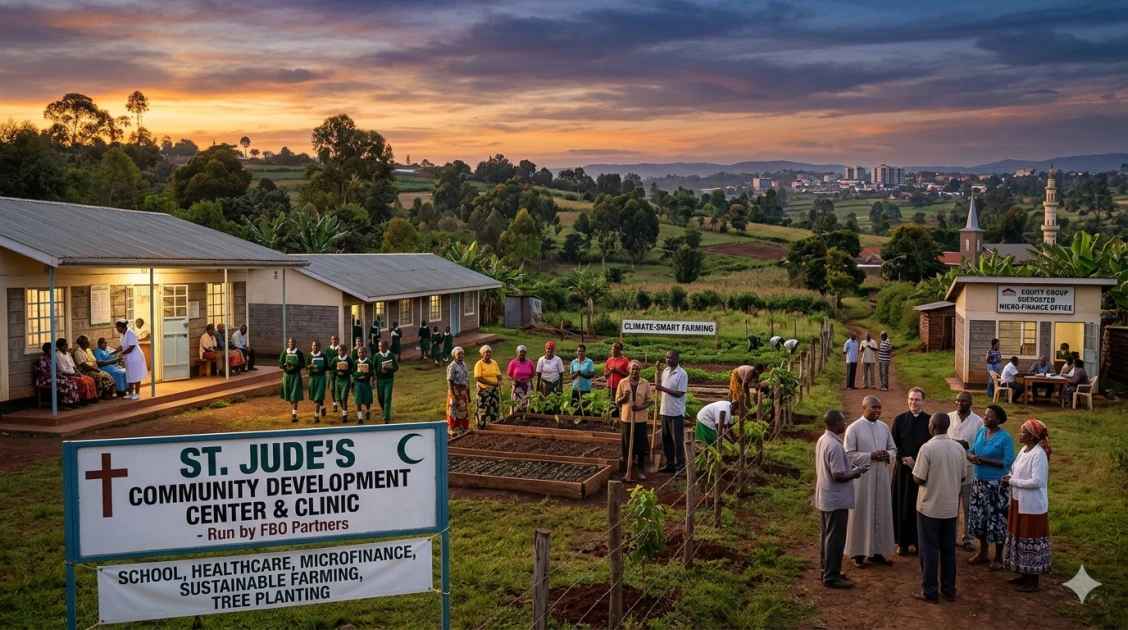
An AI-generated image showing how FBOs support communities economically. PHOTO | GEMINI

Audio By Vocalize
When we think of faith-based organisations (FBOs) in Kenya, our minds often go to spiritual guidance and houses of worship. But to limit their influence to the pulpit is to overlook one of the most powerful and deeply embedded engines of our nation's socio-economic development.
Far from
being just spiritual anchors, these institutions are indispensable partners in
building a more prosperous and cohesive Kenya, contributing in ways that are
both measurable and profound.
One of their most vital roles is stepping into the gap in
the provision of essential services. Across the country, especially in rural
and marginalised areas where state infrastructure is stretched thin, FBO-run
schools and hospitals offer a lifeline. By providing education and healthcare
either free of charge or at heavily subsidised rates, they ensure that
vulnerable and low-income populations are not left behind. This work represents
a direct and substantial contribution to the health and education components of
our national Gross Domestic Product (GDP).
Beyond these core services, FBOs are central to Kenya’s social protection ecosystem. Many run targeted programs that support Persons Living With Disabilities (PLWDs), including specialised education, vocational training, and community inclusion initiatives.
They also organise free medical
camps in underserved regions, offering screening, treatment, and referral
services to populations that would otherwise go without care. In times of
crisis, from droughts to floods, FBOs are often among the first responders,
mobilising humanitarian aid, distributing food and essential supplies, and
providing psychosocial support. This layered approach to social protection
strengthens community resilience and complements state-led interventions.
Beyond service delivery, these organisations are quiet
economic powerhouses. As major employers, particularly in the education and
healthcare sectors, they create thousands of jobs for teachers, medical
professionals, administrators, and support staff. Furthermore, many have
diversified into the hospitality sector with conference centres and retreat
facilities, generating further employment and stimulating local economies.
This has not gone unnoticed by the government, which increasingly recognises FBOs as critical non-state partners in achieving national development goals.
The partnership is especially evident in the health sector, where the Ministry of Health has lauded FBO-run facilities for their role in expanding primary healthcare under the Bottom-Up Economic Transformation Agenda (BETA).
This collaborative model is a powerful example of
how public and faith-based sectors can work in tandem to bridge service gaps and
improve the lives of citizens.
FBOs are also playing an expanding role in promoting food security and sustainable livelihoods at the community level. Through church and mosque-led farming initiatives, training on climate-smart agriculture, and support for cooperative models, they are equipping households with the skills and resources needed to improve productivity and withstand climate shocks.
Beyond agriculture, these organisations invest heavily in capacity building,
offering financial literacy programs, entrepreneurship training, and mentorship,
particularly for youth and women. Their advocacy and community mobilisation
efforts further amplify citizen voices, driving grassroots participation in
development programs and ensuring that policies reflect lived realities on the
ground.
In the face of modern challenges, Kenya’s FBOs are also proving to be remarkably adaptive. The post-pandemic era has seen a rapid shift from cash-based tithing to digital and mobile payment platforms, enhancing financial transparency and promoting wider financial inclusion.
Simultaneously,
a growing environmental consciousness is taking root. Through tree-planting
drives, afforestation programs, and strategic partnerships in green financing,
faith institutions are mobilising their communities to combat climate change
and conserve our natural heritage.
Perhaps the most significant evolution is the strategic pivot towards self-sustainability. While traditionally reliant on donations, many FBOs are now launching income-generating enterprises, from schools and farms to real estate and hospitality ventures.
This entrepreneurial spirit
ensures their long-term viability and impact, and it is here that financial
institutions have a crucial role to play, providing the capital and innovative
solutions needed to turn these ambitious projects into reality.
Furthermore, the most intangible yet invaluable contribution of FBOs is the building of social capital. In a diverse nation, they help dissolve social barriers and foster a sense of unity. By leveraging their moral authority, religious leaders promote trust, cooperation, and shared values that are the bedrock of any thriving economy.
Their presence on public commissions
and national bodies dedicated to peace and integration strengthens our
governance structures and weaves the very fabric of our national cohesion.
Beyond economics, faith-based organisations exert notable influence in Kenya’s civic and public life. Religious leaders are prominent voices in peacebuilding, civic education, and voter awareness, particularly during election periods. Their interventions help temper political tensions and encourage dialogue, accountability, and social justice.
This engagement
reflects a long-standing reality: in Kenya, faith and public life are deeply
intertwined.
Faith-based organisations are a cornerstone of Kenya’s development journey. Their deep community roots, extensive networks, and unwavering commitment to service make them uniquely positioned to complement and amplify government efforts.
To build a truly sustainable and equitable
future, we must move beyond acknowledgement to active support. Strengthening
the partnerships between FBOs, government, and financial institutions is not
merely about supporting religious groups; it is an investment in the very heart
of our nation's progress.
The author is the Group Head of Religious Sector at
Equity Group.
Join the Discussion
Share your perspective with the Citizen Digital community.
No comments yet
This discussion is waiting for your voice. Be the first to share your thoughts!