
Beyond the courtroom: CIArb Kenya’s push for alternative dispute resolution

Audio By Vocalize
While traditional instincts often point toward adversarial courtrooms, expensive legal representation, and protracted litigation, an alternative framework grounded in structured dialogue, specialized expertise, and institutional efficiency is actively redefining how conflict is managed across the African continent.
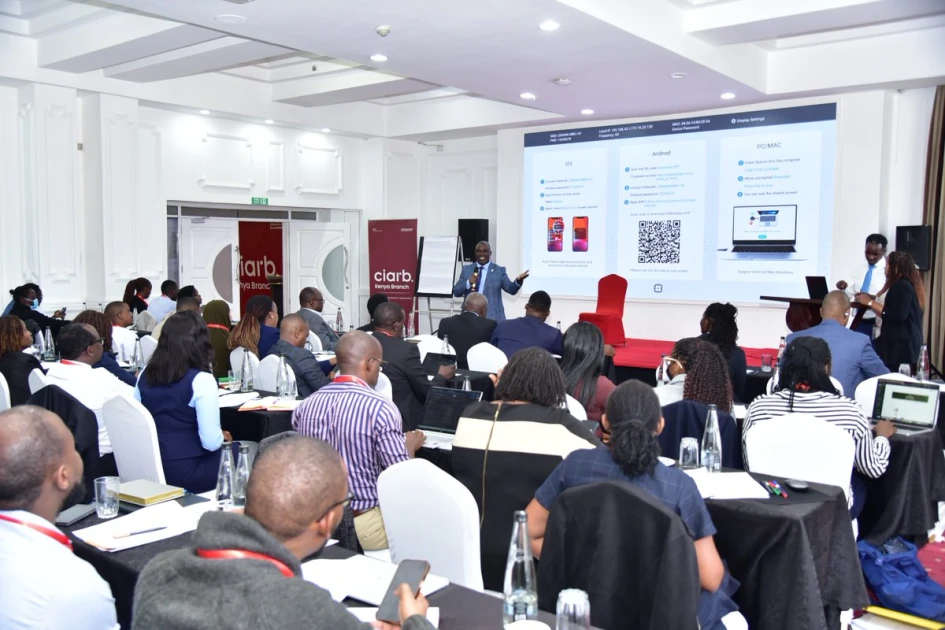
In Kenya, the Chartered Institute of Arbitrators Kenya Branch (CIArb Kenya), is an organization that has spent decades fostering professionalism, ethical standards, and systemic excellence in Alternative Dispute Resolution (ADR).
Established in 1984 as the first CIArb branch on the African continent, the institute’s history traces back to the parent organization founded in London in 1915.
“Over the decades, our work has gone beyond the legal profession,” said Prof. Kenneth Wyne Mutuma, Chairperson of CIArb Kenya.
The Kenyan branch says it has expanded its scope far beyond traditional legal frameworks to champion arbitration, mediation, and adjudication as foundational pillars for commercial stability and regional economic growth.
“We have helped build trust in commerce, supported investment, strengthened institutions and promoted peaceful, efficient resolution of conflict across Kenya and the continent. Today, as Africa's economies become more interconnected and its opportunities more ambitious, the need for strong dispute resolution systems has never been greater,” Mutuma adds.
Behind every commercial impasse or professional dispute sit individuals, enterprises, and long-term economic interests.
Whether it involves a founder safeguarding years of equity, an institutional investor demanding jurisdictional certainty, or commercial entities attempting to maintain operational ties, ADR mechanisms offer distinct pathways.
Mediation opens structured channels for mutual agreement, arbitration provides independent and legally binding determinations, and adjudication delivers rapid technical resolutions.
The objective, it says, shifts from securing a courtroom victory to engineering credible, sustainable solutions that permit parties to maintain commercial momentum.
As cross-border trade, digital commerce, infrastructure projects, and international investments grow in technical complexity, the burden of navigating these disputes falls increasingly on a new generation of practitioners.
Modern dispute resolution demands expertise that transcends statutory law, requiring a firm grasp of international commerce, emerging technology, cultural nuances, and complex negotiation dynamics.
CIArb Kenya says it has placed youth integration at the core of its institutional mandate to ensure the industry evolves alongside the broader African economy.
“Young members are not the future of dispute resolution, we are its present. The YMG gives young practitioners training, mentorship and a voice in how this profession is run. The profession we are shaping resolves African disputes in Africa, faster, cheaper and by practitioners who look like the parties,” says David Onsare, Chair of the Young Members Group (YMG).
CIArb Kenya, in partnership with the African Arbitration Association (AfAA) is set to host the TAKUKA Conference 2026. Scheduled for October 5–9, 2026, at the Diamond Leisure Lodge in Diani, Kenya, the gathering operates under the theme, “Africa Decides: Sovereignty, Innovation & the Future of Dispute Resolution.”
The conference aims to address critical structural challenges including why commercial disputes involving African entities continue to be left to foreign jurisdictions, how to build robust domestic arbitral institutions, and how technological integration can optimize resolution efficiency.
“Ciarb Kenya has spent four decades building the professionals, standards and institutions that give African businesses confidence in resolving disputes,” noted Acting CEO Evelyne Kimani.
“Our work today goes beyond training arbitrators; we are shaping an ecosystem for dispute resolution across the continent, and TAKUKA is where that ambition takes its clearest form.”
Kimani adds that externalizing dispute resolution often leaves African parties subject to foreign legal cultures and elevated costs.
“TAKUKA was created because Africa's disputes deserve African answers. Too often, disagreements involving our businesses and investments are resolved elsewhere, on someone else's terms. Together with the African Arbitration Association, we are building a platform where African institutions, expertise and confidence can shape the continent's own dispute resolution future,” she says.
The initiative reflects a broader strategy to reposition the continent from a passive participant in global legal forums into an authoritative hub for conflict management.
“We are not merely discussing the future of dispute resolution. We are helping build a future in which Africa decides, leads, and thrives,” Mutuma further notes.
Ultimately, the goal is to establish self-sustaining mechanisms that manage conflict, while building local capacity.
“The vision of CIArb Kenya is to be the Institute of choice in promoting arbitration and other dispute resolution mechanisms in Kenya, Africa and beyond,” says David Njoroge, Vice Chair of CIArb Kenya.
Join the Discussion
Share your perspective with the Citizen Digital community.
No comments yet
This discussion is waiting for your voice. Be the first to share your thoughts!