
Akamba community files landmark case against UK over colonial injustices

Audio By Vocalize
A historic legal case has been filed against the United Kingdom by members of the Akamba community seeking compensation, land restitution, and a formal apology for alleged injustices committed during the colonial era.
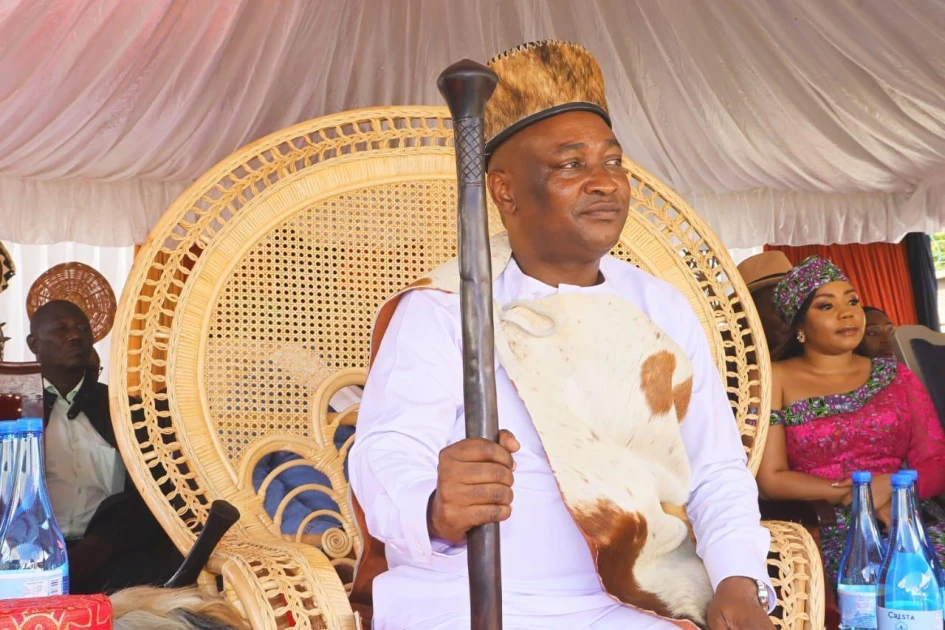
The case, led by
Dr. Augustus Kyalo Muli, National Patron of the Anzauni Clan and leader of the
National Liberal Party, accuses British colonial authorities of systematically
dispossessing the Akamba people of their fertile lands, confiscating livestock,
and suppressing cultural practices.
Among the banned
traditions was the brewing of kaluvu, a traditional drink central to Akamba
social life.
According to the
claim, the colonial administration forcibly relocated the community to
semi-arid regions with limited rainfall, effectively dismantling their
agricultural livelihoods.
The suit further
alleges that these policies pushed many Akamba into forced labor and military
service under harsh conditions described as “subjection by starvation.”
Today, the
community—estimated at around five million people—continues to face economic
hardship and marginalization, which the petition attributes to these historical
actions.
In Makueni County,
some elderly residents are said to still live in makeshift structures near
railway lines after being displaced from ancestral lands decades ago.
To pursue the
case, Muli has assembled an international legal team comprising Leigh Day, Bosek
& Co. Advocates, and the Kenya Human Rights Commission. Leigh Day
previously represented Mau Mau veterans in a successful 2013 case that resulted
in compensation and an official apology from the British government.
The legal argument
draws on international conventions and precedents, including the ILO Forced
Labour Convention of 1930 and a 2022 ruling by the African Court on Human and
Peoples’ Rights in the Ogiek v Kenya case, which affirmed land rights and
reparations for indigenous communities.
Evidence submitted
in the claim includes colonial administrative records, Parliamentary Hansard
reports from 1938 acknowledging cattle seizures, recent court findings on land
dispossession in Makueni, and petitions documenting continued cultural
suppression.
The Akamba
community is seeking a formal apology from the UK Parliament, the establishment
of a compensation fund, restitution of alienated lands beginning with over
5,000 acres in Makueni, and support for cultural restoration efforts, including
the repatriation of artifacts.
The claim also
calls for development funding for schools, healthcare, water infrastructure,
and local industries.
Muli has called on
all 22 Akamba clans to unite in support of the case, urging families to provide
testimonies and preserve historical records as evidence.
“This is not
misfortune. This is a historical crime,” he said, expressing confidence that
sustained legal action will restore the community’s dignity and secure
long-term economic and political redress.
The case is
expected to take years to conclude, but legal experts note that previous
rulings against colonial-era abuses could shape its outcome.
Join the Discussion
Share your perspective with the Citizen Digital community.
No comments yet
This discussion is waiting for your voice. Be the first to share your thoughts!