
Agnes Wanjiru's family claims they were locked out of Parliamentary session on BATUK inquiry
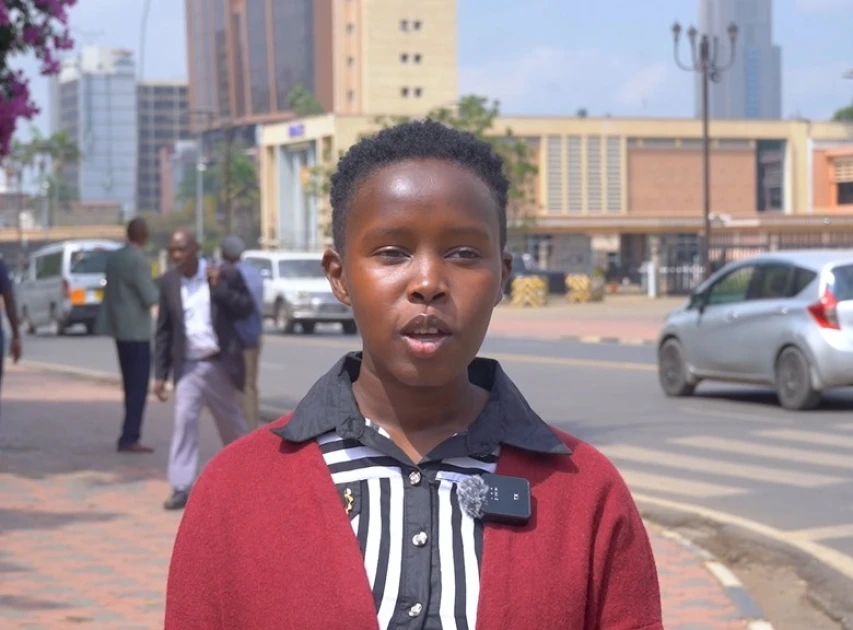
Esther Njoki, a niece to Agnes Wanjiru and the family spokesperson, speaks outside Parliament buildings.

Audio By Vocalize
The family of Agnes Wanjiru, the Kenyan woman whose 2012 murder has been linked to British soldiers attached to the British Army Training Unit Kenya (BATUK), was reportedly denied access to a Parliamentary session convened to deliberate on the long-running inquiry into the military unit's conduct.
The National Assembly's
Departmental Committee on Defence, Intelligence and Foreign Relations met on
June 10, 2026, to discuss findings and recommendations from its inquiry into
BATUK.
However, proceedings were conducted behind closed doors
despite expectations that the session would be open to the public.
According to information released
by activists following the meeting, members of Wanjiru's family, accompanied by
their lawyer, arrived at Parliament Buildings hoping to follow the proceedings
but were turned away by security officers.
They reportedly received no formal communication from the
committee explaining why they could not attend.
Speaking outside Parliament,
Esther Njoki, a niece to Wanjiru and the family spokesperson, expressed frustration
over what she described as years of discussions without meaningful action.
She urged authorities to move beyond meetings and deliver
justice for victims linked to alleged BATUK abuses, including compensation for
affected families.
“By last year November, we knew that the case would be heard
in November this year, which is a whole year, and we’re not certain of the
outcome of the court. We’ve been having talks with the UK government, but we’re
still being faced with frustrations because even after they had an inquiry, we’re
not seeing anything being implemented,” said Njoki.
Wanjiru, then a 21-year-old
mother of a five-month-old baby, disappeared in Nanyuki in March 2012. Her body
was discovered three months later in a septic tank near a hotel.
The case has since become one of the most prominent symbols of
calls for accountability involving British troops stationed in Kenya.
In November last year, former
British soldier Robert James Purkiss appeared before a court in the United
Kingdom after being arrested in connection with the case.
Court proceedings heard allegations that he had previously admitted
responsibility for Wanjiru's death to a colleague.
However, Kenya has continued to seek accountability in the
case, while calls for extradition and prosecution have remained a subject of
diplomatic and legal debate.
The Parliamentary inquiry has attracted
significant public interest. On May 29, Committee Chairperson Nelson Koech told
a visiting British Parliamentary delegation that the June 10 session would
bring together officials from the Office of the Attorney General, the Ministry
of Foreign and Diaspora Affairs, the Ministry of Defence and the British High
Commission to help conclude the committee's report on BATUK.
Reports indicate that the
decision to hold the session in private was made only days before the meeting.
Critics argue that neither the public nor Wanjiru's family were informed of the
change, despite expectations that key stakeholders would be involved in the
deliberations.
Fourteen years after Wanjiru's
death, no one has been convicted over the killing. Human rights campaigners and
the victim's family have repeatedly accused authorities of failing to deliver
justice, with concerns now being raised over the transparency of Parliament's
inquiry process.
Join the Discussion
Share your perspective with the Citizen Digital community.
No comments yet
This discussion is waiting for your voice. Be the first to share your thoughts!