
African policymakers meet in Nairobi to address education financing crisis

Audio By Vocalize
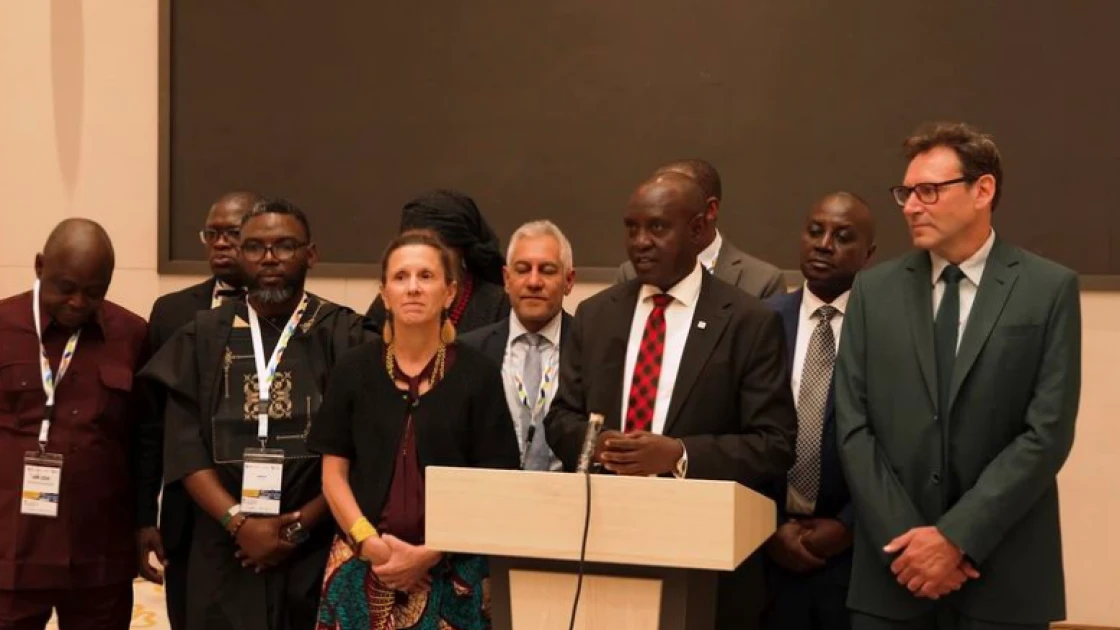
The three-day symposium, running from October 21 to 23, 2026, brings together senior officials from education and finance ministries, parliamentary budget committees and international development institutions to explore financing models that can help African countries sustain and improve their education systems.
Held under the theme “Education Financing in Africa: Navigating Fiscal Constraints, Expanding Demand and System Transformation,” the meeting comes as governments grapple with rising public debt, declining external financing and growing pressure to expand access to quality education.
Rapid population growth, persistent inequalities, climate-related shocks and the high number of out-of-school adolescents have further strained education systems, forcing governments to reconsider how they allocate and manage limited public resources.
The symposium aims to strengthen collaboration between education policymakers and government institutions responsible for national budgeting, with participants examining how education can compete more effectively for funding alongside healthcare, social protection, infrastructure and debt servicing.
The event is convened by the Knowledge and Innovation Exchange (KIX), a joint initiative of the Global Partnership for Education (GPE) and the International Development Research Centre (IDRC), in collaboration with the KIX Africa 19 and Africa 21 Hubs.
The hubs bring together institutional partners, including the African Union’s Pan-African Institute for Education for Development (AU IPED), UNESCO and UNICEF.
Participants are examining five thematic areas, including equitable education financing, early learning and teacher workforce management, secondary education and skills development, education data systems, and resilience to crises.
On access and equity, discussions are focusing on funding formulas that address geographic, gender and socio-economic disparities to ensure resources reach marginalised communities and children who remain out of school.
The symposium is also examining how governments can integrate pre-primary education into national education frameworks while managing teacher wage bills without compromising teacher training, deployment and the quality of instruction.
On secondary education and skills development, delegates are exploring flexible learning pathways, including non-formal and second-chance programmes, to improve opportunities for young people transitioning into the labour market.
Participants are further considering how education management information systems and learning assessments can be incorporated into national budgeting to improve resource allocation, accountability and value for money.
Climate adaptation, disaster risk reduction and school nutrition are also on the agenda, with delegates discussing how governments can incorporate these priorities into national budgets to protect learning during emergencies and other disruptions.
Beyond raising additional revenue, the symposium is addressing structural barriers that limit the effectiveness of education spending, including high public sector wage bills, fragmented financing arrangements and inefficiencies in resource allocation.
By bringing researchers together with policymakers and institutions that control public budgets, the meeting seeks to translate evidence into practical financing reforms that improve transparency, equity and learning outcomes.
The discussions are expected to inform approaches to education financing that enable African governments to respond to growing demand while making more effective use of available resources.
Join the Discussion
Share your perspective with the Citizen Digital community.
No comments yet
This discussion is waiting for your voice. Be the first to share your thoughts!