
African firms turn to in-house technology teams as AI investment grows

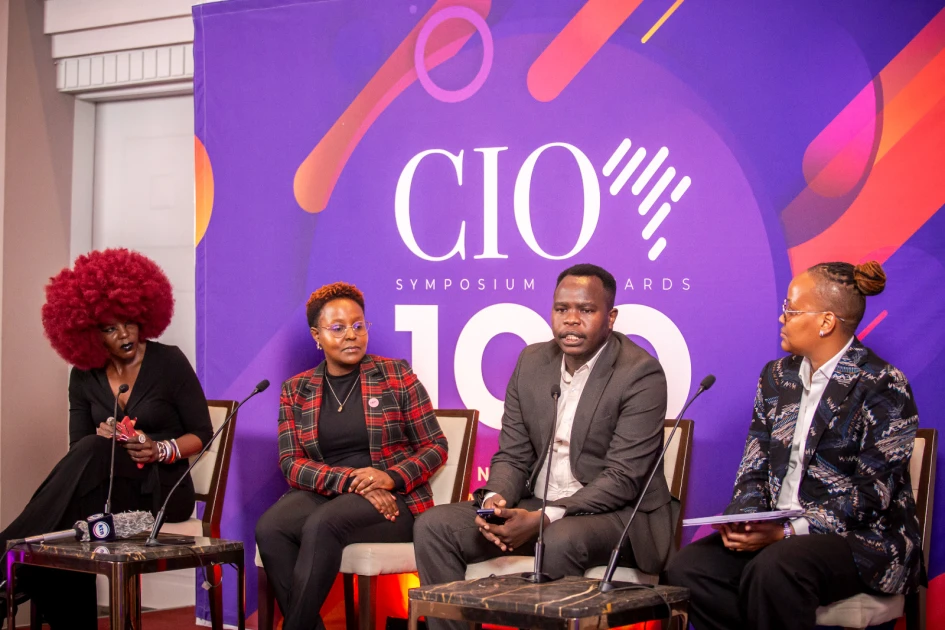
R-L Carol Odero, Head of Content - Africa at CIO Africa, Deborah Mutungi, Group IT Manager at Sarova Hotels, Gilbert Mutai, CIO at Car and General, and Mumbi Ndung'u, Executive Director at Power Learn Project, during a panel discussion at the CIO100 Partners Breakfast held at the Pullman Nairobi, Upperhill on October 15, 2026. PHOTO | COURTESY

Audio By Vocalize
African organisations are increasingly developing their own
technology solutions, with nearly four in 10 projects submitted for the 2026
CIO100 Awards completed without the involvement of external vendors.
The findings point to a growing reliance on internal
technology teams to address business challenges, as organisations across the
continent seek to improve efficiency, enhance customer experience and create
new growth opportunities.
Data from nearly 1,300 submissions across 10 countries,
including Kenya, Nigeria, South Africa, Uganda and Tanzania, shows that 38.2
per cent of projects were developed in-house.
Artificial intelligence (AI) also emerged as a major
investment priority, although its planned uptake appears to be running ahead of
its current application.
According to the findings, 84.8 per cent of organisations
intend to prioritise AI investment over the next 12 to 24 months, while 61.8
per cent of submitted projects had already incorporated the technology.
Generative AI, which can produce content such as text and
images, featured in 25.7 per cent of the projects.
AI adoption has risen from 54.8 per cent in the previous
year's submissions, signalling increased use of the technology even as
organisations continue to work through implementation, skills, data and
governance challenges.
“AI is moving rapidly up the agenda for African business and
technology leaders, but the real test is how effectively organisations
translate that interest into results. The gap between planned investment and
current adoption shows that many businesses are still working through the
practical questions of implementation, skills, data and governance. We need to
focus on how technology can solve real problems, improve productivity and open
new opportunities for growth,” said Harry Hare, Chairman of CIO Africa by dx5.
The report also challenges the assumption that
technology-driven business improvements require substantial financial
commitments, with smaller projects reporting stronger returns relative to their
cost.
Projects costing less than USD 10,000 (approximately Ksh.1.3
million) accounted for 27.2 per cent of submissions, up from 12.7 per cent in
2023.
These projects recorded a median return of 3.6 times the
initial investment, compared with approximately twice the investment for
projects in the largest budget category.
“The figures suggest that organisations can achieve
meaningful results by investing in smaller projects that solve specific
problems, rather than relying only on expensive, large-scale technology
programmes,” said Arnold Ng’ang’a, Senior Manager Consulting Services
(Enterprise Technology & Platforms) at Deloitte.
The findings, however, do not indicate the average amount
organisations spend on technology, but instead show the growing share of
submissions involving lower-cost projects.
Despite the reported progress in technology adoption,
cybersecurity preparedness remains a concern, with the findings revealing a
disparity between organisations' confidence in their security capabilities and
their testing of response plans.
Some 82.5 per cent of organisations rated their security
maturity in the highest category, yet only 38.6 per cent reported having tested
an incident-response plan.
The gap raises questions about how well organisations are
prepared to respond to cyberattacks as they expand their use of AI, cloud
services and interconnected digital systems.
Incident-response plans outline how organisations should
handle security breaches, including responsibilities for containing attacks,
protecting systems and restoring services.
The findings form part of submissions for the 2026 CIO100
Awards, which recognise organisations using technology to address business
challenges and improve performance.
The awards and symposium will take place from November 25 to
27 at Diamonds Leisure Beach & Golf Resort in Diani, Kenya, bringing
together technology leaders and business executives to discuss technology
adoption, cybersecurity and business performance.
Join the Discussion
Share your perspective with the Citizen Digital community.
No comments yet
This discussion is waiting for your voice. Be the first to share your thoughts!