
African champions Lakers seek funding boost to sustain historic rise
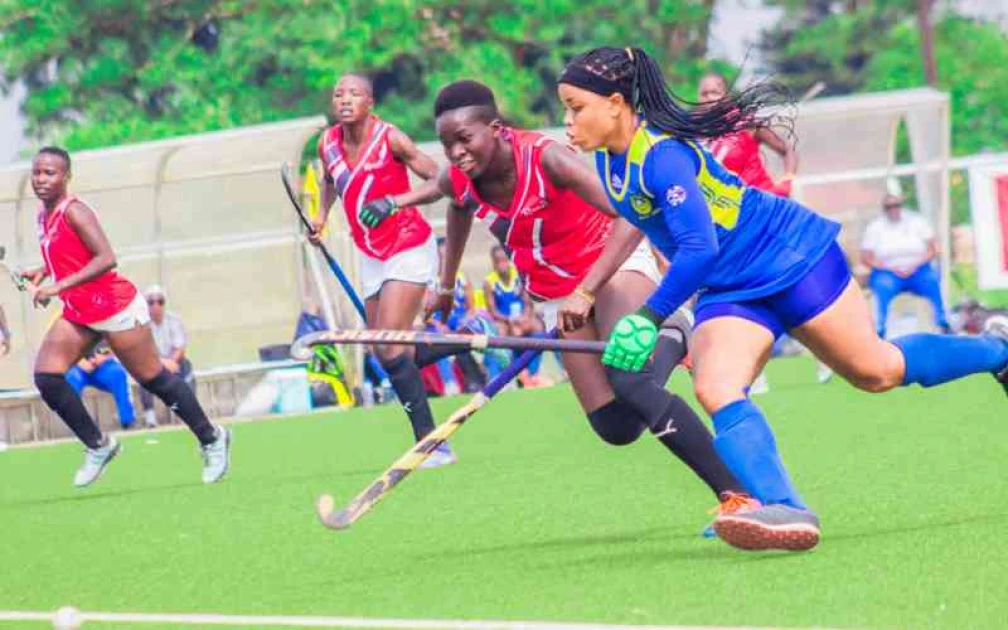
Lakers Hockey Club players in action during a past match. Photo/handout.

Audio By Vocalize
The Kisumu-based side etched their name into African hockey history earlier this year by defeating Ghana Revenue Authority in a penalty shootout after a 1-1 draw in the final of the continental championship in Zimbabwe.
Speaking on Citizen TV on Monday, Lakers Hockey Club President Fred Odhiambo reflected on the club’s remarkable journey since its establishment in 2017.
“We’ve had quite a journey in women’s hockey from our base in Kisumu. Since 2017, we have worked to promote the game locally and across the region,” said Odhiambo.
Despite limited resources, the club has grown from a community initiative into one of Africa’s leading women’s hockey teams.
“We are a community-based club, and resources are not always readily available. However, we have continued to give our best,” he added.
Founder and Technical Director Austin Tuju credited the club’s success to a clear vision of nurturing talent and competing at the highest level.
“We started with a dream to nurture talent and build a competitive team. Through discipline, resilience and determination, the players remained focused and achieved that dream,” said Tuju.
However, Tuju identified inadequate funding as the biggest obstacle facing both Lakers and the wider hockey fraternity in Kenya.
“One of the main reasons institutional teams continue to dominate the sport is because of funding. We urge both the federation and the Ministry of Sports to support hockey and help the game grow,” he said.
The financial strain is also felt by players, many of whom travel long distances to attend training sessions and league matches.
National team player Millicent Adhiambo said the team’s achievements have come despite significant sacrifices.
“It hasn’t been easy. In the past, some of us could only afford one-way transport to training sessions that lasted several hours. We appreciate the little support we receive because this is largely a self-sponsored team,” she said.
Forward Debrah Chepkurui echoed those sentiments, noting that transport costs remain a major challenge for players based outside Kisumu.
“Funding remains the biggest challenge. Some players travel from Nakuru and Nairobi, so transport to training sessions and league matches is a significant expense,” she said.
To help sustain operations, Odhiambo said the club relies on personal contributions, well-wishers and an initiative dubbed ‘Adopt a Player’.
“Through the Adopt a Player programme, individuals choose to support specific players by contributing regularly towards their needs. It has helped, but there is only so much it can achieve,” he explained.
According to Odhiambo, the club requires more than KSh50 million annually to run its programmes effectively.
“We need upwards of KSh50 million to sustain this project. At the moment, it is largely driven by individuals, which is challenging given the current economic situation,” he said.
Looking ahead, Tuju believes the club can continue its upward trajectory, having risen from the lower divisions to national and continental champions within eight years.
“Lakers is on a strong growth path. With support from the public, government and well-wishers, we believe we can reach an elite level within the next four to five years,” he said.
Tuju concluded by appealing directly to government stakeholders for support.
“We are reaching out to the Ministry of Sports and other relevant government institutions to provide the platform and assistance needed to help us achieve Olympic standards,” he said.
Join the Discussion
Share your perspective with the Citizen Digital community.
No comments yet
This discussion is waiting for your voice. Be the first to share your thoughts!