
Africa urged to prioritize inclusive digital payment systems
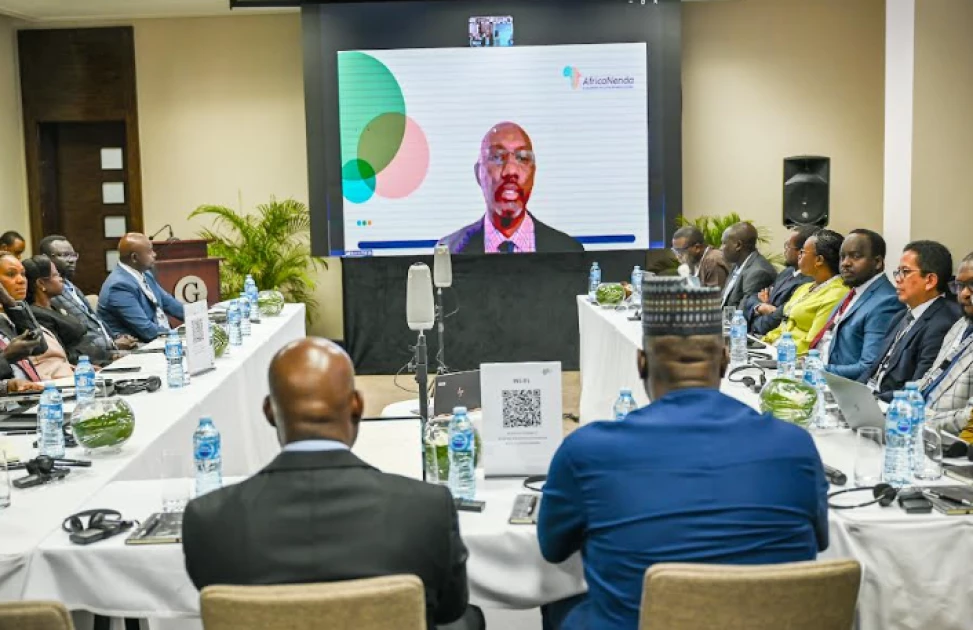
Dr. Robert Ochola, CEO, AfricaNenda Foundation, delivering the opening speech at the Peer Learning Workshop Visit held on Tuesday, June 17, 2025, in Lagos, Nigeria.

Audio By Vocalize
Africa must shift focus from building digital infrastructure that serves a limited elite to developing scalable systems that include the most vulnerable—particularly women, youth, and informal workers.
Despite growing mobile penetration, rising fintech investment, and advancements in digital public infrastructure, over 400 million Africans remain financially excluded.
Dr. Robert
Ochola, CEO of the AfricaNenda Foundation, described this disparity as “not
only unsustainable but unacceptable.” Speaking at the opening plenary of a Peer
Learning Visit co-hosted by AfricaNenda and the Nigeria Inter-Bank Settlement
System (NIBSS) in Lagos, he called on policymakers to prioritize inclusive,
interoperable systems designed to reach those at the margins.
“The real question
is: can we build scalable systems that serve every citizen—not just the
privileged few?” Dr. Ochola asked.
He cited
Nigeria’s NIBSS payment platform as an example of what is possible,
highlighting its interoperability, scale, and design rooted in local
governance. “NIBSS processes nearly a billion transactions monthly. It connects
banks, fintechs, and switches; operates 24/7 with real-time clearing; and is
built with security and inclusion in mind,” he said.
AfricaNenda
supports countries by contributing to system design, strengthening regulatory
capacity, and facilitating peer learning across regions. “We listen, we learn,
and we support countries as they build inclusive financial infrastructure,” Dr.
Ochola noted.
Call for African-Built
Solutions and Stronger Regulatory Collaboration
Premier
Oiwoh, Managing Director and CEO of NIBSS, emphasized the need for African
countries to develop homegrown payment systems instead of relying on imported
models. He also urged the dismantling of intra-African trade barriers to
enhance regional integration.
“Africa must
move beyond colonial-era frameworks and build payment systems by Africans, for
Africans,” Oiwoh said, adding that open trade requires interoperable,
cross-border financial systems.
Citing
NIBSS’s collaboration with the Central Bank of Nigeria, he advocated for
real-time regulatory oversight and stronger operational standards. He proposed
the establishment of an African Regulators Forum on Digital Payments to align
standards, share knowledge, and co-develop secure systems continent-wide.
Central Bank of Nigeria: Cash
Remains the Main Competitor
Representing
Deputy Governor Phillip Ikeazor of the Central Bank of Nigeria and Chairman of
NIBSS, Musa Jimoh stated that the dominant challenge in Africa’s financial
landscape remains cash—not competition among financial institutions.
He explained
that Nigeria’s real-time payment system was developed to meet local needs and
now serves as a scalable model. To expand such benefits across the continent,
Jimoh urged regulators to engage more actively with one another.
“Regulators
across Africa must collaborate continuously. Let us rise above jurisdictional
silos and work collectively to meet the evolving demands of our financial
environments,” he said.
Peer Learning Visit Promotes
Cross-Country Dialogue
The five-day
event brought together delegates from over 10 African countries—including
central banks, regulators, and payment system operators—for technical sessions,
policy discussions, site visits, and workshops. Nigeria’s NIP system was
presented as a case study for building real-time, interoperable payments that
support inclusion.
Participants expressed interest in adapting lessons from Nigeria to their national contexts, with the shared goal of advancing inclusive instant payment systems across Africa.
Join the Discussion
Share your perspective with the Citizen Digital community.
No comments yet
This discussion is waiting for your voice. Be the first to share your thoughts!