
Activist Kimathi warns against America First health strategy during Nairobi visit
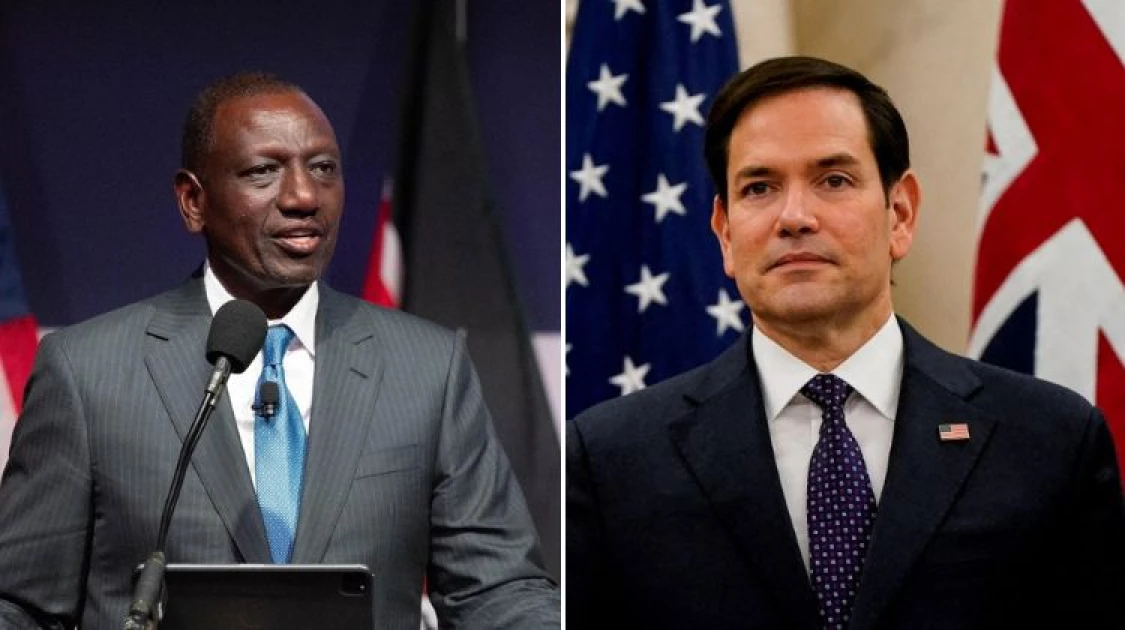
A collage of President William Ruto and US Secretary of State Marco Rubio.

Audio By Vocalize
Ayo Kimathi, an American Black nationalist lecturer who was recently in the country, made the remarks during a discussion with journalists in Nairobi, describing the initiative as one of the greatest threats to African survival in the 21st century.
"This initiative, along with others such as the genetically modified organisms' replacement of ancestral seeds, must be subjected to public debate, expert review, global scrutiny, and definitive rejection," he said.
Kimathi argued that the strategy, presented publicly as a framework for strengthening global health cooperation, should instead be read as what he called the next phase of a documented US agenda targeting populations across the developing world.
The United States government describes the strategy in markedly different terms, as a roadmap for advancing global health security, preventing disease outbreaks, strengthening health systems and promoting equitable access to care through bilateral partnerships.
The agreement, signed in Washington on December 4, 2025 by US Secretary of State Marco Rubio and President William Ruto, commits roughly $1.6 billion in US funding and $850 million in Kenyan domestic financing over five years, targeting HIV/AIDS, malaria, tuberculosis and maternal and child health.
It shifts resources away from non-governmental organisations toward direct government-to-government funding following the dismantling of USAID.
Ruto has defended the compact as a landmark partnership that moves Kenya toward greater health self-reliance. Supporters say the model deepens collaboration with partner countries and addresses shared health challenges.
The High Court has issued conservatory orders temporarily suspending implementation of the agreement insofar as it provides for the transfer or sharing of medical and sensitive personal health data, following petitions by the Consumers Federation of Kenya and Senator Okiya Omtatah, who argue the deal raises constitutional and data-sovereignty concerns.
Join the Discussion
Share your perspective with the Citizen Digital community.
No comments yet
This discussion is waiting for your voice. Be the first to share your thoughts!