
76 Kenyans killed fighting for Russia as Uganda, Ghana, Nigeria recruits also identified
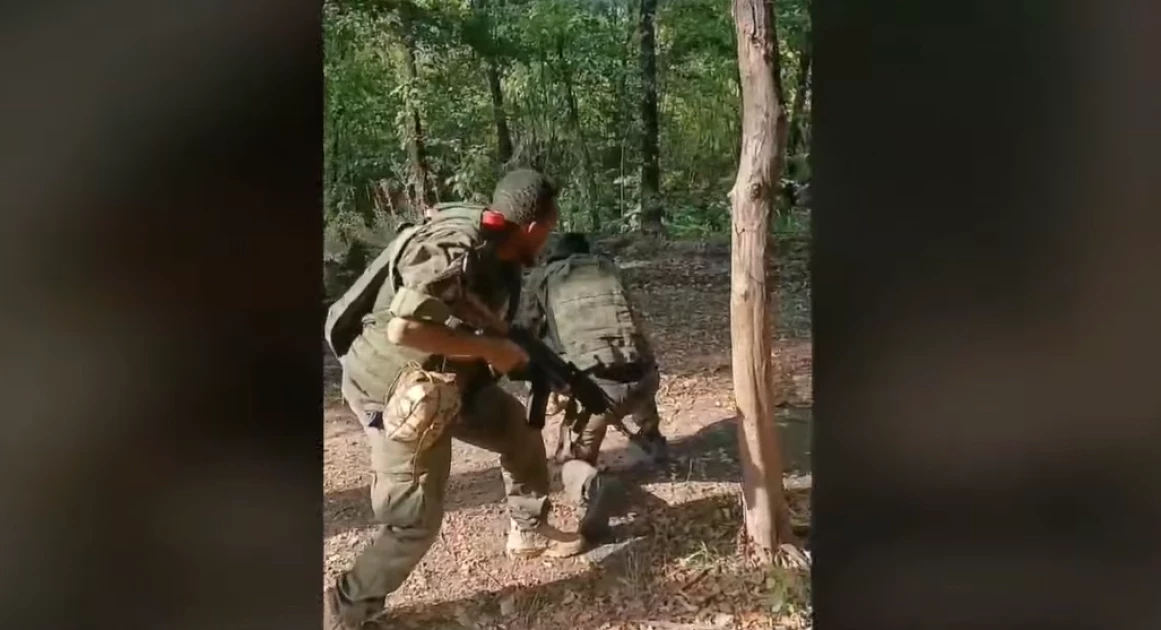
Screengrab from a video of Kenyan soldiers training in Russia.

Audio By Vocalize
At least 76 Kenyans recruited into Russia’s armed forces have been confirmed dead while fighting in the war against Ukraine, with hundreds more cases documented across Africa, according to an investigation by Journalists for Justice (JFJ).
The investigation,
titled ‘Death Contracts: How Russia Recruits Africans to Fight and Die in
Ukraine,’ documented 841 Kenyan nationals among at least 3,066 Africans from 40
countries who enlisted in Russia’s armed forces between October 2022 and June
2026.
Of the recruits
identified across the continent, 502 had been confirmed dead by the end of June
2026, while the fate of more than 2,500 remained unconfirmed.
Kenya recorded the
highest number of identified recruits in the investigation, with the country’s
National Intelligence Service telling Parliament in February 2026 that the
actual number of Kenyans recruited to fight for Russia exceeded 1,000.
The report,
published by ‘Stop Russian Recruiters’ organization on October 9, 2026, says
recruitment networks have lured Africans with promises of civilian employment
before directing them into military service.
According to the
investigation, recruits are often promised jobs in security and logistics but
are made to sign military contracts written in Russian after arriving in the
country.
Some reportedly
have their passports confiscated, while financial arrangements make it
difficult for them to leave.
In Kenya, the
investigation identified licensed employment agencies operating under the
government-backed ‘Kazi Majuu’ labour-export programme as part of the
recruitment pipeline.
The investigation
further reported that a Directorate of Criminal Investigations (DCI) raid on a
safe house in Athi River in September 2025 found 22 men awaiting travel under
the care of recruiters.
The report said
Kenya had recorded at least 76 confirmed deaths among its recruits, with Oscar
Khagola Mutoka, 39, the first identified Kenyan to be killed, in August 2025.
Uganda, Ghana
and Nigeria
Beyond Kenya, the
investigation identified 337 Ghanaian nationals recruited into Russia’s armed
forces, 214 Nigerians and 108 Ugandans.
Ghana’s
recruitment network reportedly operated through a system in which recruits paid
their own Visa and travel expenses, including broker fees of between US$5,000 (Ksh.648,650)
and US$7,000 (Ksh.908,110).
The investigation
traced one of the earliest documented Ghanaian recruitment cases to the 2022
FIFA World Cup in Qatar, where a Ghanaian businessman reportedly met an Indian
national representing Russia’s Ministry of Defence. The two subsequently
recruited 20 Ghanaians, according to the report.
In Nigeria, the
214 identified recruits were linked in part to Alabuga Start, a Russian
programme associated with a drone-production special economic zone in
Tatarstan.
The investigation
documented two confirmed deaths among Nigerian recruits: Hamzat Kazeen
Kolawale, 42, and Mbah Stephen Udoka, 37, who were killed in a drone strike in
Ukraine’s Luhansk region in November 2025.
Udoka reportedly
signed his contract on September 28, 2025, and was deployed to the front line
five days later, without documented training.
Uganda’s 108
identified cases were linked to a recruitment structure operating under the
corporate name Magnit, according to the investigation.
In August 2025,
nine Ugandan men were intercepted at Entebbe International Airport before
boarding flights to Moscow. The Russian national identified as the operation’s
lead coordinator was arrested and subsequently released.
The report also
identified Alabuga Start as a recruitment channel targeting young Ugandan women
with promises of employment and training opportunities.
Recruitment
concerns
The investigation,
based on interviews with prisoners of war, serving recruits, returnees and
families of dead and missing fighters, documented recruitment practices across
40 African countries.
It found that
recruits were frequently misled about the nature of the work they would perform
in Russia, with some subsequently deployed to fight in Ukraine.
The report also
documented cases in which intermediaries offered to help families of dead and
missing recruits obtain Russian death compensation of up to US$150,000 (Ksh.19.5
millon) in exchange for commissions of as much as 30 per cent.
According to JFJ,
some intermediaries could not provide verifiable authorisation from the Russian
government to process the compensation claims.
The investigation
further reported that a March 2026 visit to Moscow by Foreign Affairs Cabinet
Secretary Musalia Mudavadi resulted in restrictions barring further Kenyan
enlistment through Russia’s Ministry of Defence, although the measures did not
cover private recruitment into facilities such as the Alabuga drone-production
zone.
As of the report’s
publication, JFJ said no African government had completed a prisoner exchange,
established a repatriation fund or prosecuted an official for facilitating
recruitment into Russia’s military.
The report calls
attention to the risks facing Africans seeking employment abroad, as well as
the need to establish the whereabouts of missing recruits and address the
recruitment networks operating across the continent.
Join the Discussion
Share your perspective with the Citizen Digital community.
No comments yet
This discussion is waiting for your voice. Be the first to share your thoughts!