
2,911 learners benefit from SHOFCO’s uniform support to public schools
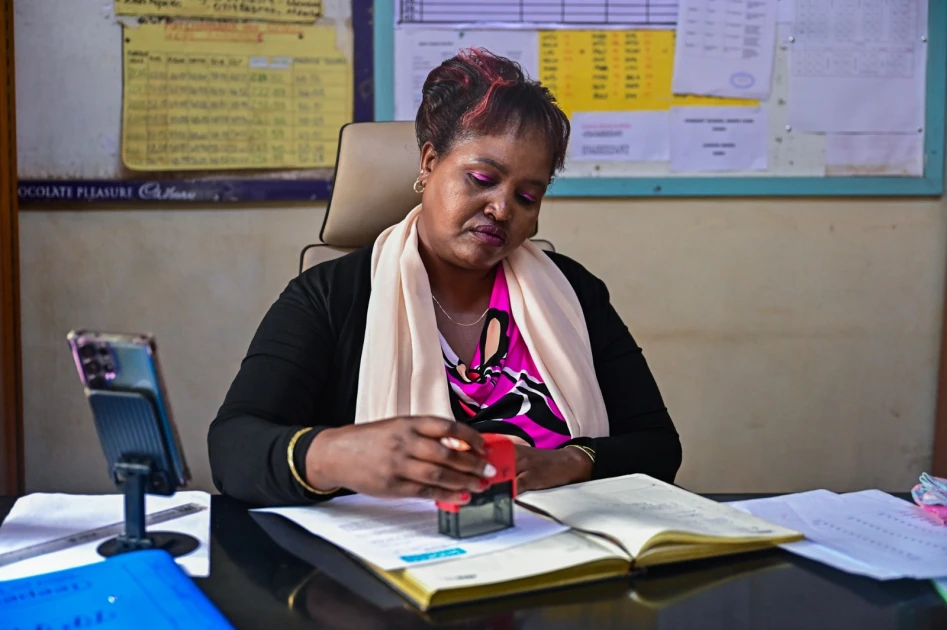
Eunice Koini, headteacher at MM Chandaria Comprehensive School

Audio By Vocalize
The single mother of three, who lives in Baba Dogo, said there were times she had sent her children to school in whatever clothes were available because she could not afford complete school uniforms for all of them.
“I have three children in school, and I have never been able to buy a full uniform for all of them at once. As a single mother, I have to choose between uniforms and other basic needs such as food,” Adoyo said.
All three of her children, who attend MM Chandaria Comprehensive School in Ruaraka Sub-County, are now among learners who have received uniforms through a Shining Hope for Communities (SHOFCO) programme targeting children from low-income households.
The programme has so far provided uniforms to 2,911 primary and junior school learners in 12 public schools across informal settlements in Nairobi County. The initiative targets 10,000 learners in eight counties across Kenya.
Alongside uniforms, the programme provides underwear for boys and girls, and sanitary towels for girls.
“No child should be left out of school because they do not have a school uniform. For many families in informal settlements, the choice is often between buying a uniform and meeting other basic needs such as food or rent. We want every child to have the dignity of walking into school dressed like their classmates and ready to learn,” John Okwako, SHOFCO’s public schools partnership officer, said during uniform issuance at MM Chandaria Comprehensive School in Ruaraka Sub County on Wednesday, September 30.
He said teachers played an important role in identifying beneficiaries, particularly learners whose attendance had been affected by a lack of proper school uniform.
“Teachers know their learners and understand the challenges they face at home. They helped us identify children who had been absent or were at risk of staying away from school because they did not have uniforms,” he said.
At MM Chandaria Comprehensive School, 325 learners received uniforms under the programme.
“Some of our learners come to school in home clothes because their parents cannot afford a complete school uniform. Unfortunately, this can make them feel different from their classmates. Some are laughed at or teased, and that can affect their confidence and even their desire to come to school,” Eunice Koini, headteacher at MM Chandaria Comprehensive School, said.
She thanked SHOFCO for intervening in an area she said had received little attention in the past.
“For the first time, we have seen an organisation come directly into our school to support children who are struggling with something as basic as a uniform. It may look like a small intervention, but to these children and their families, it means a lot,” she said.
At Chemichemi Comprehensive School in Kasarani Sub-County, 180 learners benefited from the support.
David Waweru, the school’s headteacher, said the institution serves children from the Mwengenye informal settlement where many families face financial difficulties.
“Uniform is an equaliser in school. When every child comes dressed appropriately, there is less distinction between those who can afford and those who cannot. It creates a more conducive learning environment because children are able to focus on their lessons instead of worrying about how they look or what their classmates are saying,” Waweru said.
Naomi Kuria, Teachers Service Commission curriculum support officer for Ruaraka Sub-County, said many parents were struggling to make a living, making school uniforms a lower priority compared with food, rent and other household expenses.
“In the informal settlements, many parents are working hard just to put food on the table. Uniform becomes a secondary issue, and we have had learners coming to school in old or tattered clothes. When children feel uncomfortable about what they are wearing, it can affect their confidence and attendance,” Kuria said.
Kuria said SHOFCO had also supported schools in the area through sanitation improvements and the equipping of ICT laboratories.
“These interventions are making our schools better places for children to learn and are contributing to improved attendance and participation,” she said.
Dr Kennedy Odede, SHOFCO founder and chief executive, said the decision to invest in school uniforms was informed by his own experiences growing up in Kibera where lack of basic necessities could prevent children from accessing opportunities.
“I understand what it means for a child to have a dream but lack the basic things that make it possible to pursue that dream. A uniform is not just a piece of clothing. It gives a child dignity, a sense of belonging and the confidence to sit in a classroom alongside other children,” Odede said.
For Adoyo, the impact of the intervention has gone beyond the uniforms themselves.
“My children are very happy because they can now go to school looking like everyone else. As a mother, a big burden has been lifted from my shoulders. I no longer have to worry about where I will get money for uniforms. I can now concentrate on finding food and meeting the other basic needs of my three children,” she said.
Join the Discussion
Share your perspective with the Citizen Digital community.
No comments yet
This discussion is waiting for your voice. Be the first to share your thoughts!