
2% HIMS fee on SHA payments unconstitutional, court rules
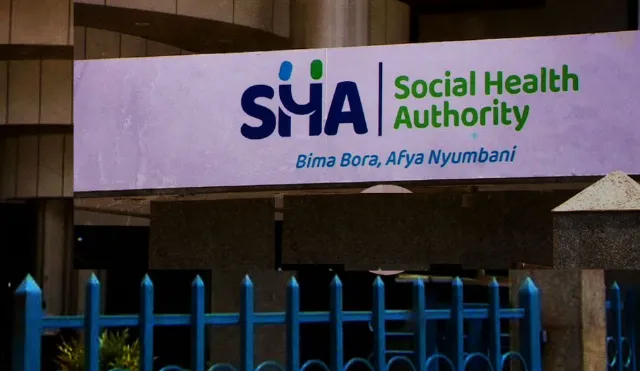
A file image of SHA offices. PHOTO | COURTESY

Audio By Vocalize
Justice Reuben Nyakundi found that the fee entry in the Third Schedule of the Digital Health (Data Exchange Component) Regulations, 2025, was made in violation of Articles 10(2)(a) and 201(a) of the Constitution and Section 5 of the Statutory Instruments Act.
The court, however, suspended the declaration of invalidity for 120 days to allow the government an opportunity to regularise the fee through the constitutionally required process.
Justice Nyakundi said an immediate invalidation would disrupt a funding stream supporting a system that processes approximately 26,000 claims daily, potentially affecting health facilities and patients.
"That a declaration be and is hereby issued decreeing that there is ambiguity in the 2% HIMS system on this charge and the same ought to be revisited on grounds of non-public participation on key sector-wise stakeholders to establish how the 2% fee capped at Kshs 5000 was arrived at and whether it is intergenerational or is capable of being reviewed and at what terms," the court ruled.
The court directed that within the 120-day period, the regulation-making authority may subject the HIMS fee to public participation in accordance with the Constitution and the Statutory Instruments Act.
It further directed that any proposed fee must be accompanied by a Regulatory Impact Statement explaining the basis on which the charge was calculated.
The judge warned that if no lawful fee entry is made within the stipulated period, the existing entry will lapse.
The court declined to order refunds of the fees already collected, ruling that the charges had been imposed under a published legal instrument that was presumed valid and had not been annulled at the time of collection.
It further observed that the fees were collected in exchange for services already rendered and that refunding payments across hundreds of thousands of claims would be disproportionate to the procedural violation.
The court also declined to issue guidelines on government institutions doing business with their own citizens, saying such policy-making fell outside its judicial mandate.
However, it noted that the Auditor General has an independent constitutional mandate to audit the Department of Health's accounts, including revenue collected through the HIMS fee.
The court also observed that any personal liability under Article 226(5) of the Constitution would require proof of loss arising from the unlawful use of public funds, which had not been established in the petition.
In its final orders, the court further questioned whether the 2 per cent fee had received the necessary Senate concurrence, given that health services are devolved functions under the Fourth Schedule of the Constitution.
It directed State organs to take steps towards fulfilling their constitutional obligations and submit monthly implementation progress reports before the Deputy Registrar of the High Court under the advisory of the Attorney General.
On the appointment of private advocates by State institutions, the court held that the engagement of law firms by public institutions and county governments is not purely a private contractual matter, but carries a public element and must comply with principles of fairness, transparency, non-arbitrariness and equal opportunity.
The ruling means the government has 120 days to address the procedural shortcomings surrounding the controversial HIMS fee, failing which the existing fee entry will lapse.
Join the Discussion
Share your perspective with the Citizen Digital community.
No comments yet
This discussion is waiting for your voice. Be the first to share your thoughts!